
How companies hire AI-ready talent in 2026
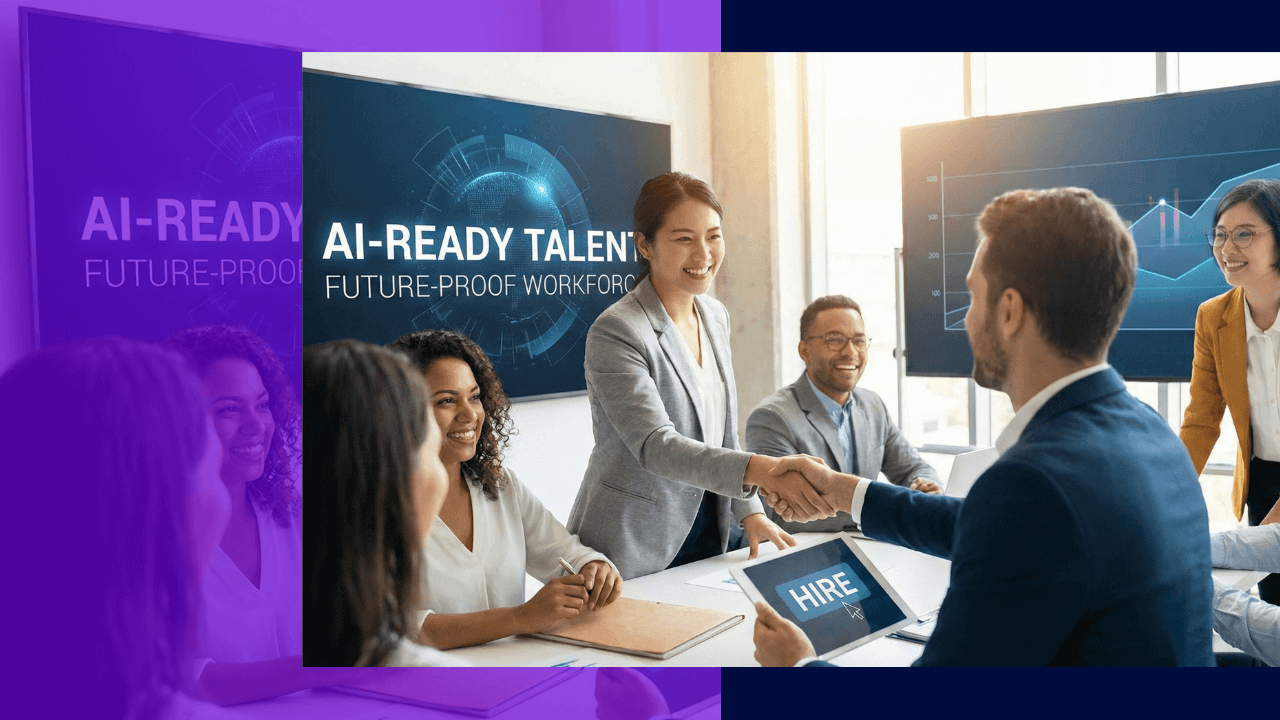
This article is a submission by Remote Latinos. Remote Latinos connects businesses with top talent from Latin America. Their platform facilitates the hiring of professionals from over 40 countries in Latin America.
Artificial intelligence has moved from an experimental capability to a core operational layer in modern businesses. From automating workflows to supporting customer experience, data analysis, and decision-making, AI is now embedded across teams.
As adoption accelerates, leaders face a new challenge: not whether to use AI, but how to hire AI-ready talent that can apply it responsibly and effectively.
Despite the abundance of tools, many organizations struggle to see meaningful results.
Research across hiring and workforce development shows that AI initiatives fail less often due to technology limitations and more often because teams lack the human capability to integrate those tools into daily work.
Hiring AI-ready talent is therefore not a technical exercise. It is a leadership and systems challenge.
What “AI-ready talent” really means
AI-ready talent is frequently misunderstood as purely technical talent. In practice, AI readiness refers to a combination of skills: AI literacy, critical thinking, process awareness, and ethical judgment.
According to research on scaling customer success and operations, the highest-performing teams are those where humans understand how to supervise, validate, and improve AI-driven outputs rather than blindly accepting them.
AI-ready professionals know how to work with AI systems. They can design workflows, document processes, interpret outputs, and escalate decisions appropriately.
This capability is valuable across roles, including operations, marketing, customer success, finance, and executive support.
Why hiring AI-ready talent has become a competitive advantage
Organizations that hire AI-ready talent consistently outperform those that focus solely on tools. Leadership research on the modern hybrid workforce shows that adaptability and self-management are now more predictive of performance than static expertise.
AI-ready professionals thrive in this environment because they continuously learn and adjust as technologies evolve.
Companies that delay hiring for AI readiness often experience fragmented automation, duplicated work, and inconsistent data quality.
By contrast, teams with AI-ready talent can streamline operations, improve accuracy, and maintain human oversight where it matters most. This capability has become a strategic advantage rather than a technical differentiator.
Common hiring mistakes companies make with AI roles
One of the most common mistakes is equating AI readiness with buzzwords.
Candidates list tools without demonstrating how those tools improved outcomes. Hiring research repeatedly shows that resumes and self-reported skills are weak predictors of performance.
Another frequent error is urgency-driven hiring. When leaders rush to “add AI capability,” they skip structured evaluation and onboarding.
This results in hires who understand tools but lack the judgment or business context to use them effectively.
Finally, many organizations underestimate onboarding, assuming AI-ready hires will self-integrate. Evidence suggests the opposite: even strong hires fail without clarity and connection early on.
Hiring for outcomes instead of tools
One of the most effective ways to avoid these mistakes is outcome-based hiring. Instead of asking candidates which AI platforms they know, high-performing organizations define what success looks like.
Outcomes may include reducing processing time, improving reporting accuracy, automating specific workflows, or enhancing customer response quality.
This approach changes both attraction and evaluation. Candidates who think in terms of results self-select into the process, while interviewers assess readiness based on applied thinking rather than familiarity with specific tools.
Structured evaluation and real-world testing
Unstructured interviews remain a major source of hiring error. Research on onboarding and early performance consistently shows that structured interviews improve predictability and reduce bias.
Scenario-based questions that require candidates to explain how they would apply AI to real business problems are particularly effective.
Many organizations also use short, paid test projects. These reveal how candidates think, document, communicate, and execute in realistic conditions.
Especially for remote and AI-enabled roles, real work consistently predicts performance better than interviews alone.
The role of vetting and talent curation
As AI skills become more widespread, vetting has become more important, not less. Verification of experience, communication ability, and reliability protects organizations from avoidable risk.
This has driven increased interest in curated or pre-vetted talent pools that narrow the field before hiring decisions are made.
For companies without internal hiring infrastructure, offshore partners are often used to access AI-ready remote professionals who have already been screened for baseline skills and operational readiness.
This approach allows leaders to focus on fit and long-term potential rather than initial qualification checks.
Onboarding AI-ready talent for real impact
Hiring is only the first step. Onboarding determines whether AI-ready talent delivers value.
Research on effective onboarding identifies four pillars: clarity, connection, consistency, and culture. For AI-enabled roles, onboarding must also define acceptable AI use, documentation standards, approval thresholds, and decision rights.
When onboarding is intentional, AI-ready hires integrate faster and contribute sooner. When it is neglected, even highly capable professionals struggle to align with organizational expectations.
Managing and retaining AI-ready teams
Retention of AI-ready talent depends on trust, autonomy, and growth. Leadership studies on modern workforces show that professionals perform best when expectations are explicit and experimentation is encouraged within clear guardrails.
Managers who invest in documentation, feedback loops, and continuous learning environments see stronger engagement and lower turnover. AI-ready professionals, in particular, value opportunities to refine systems and improve processes over time.
Where companies are finding AI-ready talent
AI-ready talent is being hired aggressively across SaaS, marketing, real estate technology, e-commerce, and operations-heavy businesses. While traditional recruitment agencies in major U.S. cities remain common, many companies are supplementing them with remote hiring strategies to access broader talent pools.
Remote hiring partners are increasingly used to connect U.S. companies with AI-ready professionals outside local markets, offering speed, flexibility, and cost efficiency while maintaining alignment with U.S. business standards.
Securing your AI-ready future
Hiring AI-ready talent is no longer a future concern. It is a present leadership responsibility. Organizations that succeed are those that treat AI hiring as a systems challenge rather than a tool-selection exercise.
By focusing on outcomes, structured evaluation, vetting, and intentional onboarding, companies avoid costly mistakes and build teams capable of turning AI into real operational value.
As AI continues to reshape how work is done, leaders who invest in AI-ready people, not just platforms, will be best positioned to adapt, scale, and compete.
References
Herrenkohl, E. (2010). How to hire A-players: Finding the top people for your team, even if you don’t have a recruiting department. Wiley.
Johnson, K. (2022). How to recruit, hire and retain great people. G&D Media.
Kumler, E. (2020). How not to hire. HarperCollins Leadership.
Loper, N. (2014). Virtual assistant assistant. Bryck Media.
Mar, J., & Armaly, P. (2024). Mastering customer success. Packt Publishing.
Madhwacharyula, C., & Ramdas, S. (2023). Scaling customer success. Apress.
Painter, A. J., & Haire, B. A. (2022). The onboarding process: How to connect your new hire. Team Solution Series.
Rodriguez, R. (2007). Latino talent. Wiley.
Tulgan, B. (2022). Winning the talent wars. W. W. Norton & Company.
Wintrip, S. (2017). High-velocity hiring. McGraw-Hill Education.






 Independent





