
Form W-9: Definition and purpose

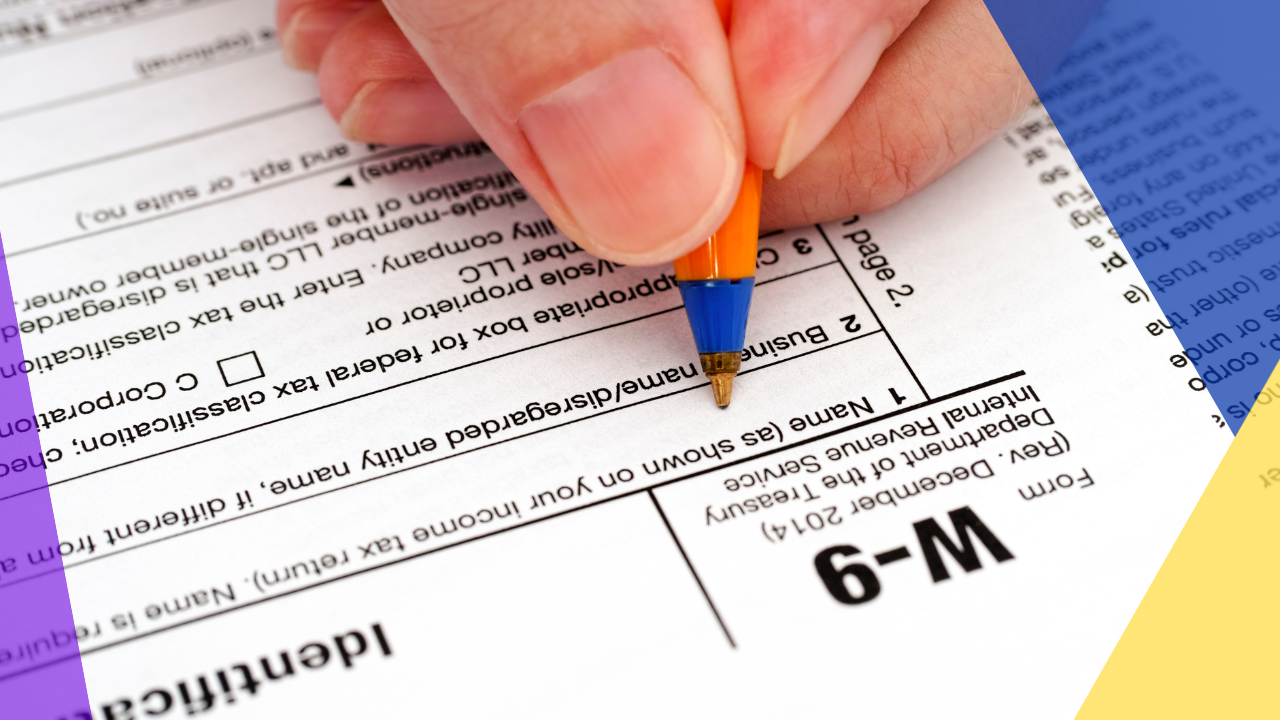
What is Form W-9, and who needs to fill it out?
Form W-9 is an IRS form that asks a person or business for their correct taxpayer identification number so a payer can report the income they paid.
- Freelancers, independent contractors, and vendors use it the most.
- The payer keeps the form and uses it to prepare 1099 forms.
- You do not send Form W-9 to the IRS yourself.
In most countries, paying taxes funds programs that help the public and businesses alike. So one of the first steps in a new job is to give a taxpayer identification number (TIN).
This number is unique to you. Employers and other payers need it to record your deductions and tax payments the right way. As one of the Internal Revenue Service (IRS) forms in the United States, Form W-9 helps a payer request your tax details. Below, we explain what the form does and when you need it.
What is Form W-9?
Form W-9 is the request for taxpayer identification number and certification. It verifies a person’s name, home address, and taxpayer identification number. Usually, a U.S. citizen or a resident alien fills it out.
Payers use the details on Form W-9 to complete a 1099 tax form. As a result, the form plays a key role in income tax filing. For non-employee pay, the payer often files the 1099-NEC form for non-employee compensation.
When to accomplish form w-9
You fill out Form W-9 when a payer asks for it. Then you give the finished copy back to that payer. Most of the time, an independent worker fills it out. For example, freelancers and part-time workers on a non-employment deal use it.
This differs from a salaried worker. An employee instead gets a Form W-2 from the employer. So the line between the two forms often marks the line between staff and contractors.
Banks and other financial firms also request the form. They need it to report interest and dividend payments on a 1099-INT form. In addition, contest and prize winners fill it out. The IRS still counts prize value as taxable income.
Different uses of form w-9
The main use of Form W-9 is to gather details from a person or business. For example, a company may pay a non-employee more than $600 in a year for a service. In that case, the company must file a return.
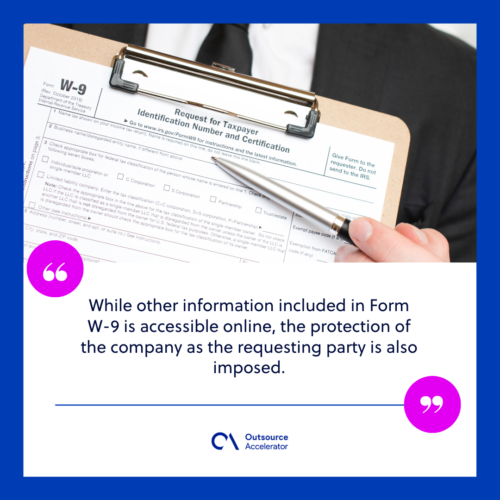
Some Form W-9 details are public. Still, the form protects the payer too. It asks the other party to sign and certify the following:
- The tax identification number (TIN) is correct
- The other party is not subjected to backup withholding
- The other party requests backup withholding exemptions
- Foreign Account Tax Compliance Act (FATCA) code used by the vendor (with the vendor’s exemption status)
Companies then use the form details to complete their returns. This includes the Social Security number or TIN, the name, and the address. So accuracy on the form really matters.
Either party may send a copy to the IRS. However, the payer that asked for the form must keep the copies safe. The form also supports Forms 1098 and 1099. As a result, it covers mortgage interest, real estate proceeds, student loans, and some canceled debt.
Because of this, many companies now work with Software-as-a-Service (SaaS) providers. Good software helps them collect and file forms on time. Many firms also try outsourcing tax preparation to keep filings clean and timely.
Effects of not complying with Form W-9
What happens if you refuse a valid Form W-9 request? The payer may hold back tax at a 24% rate from your pay. So non-compliance can cost you money right away.
Companies also carry a duty to the IRS. They must collect a complete Form W-9 from workers and vendors. If they fail to do so, they may face penalties.
Still, be careful who you trust. Sometimes the person asking has no real business reason. In that case, it is fine to say no. First, ask a tax professional for guidance.
Scammers also use fake Form W-9 requests to steal data. So always check the sender first. For example, call the company to confirm the request is real before you sign.
Frequently asked questions about Form W-9
Who has to fill out Form W-9?
Freelancers, independent contractors, vendors, and prize winners fill it out. In short, anyone who gets paid but is not a salaried employee may need one. Banks may also ask account holders to complete it.
Do I send Form W-9 to the IRS?
No. You give the form to the payer who asked for it. The payer keeps it on file. Then they use it to prepare 1099 forms.
What is the difference between Form W-9 and Form W-2?
An employer gives a Form W-2 to a salaried employee. A payer gives a Form W-9 to a contractor or vendor. So one covers staff, and the other covers non-employees.
What happens if I refuse to complete Form W-9?
The payer may apply backup withholding at a 24% rate. As a result, you keep less of your pay. You may still owe the same tax at filing time.
Is it safe to share a Form W-9?
It is safe with a payer you trust. Still, the form holds sensitive data like your TIN. So confirm the request first, and send it through a secure channel.
Key takeaways
- Form W-9 gathers correct taxpayer details for IRS reporting.
- Independent contractors use it most, though other cases apply too.
- The form captures full name, address, tax class, and withholding status.
- A signer faces civil or criminal penalties for false or missing details.
- Both parties should store, copy, and send the form with care.
Many firms hire tax pros or get them outsourced from different countries to keep this work accurate. A clear grasp of how contractors and full-time staff differ also helps you file the right form. For teams that file many returns, the right professional tax software can save hours. In the end, Form W-9 is simple, but accuracy keeps you clear of penalties.






 Independent





