
Embedded software: What it is and why it matters

What is embedded software and why does it matter?
Embedded software is code built into a device to control one specific job, and it powers everything from cars to medical tools.
- It runs inside chips and firmware, not on your screen.
- It comes in five main types, each with a clear role.
- As a result, it keeps modern devices safe, fast, and reliable.
Embedded software is key to today’s technology. It lets devices and systems run well and do special jobs. So without it, most smart devices would not work.
This article explains embedded software in plain terms. Next, it covers the types, uses, and value of this code.
Definition of embedded software
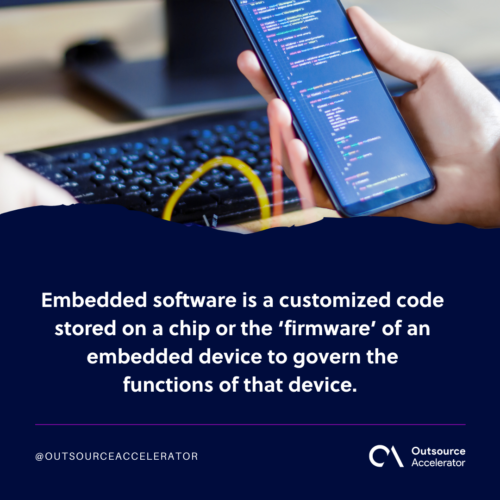
Embedded software is custom code stored on a chip or in the firmware of a device. Its job is to control how that device works. Hardware makers use it to run many devices and systems.
This code also manages the apps on a computer and the operating system. In short, it keeps the parts working together.
Most users never touch embedded software directly, because it needs no input. Still, you can find it in almost any item. For example, it runs simple things like toasters and light bulbs. It also runs complex systems, such as tracking tools in missiles.
5 types of embedded software
There are five main types of embedded software. Each one serves a different purpose. Here is a quick look at all five.
Real-time embedded software
Real-time embedded software reacts to events or inputs within strict time limits. So it must be fast and steady.
It has to process the input and give the output on time. This keeps the whole system working well.
For example, robotics and flight control systems often use it. After all, these programs must respond quickly and the same way each time.
Firmware
Firmware is embedded software stored for good in a device’s non-volatile memory. Usually, that means read-only memory (ROM) or flash memory.
Both ROM and flash memory are non-volatile. Firmware gives low-level control over the hardware. So the device can carry out its special tasks.
Devices like smartphones, routers, and Internet of Things (IoT) devices often have firmware. As a result, their hardware works as intended.
Firmware also hands control of the device to an operating system. That system then launches and manages the device’s programs.
Middleware
Middleware is a link inside embedded software. It sits between the application and the hardware.
It adds a layer of abstraction, which makes building easier. So different parts can talk and work together with less effort.
Embedded systems often use middleware. That is because they need networking, data management, or complex software structures.
Device drivers
Device drivers are embedded software parts that help devices communicate. In short, they connect the operating system with the hardware.
They link the operating system to devices like printers, displays, sensors, and actuators. As a result, each part talks to the rest.
Device drivers also keep devices working right. So software can reach and use the device’s features.
BIOS and bootloaders
The Basic Input/Output System (BIOS) and bootloaders start the hardware and load the operating system. Both are key embedded software parts.
Bootloaders handle the job of loading an operating system into memory. Meanwhile, the BIOS runs core tasks, such as hardware setup.
So these two parts are vital. They handle both start-up and steady, ongoing work.
Applications of embedded software
How do you use embedded software with an operating system? Here are a few clear examples. Many firms build these through software development outsourcing.
Automotive industry
Embedded software controls many jobs in the car sector. For example, it runs engine management, safety systems, entertainment, and navigation.
It also lets makers add advanced driver assistance systems (ADAS). So it is a core part of self-driving cars.
Consumer electronics
Consumer gadgets all run on embedded software, including:
- Smartphones
- Tablets
- Smart televisions
- Household appliances
Embedded software powers the user interface, connection, multimedia, and smart features on these gadgets. As a result, they feel easy to use. Many brands pair it with app development to add new tools.
Medical devices
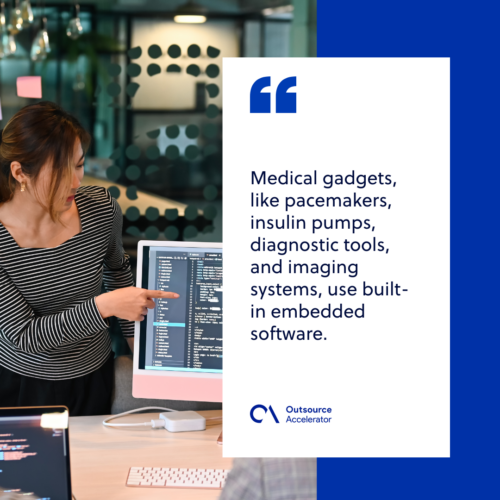
Medical gadgets use built-in embedded software too. These include pacemakers, insulin pumps, diagnostic tools, and imaging systems. Because of this, the devices work right and stay reliable. So doctors and nurses can give good care.
Industrial automation
Industrial systems lean on embedded software too. It runs machinery, robotics, and process control.
It also lifts output on the factory floor. For example, it supports process monitoring, data collecting, control algorithms, and human-machine interfaces. Some teams add IoT software development to link these systems.
Embedded software power-ups in modern technologies
Embedded software also drives many modern technologies. Here are some of the biggest power-ups.
- Internet of Things (IoT) – IoT is a web of connected devices that run on embedded software. For example, the code handles data gathering, processing, and communication.
- Artificial intelligence (AI) – AI systems use embedded software for data processing, pattern recognition, and decisions. So robotics and self-driving cars rely on it too.
- Edge computing – this setup uses embedded software to move processing and storage closer to use. As a result, edge devices process, analyze, and share data on the spot.
- Cybersecurity – security systems use embedded software for many tasks. These include data encryption, threat detection, and access management.
Overall, embedded software lets machines run the hardware. It also controls the flow of resources and lifts efficiency. So performance stays dependable. Many businesses now build custom software solutions to get the most from it.
Looking to improve your systems with tailored embedded software solutions? Visit Innowise‘s website to explore how its expertise can help your business achieve greater efficiency and innovation.
Frequently asked questions about embedded software
What is embedded software in simple terms?
Embedded software is code built into a device to run one main job. It lives on a chip or in firmware. So it works quietly in the background.
What is the difference between embedded software and firmware?
Firmware is one type of embedded software. It sits in a device’s permanent memory and controls the hardware. Embedded software is the wider group that firmware belongs to.
Where is embedded software used?
You can find it in cars, phones, medical tools, and factory machines. In fact, most smart devices use it. As a result, it shapes daily life more than most people notice.
Do users interact with embedded software directly?
Usually, no. The code runs on its own and needs little input. So users see the results, not the software itself.
Why is embedded software important?
It lets devices run safely, quickly, and reliably. Because of this, it supports key tools in healthcare, transport, and industry. In short, modern technology depends on it.






 Independent





