
8 most significant e-commerce security issues and how to avoid them


What are the most common e-commerce security issues?
The most common e-commerce security issues are malware, payment fraud, card skimming, third-party breaches, insider access, data exposure, weak transaction security, and poor PCI compliance.
- Most attacks target payment data, logins, and stored customer records.
- Simple habits, like SSL and fraud alerts, stop many threats.
- A single breach can cost sales, trust, and your reputation.
E-commerce security issues grow as more shops move online. Attackers look for easy targets every day. So good cyber hygiene matters more than ever. As an online store owner, you get one chance to protect customer data.
If your store loses key data, you will likely lose many buyers too. For example, shoppers lose trust fast when their details leak. As a result, the brand gains a bad name. Typically, hackers target store admins, users, and staff. They often use various malware evasion techniques. So securing your assets means real protection against these risks. This article covers the top e-commerce security issues. It also shares clear tips to help you avoid these attacks.
Basic e-commerce security
Basic e-commerce security is a set of rules that protect people in online deals. So you must earn each client’s trust. First, put these security basics in place:
Privacy
Privacy means you limit who can see customer data. So no outside party should reach a buyer’s account or personal details. Only the chosen retailer should hold that data. However, a breach happens when sellers let outsiders in. Because of this, e-commerce sites should use anti-virus, firewalls, encryption, and other data security measures.
Integrity
Integrity is another key part of e-commerce security. The idea is simple. Your store must use client data exactly as given. So the data must stay unchanged. However, any edit to that data breaks trust. As a result, the customer doubts your care and honesty.
Authentication
Authentication means both seller and buyer are real. So each side must be who they claim to be. First, the company should prove it is genuine. It sells real goods or services with a fair claim. In addition, clients should provide evidence of identification. This helps the seller feel safe in each deal.
Non-repudiation
Non-repudiation is a legal idea. It urges both sides not to deny their acts. So the buyer and the company must finish the deal they start. As a result, neither party can reject a signature, email, or purchase later.
8 e-commerce security issues
A well-built site is great. Still, customer data stays at risk without strong security. So follow clear rules and best practices. First, let us look at the top e-commerce security issues:
1. Malware and website hacking
Hackers use malware to reach user data on shopping sites. So this threat is serious for your store. For example, malware can steal data from the client side. It can also reroute users through bad code or affiliate links. As a result, the site owner takes a real loss. So every online seller should watch for this risk.
2. Payment processing issues
Payment processing is a newer threat that criminals use. Fake sellers grab payment details through a gateway. Meanwhile, honest sellers set up payment steps the right way. However, this issue also appears when data is stolen or changed. As a result, it can later lead to identity theft.
3. Credit card skimming
Card skimming is a very risky e-commerce security issue. It hits the financial data of both stores and buyers. For example, a clerk can copy card details in seconds. Because of this, hackers can also steal card data from online systems. So they even grab receipts left at ATMs.
4. Third-party vendor issues
Storing payment data with a third-party vendor adds risk. So hackers can break into those outside sites or accounts. As a result, they reach your store through that partner. For example, an attacker may hit your ad service. Then the hacker sees your stats pages, cookie store, and ads.
5. Unauthorized employee access
Staff access can turn into misuse. For example, workers may read emails, delete data, or steal files. So when unauthorized employees reach private accounts, they can buy things in the company name. As a result, this issue often ends in a direct financial loss.
6. Sensitive data exposure
Sensitive data exposure is also known as a data breach. So it can hurt both data safety and daily work. For example, hackers reach a site’s database. Then they steal card and Social Security details for money.
7. Insufficient transaction security
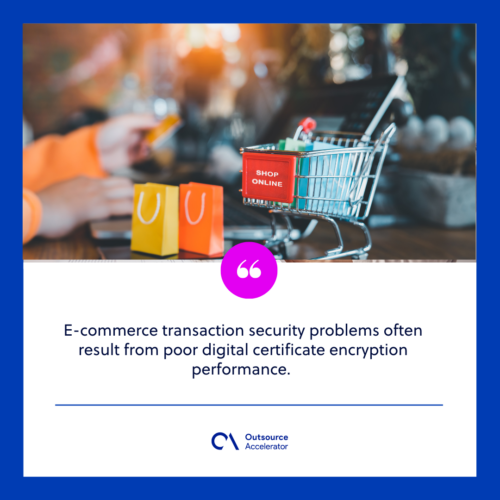
Weak transaction security lets thieves move money between accounts. So the problem often starts with poor encryption. As a result, personal data leaks. It can also lead to changes in digital certificate data.
8. Lack of PCI compliance
A lack of PCI compliance is a real gap. So it often means skipped IT security audits. As a result, data stays exposed. For example, a hacked system with no encryption can leak company and card details.
Essential tips to avoid e-commerce security issues
E-commerce security is a core part of online shopping. Still, many stores treat it as a low priority. However, once you know these risks, you can act fast. So here are clear tips to avoid e-commerce security issues:
Use the latest web browser
An old browser can leave your store open to hackers. So update your browser when a new version is out. In addition, many free tools check for updates for you. Remember to do this often. An outdated browser puts you at real risk. So the newest version brings the latest security fixes.
Always log out after shopping online
You can never be sure who watches your browser cookies. So someone could reach your account. In fact, phishing attacks keep rising to steal card and login data. Because of this, we all need an extra step. So log out after you shop. Also, never leave your browser open on unsafe sites.
Shop with reputable merchants
The web is full of shopping cart plugins. They all show features and offers to win your click. However, fancy features are not enough. So choose only trusted merchants. They follow current industry standards. As a result, you get a safer buying experience.
Investigate third-party providers
Check third-party providers before you trust them. So you know who they are and what they can do. For example, weak encryption on their side can leak your data. As a result, you may face a breach. So always vet outside sites for security gaps.
Ensure your site has an SSL certificate
You need an SSL certificate for any site with transactions. A Secure Socket Layer (SSL) certificate is an encrypted link between the user and your server. In addition, SSL monitoring checks that it stays valid. So SSL encrypts data sent from server to client. It also protects data on your server. As a result, card numbers and addresses stay safe. When encryption covers data in motion, outsiders cannot read it.
Only accept secure transactions
Online criminals always look for cracks in your armor. So give buyers a safe space to pay. For example, a secure payment step encrypts card and account details. As a result, that data stays protected as it moves to the bank.
Set up fraud alerts
Fraud alerts help if you use a card online. So you learn about odd charges right away. As a result, you can act fast if someone tries an unapproved payment. In addition, you can set alerts based on how you buy. For example, you can add an alert for each item from a seller.
Avoid public Wi-Fi
Using public Wi-Fi is risky. Hackers often use it to reach private data. So it can expose usernames, passwords, and card details. Because of this, use mobile data or private Wi-Fi when you shop. As a result, your information stays safer.
Only store the necessary information
Keep only the data you need for each purchase. So store the minimum required. As a result, a page holds less data. This makes it harder for hackers to grab much at once.
Avoid these e-commerce security threats by following these tips
Any data you collect can be at risk one day. So what matters is how ready you are. A wise seller takes every step to stay safe. This protects you, your business, and your buyers. As a result, sellers who know these e-commerce security issues can guard their data and products. So follow these tips. Then your site should be strong enough to withstand serious cybersecurity threats.
Frequently asked questions
What is the biggest e-commerce security threat?
Malware and payment fraud rank at the top. So they cause the most data loss. However, weak passwords and public Wi-Fi also open easy doors for hackers.
How can small online stores stay secure?
Start with an SSL certificate and strong logins. In addition, add fraud alerts and keep software updated. So even small stores can block most common attacks.
What is PCI compliance and why does it matter?
PCI compliance is a set of card data safety rules. So it guides how you store and handle payments. As a result, it lowers the risk of a breach and heavy fines.
Are third-party vendors a security risk?
Yes, they can be. For example, a weak partner site can leak your data. So vet each vendor and check their security before you connect.
Does an SSL certificate stop all attacks?
No, but it is a strong first layer. So it encrypts data in transit and blocks many threats. Still, you also need fraud alerts, updates, and safe habits.
Key takeaways
- The main e-commerce security issues are malware, fraud, skimming, and weak compliance.
- Privacy, integrity, authentication, and non-repudiation form the base of a safe store.
- SSL, fraud alerts, and browser updates stop many common attacks.
- Third-party vendors add risk, so vet each one before you connect.
- Collect only the data you need, and log out after every session.






 Independent





