
A practical guide to digital nomad policy

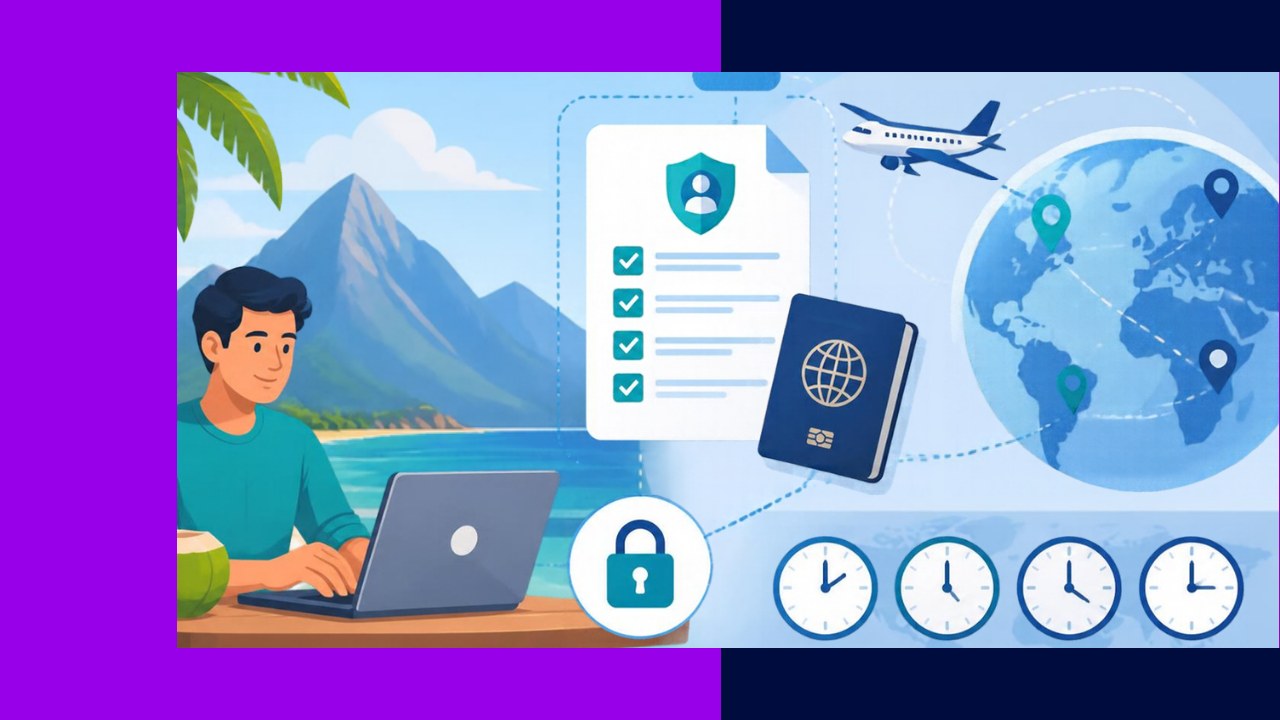
- A digital nomad policy sets clear rules for who can work abroad, for how long, and under what conditions.
- The hardest parts are tax, immigration, and data security, so write those sections with legal and IT input.
- Keep the policy practical: eligibility, approval, duration limits, time-zone rules, equipment, and expenses.
More employees now ask to work from a beach town, a parent’s home overseas, or a cheaper city abroad. A clear digital nomad policy lets you say yes without exposing the company to surprise tax bills or security gaps. Without one, every request becomes a one-off negotiation, and managers make inconsistent calls that feel unfair.
This guide walks through the sections a good policy needs. It is written for HR, IT, and operations leaders who want a document that protects the business and still treats people well.
What a digital nomad policy covers
A digital nomad policy is the written set of rules for employees who want to work remotely from somewhere other than their usual home base, often across a border. It differs from a standard remote work policy because it adds cross-country tax, visa, and compliance questions.
Treat it as one part of your wider remote framework. Many companies fold it into their broader approach to remote work policies for global teams.
Eligibility and which roles qualify
Not every role works from anywhere. Jobs that need physical presence, local licensing, or constant real-time collaboration may not fit. Spell out which roles qualify and which do not.
Common criteria include tenure (for example, six months in role), good performance standing, and a job that is already fully remote-capable. State whether contractors and new hires are included.
The approval process
A clear process prevents confusion. Keep it short and predictable so both sides know what happens next.
1. Request and notice period
Ask for written requests ahead of time. Thirty days is a reasonable minimum, and longer stays may need more lead time.
2. Manager and HR review
The manager checks workload and coverage. HR and legal check the destination for tax and visa flags. IT confirms the person can work securely from there.
3. Written approval
Approve in writing, with the dates, the location, and any conditions attached. Keep a record so the arrangement stays traceable.
Tax and payroll considerations
Tax is where most companies get caught. An employee working abroad can trigger payroll, residency, or corporate tax obligations in the host country. Time spent there matters, because many countries use day-count thresholds to decide residency.
Flag the risks in the policy, then route each case to a tax adviser. For U.S. taxpayers abroad, the IRS notes that “the maximum foreign earned income exclusion amount is adjusted annually for inflation,” on its foreign earned income exclusion page. Set a firm rule: no one starts working abroad until payroll and tax have cleared the destination.
Legal, immigration, and employment rules
Working remotely from another country is not the same as a holiday. The employee usually needs the legal right to work there, which a tourist visa rarely grants. Require a valid visa or work permit before any stay begins.
Local labor law can also apply once someone works in a country long enough. Wage, leave, and termination rules may follow the host country, not your home one. The U.S. Department of Labor’s Fair Labor Standards Act guidance is a reminder that wage and hour rules vary by jurisdiction. State plainly that immigration compliance rests with the employee.
Data security and equipment
Remote work abroad widens your attack surface. Public Wi-Fi, personal devices, and unfamiliar networks all raise risk, so your policy needs firm security rules written with IT.
Require company-managed devices, a VPN or zero-trust access, full-disk encryption, and multi-factor authentication. The NIST guide to enterprise telework, remote access, and BYOD security recommends securing remote components “against expected threats as identified through threat models.”
Cover equipment too. Say who supplies laptops, who pays for repairs abroad, and how gear gets returned if someone leaves.
Time zones and availability
Distance changes working hours, so set expectations that keep teams in sync across time zones.
Core overlap hours
Define a minimum window when the employee must be reachable, for example four hours of overlap with the main team. This keeps meetings and handoffs workable.
Response and async norms
Spell out how fast people should reply and what moves to asynchronous updates. Clear norms reduce the pressure to be online at odd hours.
Duration limits and expenses
Most policies cap how long someone can work abroad, often 30 to 90 days per year. Short caps keep tax and immigration risk low. Longer stays usually need extra legal review or a formal relocation.
On money, be explicit. State that the employee covers travel, housing, and living costs unless the trip is company-directed. Confirm that salary stays tied to the home location, not the destination.
| Policy element | Typical rule |
|---|---|
| Eligible roles | Fully remote-capable, past probation |
| Notice period | 30 days or more before travel |
| Duration cap | 30 to 90 days per country, per year |
| Devices | Company-managed, encrypted, MFA on |
| Costs | Employee pays personal travel and living |
Once the policy is live, review it yearly, because tax thresholds and visa programs change often. To plan for where staff tend to go, scan the growing list of countries offering remote work visas.
Frequently asked questions
Is a digital nomad policy legally required?
No law forces you to publish one. Still, several U.S. states and many countries require written notice of where employees work for tax withholding. A policy gives you one place to capture that data and prove you asked.
How is this different from a work-from-home policy?
A work-from-home policy usually assumes one fixed, local address. A digital nomad policy assumes movement across cities or borders, so it adds visa checks, day-count tracking, and host-country compliance that home-based rules skip.
Can we let someone stay abroad indefinitely?
You can, but the cost rises sharply. Beyond a few months, you often need a local entity, an employer of record, or a formal transfer. Build an escalation step into the policy so indefinite stays trigger a separate, deliberate decision.
Who owns enforcement once someone is overseas?
Share it. The manager owns performance and availability, IT owns device and access compliance, and HR owns the tax and immigration paper trail. Naming each owner stops gaps from forming while the employee is far away.






 Independent





