
5 data engineering best practices to boost your business health

What are the top data engineering best practices?
The top data engineering best practices are strong data quality management, automated pipelines, scalable infrastructure, solid security, and clear data governance.
- Clean, reliable data leads to better decisions.
- Automated pipelines cut manual errors and save time.
- Scalable, secure systems keep pace as data grows.
Businesses keep looking for ways to harness the power of information. The challenge is not a lack of data. Instead, it is handling and processing that data well.
That is where data engineering comes in. It has become a cornerstone for modern firms, and it drives real competitive advantage.
This field is key to transforming raw data into useful insight. As a result, it supports better decisions and smoother operations.
In this article, we cover five data engineering best practices that lift a company’s health and efficiency. We also show how Innowise’s solutions help you apply them with ease.
What is data engineering?
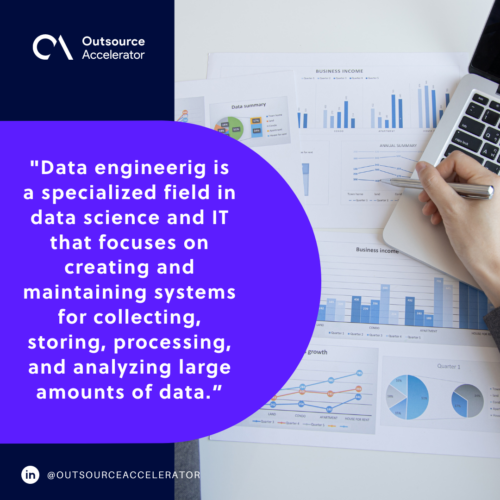
Data engineering is a field within data science and IT. It focuses on building and running systems that collect, store, process, and analyze large amounts of data.
In practice, it means creating data pipelines. These pipelines move data from many sources to storage, such as data warehouses or cloud computing platforms, and then to analytics tools.
Data engineers make sure data is accurate, accessible, and ready for analysis. So their work covers a range of tasks, including:
- Database management
- Data integration
- Data transformation
- Ensuring data quality and consistency
The goal is simple. It helps organizations use their data well. In turn, it lays the foundation for data-driven decisions.
Without this work, raw data stays messy and hard to trust. As a result, reports take longer and insights slip through the cracks. So strong data engineering keeps the whole business moving on facts, not guesswork.
Importance of data engineering best practices
Following data engineering best practices matters for any firm that wants to optimize its data. Here are the key reasons these practices are important:
- Data quality. It ensures accurate, reliable data for better decisions.
- Scalability. It lets systems handle growing data volumes with ease.
- Performance. It speeds up data processing and analytics.
- Security. It protects sensitive data and supports compliance.
- Cost efficiency. It trims costs by using resources well.
Many firms also explore data management outsourcing to apply these practices faster.
5 data engineering best practices for your business
These data engineering best practices help you manage data and draw out real value. Here are five key practices to follow:
1. Data quality management
Accurate, complete, and consistent data drives reliable analytics. So use validation checks, data cleansing, and ongoing monitoring. As a result, you keep standards high. For more depth, see these data management best practices.
2. Automated data pipelines
Automate your data workflows to streamline collection, transformation, and loading. In turn, this cuts manual errors and saves time. So data stays ready for analysis when you need it.
For example, a nightly pipeline can refresh reports before the team logs in. As a result, decisions rest on current data, not stale files.
3. Scalable infrastructure
Design systems that handle rising data volumes and complexity. For this, use scalable cloud services and efficient storage. As a result, growth never drags down performance. Strong big data consulting can help here.
4. Data security and privacy
Put strong security in place, such as encryption, access controls, and regular audits. So you protect sensitive data and build trust.
Also, meet data protection rules to guard user privacy. In the end, compliance strengthens customer confidence.
For instance, encrypt data both at rest and in transit. Meanwhile, limit access so only the right people can view sensitive fields. As a result, a single breach causes far less harm.
5. Effective data governance
Set clear policies for data management, including ownership, stewardship, and usage. As a result, you gain accountability and consistency. To go deeper, learn why data governance matters.
By following these best practices, firms can strengthen their overall business health and make the most of their data. As a leading IT services company, Innowise’s data engineering solutions help businesses apply these practices with ease.
Innowise’s cutting-edge data engineering solutions
Innowise stands at the forefront of data engineering. It offers modern solutions that reshape how firms handle and use their data.
Its services span pipeline automation, data quality management, scalable infrastructure, and strong security. So you get support across the whole data lifecycle.
With a skilled team, Innowise keeps your data accurate, accessible, and secure. As a result, you can make data-driven decisions with confidence.
Still, the right partner does more than build tools. For example, they help you set standards and train your team. So the gains last well beyond the first project.
Want to see how Innowise can move your business forward? Get in touch with Innowise today to learn about its services and pricing.
Frequently asked questions about data engineering best practices
What is the difference between data engineering and data science?
Data engineering builds the pipelines and systems that move data. Data science then analyzes that data for insight. So the two roles work closely together.
Why do automated data pipelines matter so much?
They remove slow, manual steps. As a result, errors drop and data arrives on time. So teams can trust the numbers they use.
How does data governance fit into these best practices?
Governance sets the rules for how data is owned and used. In turn, it keeps data consistent and compliant. So every other practice runs more smoothly.
Can small businesses apply data engineering best practices?
Yes, and they should start early. Scalable cloud tools keep costs low. So even lean teams can build a solid data foundation.






 Independent






