
5 reasons to invest in customer support process outsourcing

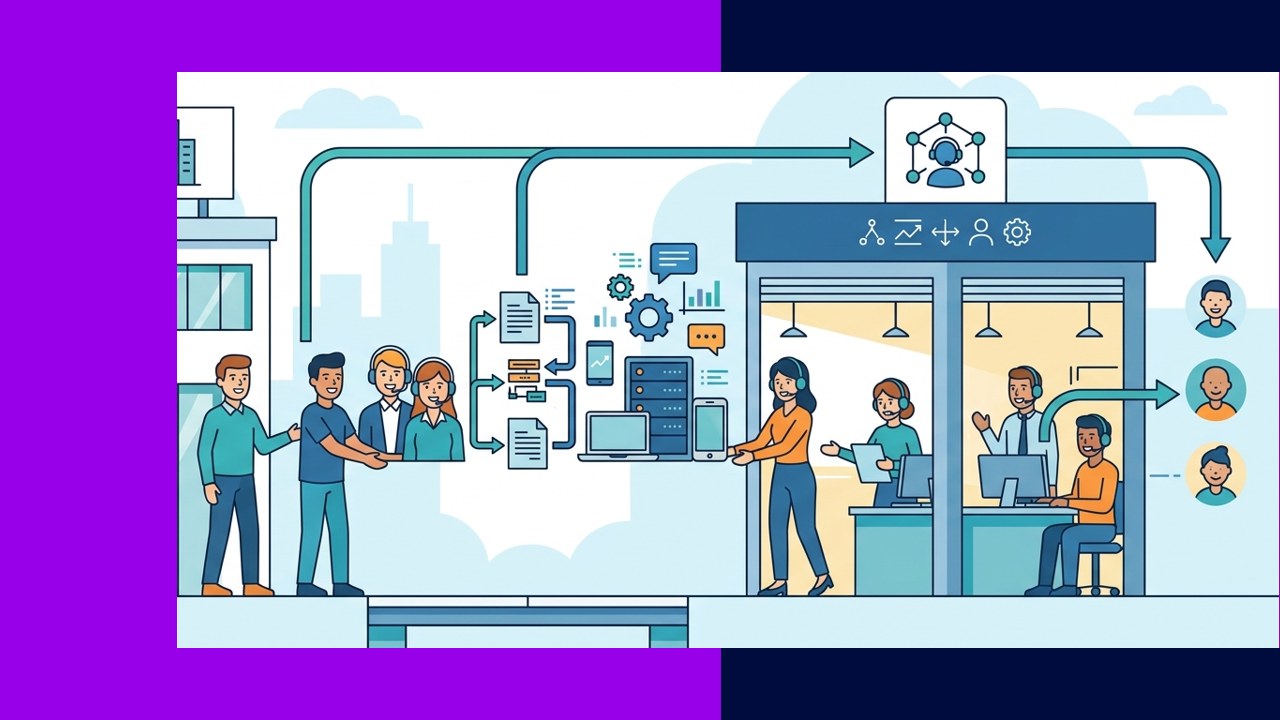
- Customer support process outsourcing hands the whole function (people, process, and technology) to a specialist partner.
- The model cuts cost, adds round-the-clock coverage, and lifts customer satisfaction scores.
- It also frees your internal team to focus on the core business.
Customer support process outsourcing means handing your full support operation to an external partner. That includes the agents, the workflows, and the tools behind them. It is not simply renting extra headcount. Instead, a provider runs the process end to end, from first contact to resolution and reporting.
Support demand rarely stays flat. Tickets spike during launches, holidays, and outages. Because of this, many teams struggle to staff and train fast enough. Outsourcing the process gives you a ready-made engine for those swings.
Below are five clear reasons to invest in this model. Each one looks at people, process, and technology together, not just the wage line.
1. Lower and more predictable costs
Cost is the first reason most leaders explore outsourcing. A provider spreads recruiting, training, and management across many clients. As a result, your per-ticket cost usually drops.
The savings go beyond wages, though. You avoid buying and maintaining your own helpdesk software, phone systems, and quality tools. The partner already owns that stack. Because pricing is often per seat or per contact, your costs also become easier to forecast.
For a wider view of these economics, see this overview of the main benefits and drivers of outsourcing. It explains why cost is only the starting point for most companies.
2. Round-the-clock and scalable coverage
Customers expect help at odd hours. Building a 24/7 internal team is expensive and hard to sustain. A support partner solves this with staff across multiple time zones.
Scale works both ways. When a promotion drives a surge, the provider adds trained agents quickly. When volume drops, you scale back down. You do not carry idle staff during quiet weeks. This flexibility is tough to match in-house.
Coverage also spans channels. A mature partner handles phone, email, chat, and social from one process. Because the workflows are shared, customers get a consistent answer on every channel.
3. Access to trained specialists, tools, and process
Good support is a discipline, not a favor. A dedicated provider brings people, playbooks, and platforms that most in-house teams cannot build alone. That combination is the real value of outsourcing the whole process.
Specialist agents already know how to de-escalate, troubleshoot, and document. The partner layers proven workflows on top, such as tiered escalation and quality scoring. Modern tools then tie it together, including CRMs, knowledge bases, and analytics dashboards.
Self-service is part of that toolkit. According to Harvard Business Review, “81% of all customers attempt to take care of matters themselves before reaching out to a live representative.” A strong partner designs help centers and bots for exactly that behavior. As a result, agents handle fewer simple tickets and focus on harder ones.
4. Faster response and higher CSAT
Speed shapes how customers feel about your brand. Long queues and slow replies push people away. A specialist partner staffs to service levels, so wait times stay low even at peak.
Effort matters as much as speed. Research behind the Customer Effort Score shows that making problems easy to solve builds loyalty. A well-run process reduces that effort through clear scripts, fast tools, and first-contact resolution.
Better metrics follow. Response times fall, and customer satisfaction (CSAT) scores tend to rise. Because providers track these numbers daily, problems surface early. You get reporting you might never build on your own.
5. More focus on your core business
Support is essential, yet it is rarely your competitive edge. Every hour spent hiring agents is an hour not spent on product or growth. Outsourcing the process removes that drag.
Your leaders stop managing rotas and refunds. Instead, they set goals and review results. The partner handles the daily grind of staffing, coaching, and coverage. In short, you keep control of strategy while shedding the operational load.
This focus compounds over time. Teams ship faster and serve customers better at once. That is why many scaling companies treat support outsourcing as a growth lever, not just a cost cut.
In-house support versus outsourced support process
| Factor | In-house team | Outsourced support process |
|---|---|---|
| Cost model | Fixed salaries plus tools and overhead | Per seat or per contact, easier to forecast |
| Coverage | Limited hours, hard to run 24/7 | Round-the-clock across time zones |
| Scaling | Slow hiring and training cycles | Ramp up or down within weeks |
| Tools | You buy and maintain the stack | Partner supplies CRM, phones, and analytics |
| Focus | Leaders manage daily operations | Leaders focus on core business goals |
For a deeper look at one common form of this model, read this guide to how call center outsourcing works. It covers service types, benefits, and how to pick a partner.
Frequently asked questions
What is customer support process outsourcing?
It is the practice of handing your entire support function to an external partner. The provider supplies the agents, the workflows, and the technology. You set the goals and review the results.
How is it different from hiring more agents?
Extra headcount only adds people. Process outsourcing adds trained people, proven workflows, and ready tools together. Because of that, it scales faster and often costs less per ticket.
Will outsourcing hurt customer satisfaction?
It should not, when the partner is a good fit. Strong providers staff to service levels and track CSAT daily. As a result, many companies see faster replies and steadier scores.
Which support channels can a partner handle?
Most partners cover phone, email, live chat, and social messaging. A mature process ties these channels together. So customers get a consistent answer wherever they reach out.
Key takeaways
- Customer support process outsourcing bundles people, process, and technology into one managed service.
- The model lowers cost, adds 24/7 coverage, and scales quickly with demand.
- Trained specialists and better tools tend to lift response times and CSAT.
- Outsourcing the process frees your team to focus on core growth work.






 Independent





