
Chief strategy officer: Why you need one in your firm


What is a chief strategy officer?
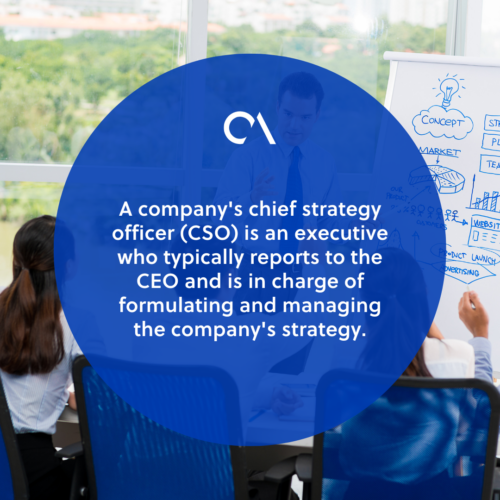
A chief strategy officer (CSO) is the senior executive who builds and runs a company’s long-term strategy, and the role usually reports straight to the CEO.
In short, a chief strategy officer sets the direction and keeps the business on course. A CSO owns three core duties:
- Shaping the company’s long-term vision and strategy
- Guiding strategic planning across teams
- Leading mergers and acquisitions (M&A)
Today, a clear strategy matters more than ever for lasting success. Without an effective business strategy, a company can miss its goals. As a result, performance drops and some functions may fail. For these reasons, many firms now hire a chief strategy officer. People also call this role chief executive strategist or vice president of business strategy development.
This article explains what a CSO does day to day. It also covers the main roles and why one may help your firm. To see how the job fits the wider C-suite, you can compare it with the chief of staff position.
Significant roles of chief strategy officers
A chief strategy officer works closely with other executives and teams. Because of this, the company’s goals stay in line with its stated purpose. Here are the four main roles of a chief strategy officer.
1. Ensuring the organization’s long-term viability
First, a chief strategy officer spots risks and chances that could shape the company’s future. So they build plans that match the firm’s goals and vision. They also know the field well, including consumer habits and rivals. As a result, they use this insight to keep the business profitable and competitive.
2. Providing a strategic direction to firms
Next, a chief strategy officer sets direction by framing the firm’s goal, vision, and values. In addition, a CSO makes sure every team and worker backs those aims. This work calls for a clear plan built with other leaders. It also helps to understand the gap between leadership and management. For this reason, a chief strategy officer must be a strong communicator. So they can share the vision with staff, shareholders, and customers alike.
3. Fostering a culture of innovation
We all know that long-term success depends on new ideas. Therefore, a chief strategy officer builds a culture that rewards fresh thinking. In addition, a CSO backs smart risk-taking. Meanwhile, they give staff a safe space to test new ideas.
4. Enhancing the company’s reputation
Finally, a chief strategy officer may also handle crisis management and damage control when a reputation is at risk. So this protects the brand image. It also keeps every process in line with legal standards.
5 reasons why you should hire a chief strategy officer
Are you unsure whether you need a chief strategy officer? Here are five clear reasons why one may help your firm.
1. Develop a clear and effective corporate strategy
If you want your company to grow, a chief strategy officer is a smart hire. This expert shapes ideas that move you toward your goals. Meanwhile, they watch the market for threats and openings. As a result, they work with other leaders to build plans that help the business thrive.
2. Align resources to achieve strategic goals
A chief strategy officer gets everyone on the same page. So the company can reach its long-term goals. In addition, a CSO makes sure you spend time, money, and energy on the right work. This gives you an edge over rivals.
3. Identify growth opportunities
A chief strategy officer studies market trends to find new room to grow. In addition, they help you earn more income and keep loyal customers. For example, they set industry best practices and roll them out across your teams.

4. Analyze market trends and competition
A chief strategy officer tracks market shifts and rivals over time. So your business stays sharp and current. Good competitive intelligence feeds these plans. As a result, a CSO helps you hold your position and outshine the competition.
5. Strategic partnerships
A chief strategy officer shares your strategy with partners and stakeholders. In turn, this builds a brand image that matches your purpose and vision. It also works well alongside a chief customer officer who owns the client relationship. Because of this, you strengthen ties with stakeholders. So you win your clients’ trust and confidence too.
Chief strategy officer: Aligns resources to achieve strategic goals
Overall, a chief strategy officer lines up resources to:
- Meet growth opportunities
- Assess market trends and rivalry
- Explain the company’s strategy to stakeholders
The role can also stretch into big deals. For instance, a CSO often leads mergers and acquisitions from start to finish. So if you want lasting success, consider hiring a chief strategy officer soon.
Frequently asked questions about the chief strategy officer role
What does a chief strategy officer do?
A chief strategy officer builds and runs the company’s long-term plan. They spot risks and openings, set direction, and align teams. In addition, many lead mergers and acquisitions.
Who does a chief strategy officer report to?
In most firms, the chief strategy officer reports to the CEO. So the two work closely on vision, growth, and big-picture goals.
What skills does a chief strategy officer need?
A chief strategy officer needs strong analysis and clear communication. They also need market insight and sound judgment. Because of this, they can turn data into plans that work.
Is a chief strategy officer the same as a CEO?
No. The CEO leads the whole company, while the chief strategy officer owns strategy. Still, the two roles work side by side every day.
Does a small business need a chief strategy officer?
Not always. Many small firms share these duties among leaders at first. However, a growing business often gains an edge from a dedicated CSO.
Key takeaways
- A chief strategy officer sets and runs the company’s long-term strategy.
- The role usually reports to the CEO and works across every team.
- A CSO spots risks, finds growth, and often leads mergers and acquisitions.
- Strong communication helps a CSO align staff, partners, and customers.
- A dedicated strategy leader can give your firm a lasting competitive edge.






 Independent





