
7 budgeting and forecasting methods examples worth knowing

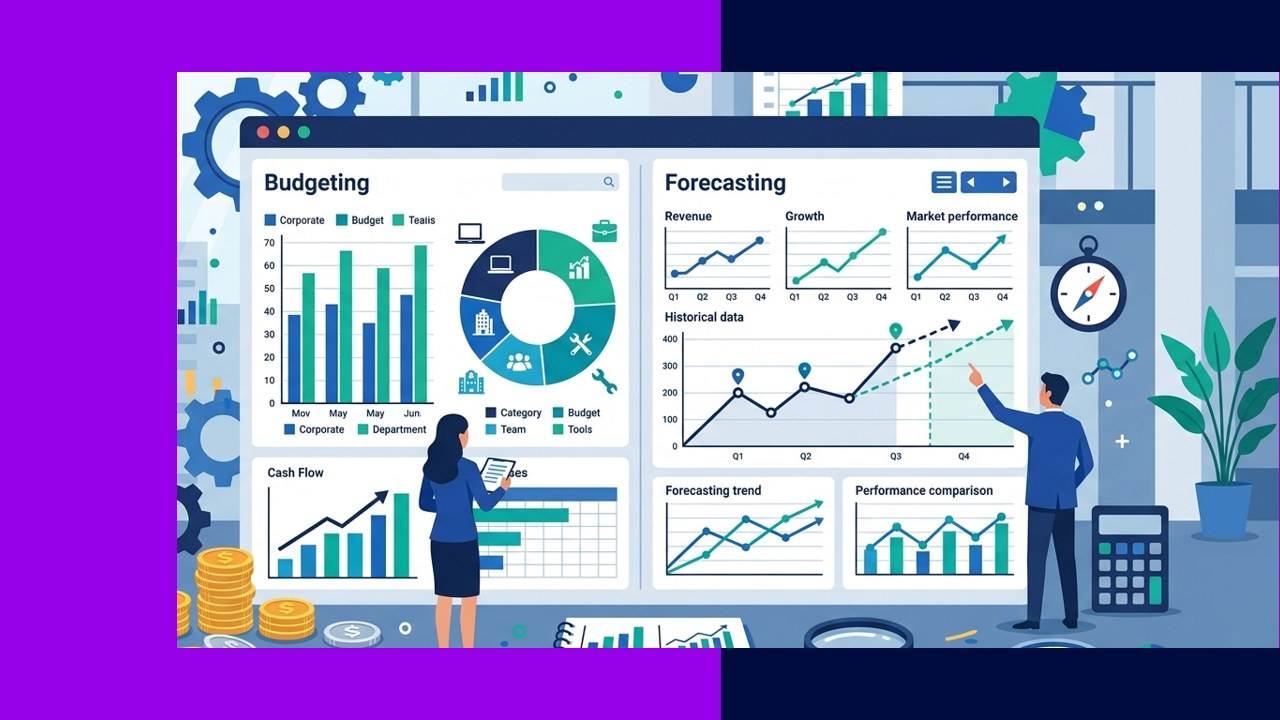
- Budgeting and forecasting methods each suit a different goal, from cost control to agility.
- Most finance teams mix several methods rather than relying on one.
- Outsourced FP&A support adds capacity to build, run, and refresh these models.
Choosing the right budgeting and forecasting methods shapes how well a finance team plans, spends, and adapts. Each method answers a slightly different question. Some tighten cost control. Others help you react faster to change. The best approach usually blends two or three.
Below are seven methods worth knowing. For each, you will see what it is and when to use it. We also explain how outsourced FP&A support helps teams run these models without stretching headcount.
1. Incremental budgeting
Incremental budgeting starts with last year’s numbers. You then add or subtract a small percentage for the coming period. It is the most common method because it is simple and fast to build. According to Corporate Finance Institute, this format is popular because “it is simple and easy to understand.” For more detail, see this guide to common budgeting methods.
Use it when your business is stable and costs stay predictable. However, it can quietly carry forward waste. Old spending rarely gets challenged, so review it now and then.
2. Zero-based budgeting
Zero-based budgeting (ZBB) starts every line at zero. Managers must justify each expense from scratch, not just the increases. As a result, the budget reflects real current needs rather than history.
Use ZBB when you need to cut costs or reset priorities. It suits teams entering a lean phase or a major restructure. The trade-off is effort. Building a budget from nothing takes time and detailed input. For that reason, many teams run ZBB every few years, not every cycle.
3. Activity-based budgeting
Activity-based budgeting (ABB) builds the budget around activities that drive cost. First, you identify the work that consumes resources. Then you assign a cost to each activity based on expected volume. In short, spending follows what the business actually does.
Use ABB when overhead is complex and hard to trace. It helps manufacturers, logistics firms, and service teams with many moving parts. Because it links cost to output, it exposes inefficiency clearly. The downside is data. You need clean activity records to make it work.
4. Rolling forecasts
A rolling forecast updates continuously instead of stopping at year-end. As each month closes, actual results replace the forecast. Then a new month gets added to the end. This keeps a steady forward view, often twelve months out.
Use rolling forecasts when your market moves fast. They suit high-growth companies and volatile revenue. Because the horizon never expires, planning stays current. Static annual budgets, by contrast, go stale within a quarter. Many teams pair a rolling forecast with an annual budget for balance.
5. Driver-based forecasting
Driver-based forecasting models the few variables that truly move your numbers. These drivers might include units sold, headcount, or website traffic. You link each driver to revenue or cost. When a driver changes, the forecast updates automatically.
Use this method when you want speed and clarity. It lets you test decisions quickly, such as adding staff or raising prices. Start with three to five drivers, then expand as needed.
6. Scenario and sensitivity analysis
Scenario analysis builds several versions of the future. You model a best case, a worst case, and a likely case. Sensitivity analysis is narrower. It changes one variable at a time to see the impact.
Use these methods when uncertainty is high. They help you prepare for risk before it hits. For example, you can test what a 10% sales drop does to cash. Good scenario work pairs naturally with driver-based models and rolling forecasts. The SBA reminds owners that a solid plan “provides a cash flow projection for future years,” and scenarios stress-test that projection. See the SBA guide on how to manage your finances.
7. Top-down vs bottom-up budgeting
These two methods describe direction, not detail. In top-down budgeting, senior leaders set the numbers and pass them down. In bottom-up budgeting, department managers build estimates and send them up for approval. Corporate Finance Institute notes that department heads “prepare their budget based on present information and past experiences.” Read more on top-down and bottom-up budgeting.
Use top-down when speed and alignment matter most. Use bottom-up when accuracy and buy-in matter more. Many teams combine both. Leaders set targets, and departments shape the detail underneath.
How the methods compare
| Method | Main strength | Best when |
|---|---|---|
| Incremental | Fast and simple | Costs are stable |
| Zero-based | Deep cost control | You need to reset spend |
| Activity-based | Traces overhead | Operations are complex |
| Rolling forecast | Always current | Markets move fast |
| Driver-based | Quick what-if tests | Few clear cost drivers |
| Scenario/sensitivity | Prepares for risk | Uncertainty is high |
| Top-down vs bottom-up | Balances speed and buy-in | You need both alignment and detail |
Where outsourced FP&A support fits
Running these methods well takes time and skilled hands. Many lean finance teams lack both. That is where an outsourcing provider helps. An offshore FP&A partner can build models, update forecasts, and clean the data behind them.
For example, an outsourced analyst can maintain a rolling forecast every month. Another can run scenario models before board meetings. Finance leaders then keep the judgment calls, while the heavy modeling gets handled offsite. To see the broader model, review this overview of back office outsourcing and the basics of how outsourcing works.
Frequently asked questions
What is the difference between budgeting and forecasting?
A budget sets a plan for what you intend to spend and earn. A forecast predicts what will actually happen based on current data. Budgets are fixed targets. Forecasts change as new results come in. Most teams use both together.
Which budgeting method is best for a small business?
Incremental budgeting is often the easiest place to start. It is fast and needs little data. As the business grows, a driver-based forecast adds useful flexibility. In short, start simple, then layer in more detail over time.
How often should a finance team update its forecast?
Monthly updates work well for most companies. Fast-moving businesses may update weekly. A rolling forecast makes this routine because it refreshes on a set cycle. Regular updates keep decisions grounded in current numbers.
Can outsourced teams handle budgeting and forecasting?
Yes, and many finance teams already do this. An outsourced FP&A partner can build models and run monthly updates. Your internal leaders still own the strategy and final sign-off. The provider adds capacity and speed.
Key takeaways
- No single method wins; match the method to your goal and how fast your market changes.
- Blend budgeting methods with forecasting methods for both control and agility.
- Rolling forecasts, driver-based models, and scenario analysis suit uncertain conditions best.
- Outsourced FP&A support adds capacity to build and maintain these models affordably.






 Independent





