
8 must-know AI implementation dos and don’ts


What are the most important AI implementation dos and don’ts?
Successful AI implementation comes down to starting with a clear business problem, using clean data, scaling in stages, and building in ethics and monitoring from day one.
- Do tie every AI project to a real, measurable business goal.
- Do start small, prove the value, then scale across teams.
- Don’t rely on poor data, and don’t treat AI as a one-time setup.
AI implementation means adding AI tools, such as machine learning models, natural language processing, or automation, into daily business operations. So the goal is simple: use the technology to get real work done.
Recent data from Netguru shows that 78% of organizations now use AI in at least one function. That is a sharp rise from only about half a short time before. However, many firms still stall when they move from a pilot to full rollout. As a result, there is a wide gap between intention and execution.
This article lays out eight AI implementation dos and don’ts. Each one helps decision-makers adopt AI in a way that delivers real value, not wasted effort.
Why businesses must consider AI implementation
AI is no longer a future idea. Instead, it is a practical tool that helps growing companies gain an edge. In addition, firms across every industry now use it to speed up work, cut costs, and make better calls.
Here is why businesses must take AI implementation seriously.
Boosts operational efficiency
AI tools can automate repetitive tasks, cut human error, and speed up workflows. As a result, teams free up time for higher-value work. This often shows up as faster turnaround and better output across departments. Many firms pair this with intelligent automation to connect steps that used to sit in silos. Over time, these small gains add up to smoother operations.
Improves decision-making
AI systems read huge datasets fast and with few mistakes. So leaders get real-time insight that supports smarter strategy. For example, AI can forecast sales or map customer behavior. As a result, teams decide based on facts, not guesswork. These data-led choices lower risk and steady business outcomes.
Enhances customer experience
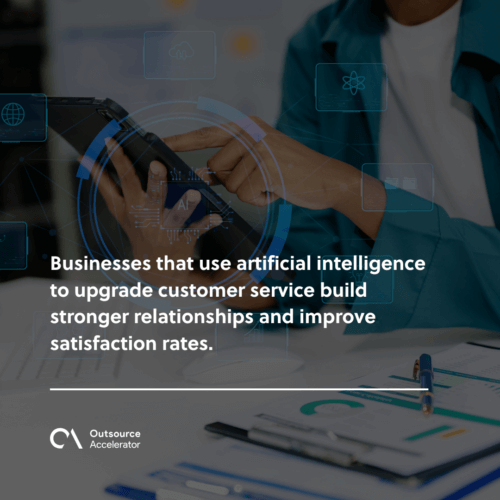
AI chatbots, recommendation engines, and support tools lift every customer touchpoint. They reply faster, personalize the message, and run all day and night. So firms that use AI to upgrade customer service build stronger ties and raise satisfaction.
Drives innovation and growth
AI opens the door to new products, sharper marketing, and better use of budget. In addition, it lets firms test, adapt, and scale ideas without wasting time or money. As a result, early movers often lead their sector because they stay agile. Watching current AI trends helps teams spot the next useful shift early.
Reduces long-term costs
AI tools need money upfront. Still, they usually lower costs over time. Automation trims labor spend, cuts costly errors, and improves how resources are used. So firms that adopt artificial intelligence early often see stronger returns as the systems scale.
Knowing the right way to adopt AI starts with the most important AI implementation dos and don’ts.
8 AI implementation dos and don’ts
AI can be a game-changer for any business. Still, success depends on how you roll it out. Many firms rush in without a plan. As a result, they hit setbacks that drain time and money.
To avoid the common traps, follow the right steps and skip the big mistakes. Here are the AI implementation dos and don’ts to guide a smart approach.
1. DO: Start with a clear business problem
AI should solve a real problem, not just follow a trend. First, name the specific tasks where automation, prediction, or analysis could help. This focus raises your odds of a useful, measurable result.
2. DO: Involve stakeholders early
Good rollouts need input from leaders, tech teams, and end users. So bring them in early. Early teamwork aligns goals, sets fair expectations, and heads off costly confusion later.
3. DO: Invest in the right infrastructure
AI tools need solid support, such as clean data, computing power, and easy integration. Build that base first. As a result, you avoid delays and the system can grow as needed. A strong foundation also keeps performance steady as data piles up over time.

4. DO: Start small, then scale
Begin with a pilot to test the model, gather feedback, and fix issues. Once it proves useful, grow it step by step into more teams. So this phased path lowers risk. It also builds team confidence before any big spend.
5. DON’T: Rely on AI without quality data
AI is only as good as the data it reads. Incomplete, old, or biased data leads to poor results. For this reason, strong data governance matters. First, clean the data, then deploy.
6. DON’T: Treat AI as a one-time setup
AI models need ongoing checks and updates. A one-and-done mindset often leads to drift and weak ROI. So assign a team to review and tune the system on a regular basis.
7. DON’T: Ignore ethical or compliance concerns
Using AI without weighing legal, privacy, or ethical implications can backfire. So build for transparency, security, and fairness. As a result, you lower both regulatory and reputational risk.
8. DON’T: Overpromise results too soon
AI is not magic. It takes time to learn, adapt, and deliver value. So avoid wild goals in the early stages. Instead, report progress based on data, not hype.
Following these AI implementation dos and don’ts helps businesses cut risk and unlock the full value of AI. In addition, it keeps teams focused on outcomes rather than tools.
Execute a successful AI implementation with Acquire Intelligence
Acquire Intelligence helps global firms leverage the full potential of AI through strategy, implementation, integration, and governance services. Its team builds tailored roadmaps, deploys automation, and embeds ethical standards so businesses run smarter. This model mirrors how AI-augmented BPO services blend people with smart tools.
Global brands also gain from Acquire Intelligence’s delivery centres and specialists across the Philippines, the Dominican Republic, the US, and Australia.
So you can gain real value from AI without disruption or guesswork. Reach out to Acquire Intelligence for a discovery call. Its experts will work with your team to drive efficiency, cut wasted effort, and scale with care.
Frequently asked questions about AI implementation
Here are quick answers to common questions about AI implementation dos and don’ts.
How long does AI implementation take?
It depends on scope. A focused pilot can show results in a few months. However, a full rollout across many teams is a multi-stage effort, not a single project. So plan in phases and review each one.
What is the first step in AI implementation?
Start with a clear business problem. First, name the task you want to fix or speed up. Then check whether automation, prediction, or analysis fits. This keeps the project grounded in real value.
How much does AI implementation cost?
Costs vary with data, tools, and scale. There is an upfront spend on infrastructure and setup. Still, automation often lowers long-term costs as the system matures. So weigh both the startup and the running numbers.
Can small businesses use AI?
Yes. Many AI tools now come as affordable, ready-made services. So a small team can start with one use case, such as support or scheduling. Then it can scale as results come in.
What is the most common AI implementation mistake?
Relying on poor data is the biggest one. Weak data leads to weak output, no matter how good the model is. For this reason, clean your data and set clear governance before you deploy.






 Independent






