
Top 7 AI call quality assurance tools for contact centers

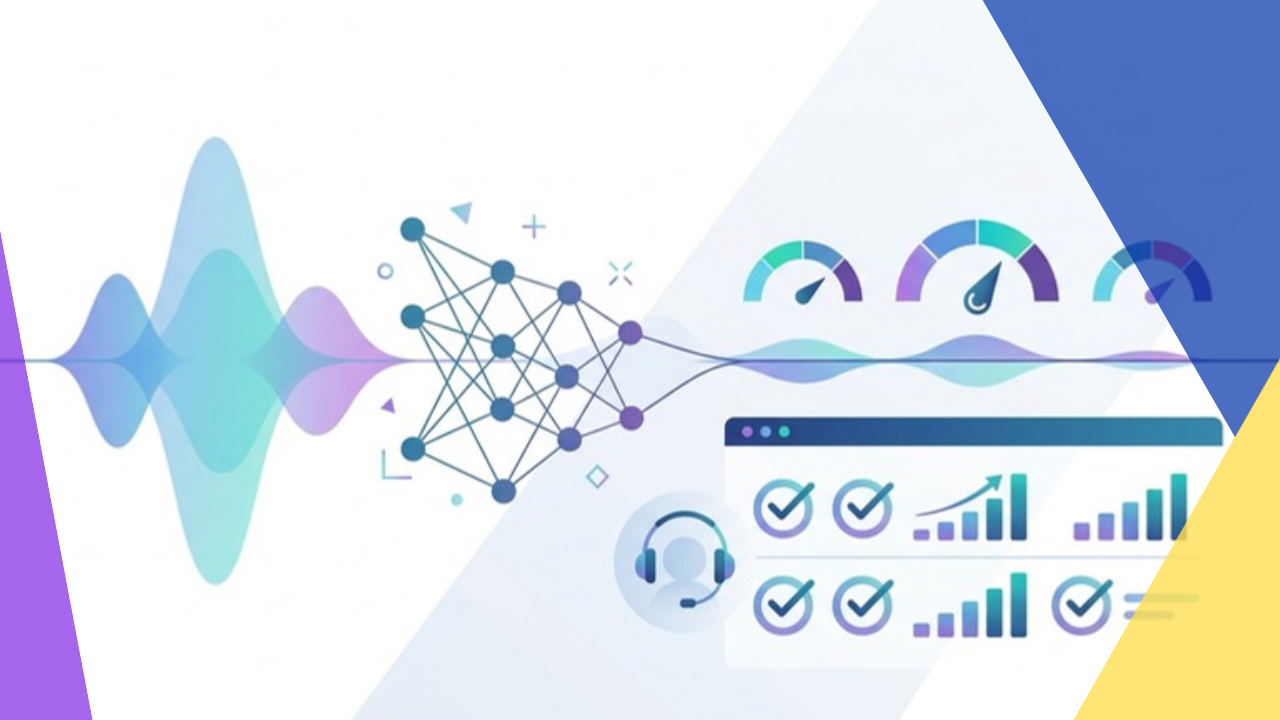
- AI call quality assurance tools transcribe and score customer conversations automatically, instead of reviewing a small manual sample.
- They help companies vet outsourcing partners and help BPO providers prove performance on measurable terms.
- Options range from enterprise suites such as NICE, Verint, and Genesys to specialist platforms such as Observe.AI, CallMiner, Cresta, and Level AI.
- The right choice depends on call volume, channels, languages, and how deeply you need coaching tied to scoring.
AI call quality assurance tools use speech recognition, natural language processing, and machine learning to transcribe, analyze, and score customer conversations at scale.
Traditional QA teams listen to only a small share of calls by hand. These platforms can review every interaction and grade it against a consistent rubric.
That shift matters for two audiences. Companies exploring outsourcing want proof that a partner keeps service quality high. BPO and contact center providers need to defend margins and win contracts on measurable results.
The efficiency case is real. A widely cited study from the National Bureau of Economic Research on generative AI in customer support found that access to an AI tool raised issues resolved per hour by about 14 percent.
Pairing that gain with automated scoring is what makes modern call center quality monitoring practical. Below are seven established tools worth knowing.
List of AI call quality assurance tools
1. Observe.AI
Observe.AI is a conversation intelligence platform built for contact centers and support teams. It transcribes voice and chat interactions, then scores them against configurable quality scorecards. The system flags coaching moments and surfaces trends across agents and queues.
2. CallMiner
CallMiner is one of the longer established names in speech and text analytics. Its Eureka platform analyzes interactions across calls, email, chat, and social channels. Teams use it for sentiment analysis, compliance monitoring, and root-cause insight into why customers reach out.
3. NICE
NICE offers automated quality management within its CXone cloud suite. Its analytics interpret intent, sentiment, and outcomes, and can score interactions without manual sampling. The platform is widely deployed by large enterprises and outsourcing providers alike.
4. Verint
Verint provides quality and compliance capabilities inside its wider workforce engagement portfolio. Automated quality management scores interactions and routes exceptions to human reviewers. Speech and text analytics help supervisors spot compliance risk and coaching gaps early.
5. Genesys
Genesys Cloud CX includes native speech and text analytics alongside contact center routing. It can transcribe calls, detect sentiment, and support automated evaluations. Because the analytics are built into the platform, teams avoid stitching together separate systems.
6. Cresta
Cresta applies generative AI to contact center conversations both in real time and after the fact. It offers agent assist prompts during live calls and automated quality scoring afterward. The platform suits teams that want coaching and QA to draw on the same data.
7. Level AI
Level AI concentrates on automated quality assurance and customer experience analytics. Its models can evaluate a large share of interactions against custom criteria rather than a small sample. Reporting highlights agent performance, customer sentiment, and emerging issues.
How to choose an AI call QA platform
Begin with coverage. Decide which channels you handle and whether you need to score every interaction or a broad sample. Confirm the platform supports your languages and telephony setup before anything else.
Then weigh depth against fit. Enterprise suites bundle QA with routing and workforce tools, while specialist platforms often go deeper on scoring and coaching. Sentiment features are improving quickly, and academic research on speech emotion recognition confirms it is now used to assess the quality of client and agent interactions. If sales calls matter too, compare notes with dedicated conversation intelligence software.
AI call QA tools compared
| Tool | Category | Often suits |
|---|---|---|
| Observe.AI | Conversation intelligence and auto QA | Support and sales teams |
| CallMiner | Speech and text analytics | Compliance-heavy operations |
| NICE | Enterprise CX suite | Large enterprises and BPOs |
| Verint | Workforce engagement suite | Regulated, high-volume centers |
| Genesys | Cloud contact center platform | Teams wanting all-in-one tooling |
| Cresta | Generative AI assist and QA | Real-time coaching use cases |
| Level AI | Automated QA and CX analytics | QA teams scaling beyond sampling |
Frequently asked questions
Here are common questions from buyers and providers evaluating AI call QA tools.
What are AI call quality assurance tools?
They are software platforms that transcribe customer calls and other interactions, then analyze and score them automatically. They apply the same evaluation criteria a human reviewer would, but across far more conversations and in a fraction of the time.
How are they different from manual QA?
Manual QA relies on supervisors sampling a handful of calls per agent each month. AI-driven quality assurance software can score a much larger share of interactions and apply criteria consistently, which reduces bias and blind spots.
Can these tools really score every call?
Many platforms are designed to evaluate all recorded interactions, not just a sample. Accuracy still depends on clean audio, solid transcription, and well-defined scorecards, so most teams keep human reviewers in the loop for edge cases and calibration.
Are these tools useful for BPO providers?
Yes. Providers use them to demonstrate consistent quality to clients, coach agents at scale, and flag compliance issues before they escalate. Transparent scoring can become a competitive advantage during contract renewals and new pitches.
Key takeaways
AI call QA has moved from a niche experiment to a practical way to raise service quality across every conversation.
- Automated scoring lets teams review far more interactions than manual sampling allows, with more consistent criteria.
- Enterprise suites suit organizations that want QA bundled with routing and workforce tools, while specialists go deeper on coaching.
- Both outsourcing buyers and BPO providers benefit, since measurable quality supports better decisions and stronger contracts.
- Match any tool to your channels, languages, and volume, and keep humans involved for calibration and judgment calls.






 Independent





