
Your first 30 days with an outsourced call center


This article is a submission by Hit Rate Solutions, a Philippines-based inbound and outbound call center serving SMEs across the U.S., Canada, and Australia. Hit Rate Solutions specializes in cold calling, appointment setting, lead generation, customer support, and virtual assistance.
A new support team needs more than a script and a start date. Agents must understand your business, use your systems, recognize exceptions, and know when to request help.
The first month establishes these foundations and tests whether the shared workflow works during real customer interactions.
A practical call center onboarding plan gives the client and provider clear responsibilities for preparation, training, launch, and review. Some operations need longer than thirty days.
Use the following framework to guide progress, with readiness determining when the service moves forward.
Before day 1: agree on the scope
Define what the outsourced call center will handle: service hours, communication channels, inquiry types, and authorized actions. Identify responsibilities that remain with your internal team.
For example, agents may schedule appointments while managers approve exceptions to booking rules.
Assign a primary contact on each side and establish a backup for urgent questions. Agree on reporting frequency and select measures tied to your goal. If reducing unanswered calls is the priority, document current missed calls, coverage gaps, and callback procedures before launch.
Stage deliverable: An approved scope, named contacts, escalation rules, and baseline measures that both teams understand.
Days 1 to 7: prepare information and access
Build a searchable knowledge base with service descriptions, business hours, approved answers, booking instructions, and escalation contacts. Explain common exceptions and identify who owns updates.
Agents need a dependable source of current information rather than several conflicting documents.
Arrange individual system access through your approved process. Depending on the scope, agents may need a phone platform, customer relationship management system, ticket queue, or calendar.
Test permissions before live work, including transfers, appointment changes, and note entry. Establish how access will be changed or removed when assignments end.
Stage deliverable: Current instructions and tested access for every assigned agent, with outstanding setup issues recorded and assigned to an owner.
Set documentation and follow-up rules
Decide what agents must record after each interaction. Notes should explain the reason for contact, the action taken, and the next step. Define reporting categories clearly so agents classify similar interactions consistently.
Show examples of complete records during call center onboarding. Specify where notes belong, who receives follow-up tasks, and when those tasks need attention.
If teams use different systems, explain how information moves between them and how conflicting updates are resolved.
A message marked urgent has little value unless someone knows where to find it and what response is expected.

Days 8 to 14: train through realistic scenarios
Effective call center training connects business knowledge with execution. Agents should practice finding information, explaining approved answers, completing system actions, and documenting outcomes. Use fictional or appropriately anonymized examples that follow your information-handling rules.
Include routine requests and exceptions. Ask agents to explain why they chose an action, especially when a request requires escalation. This reveals misunderstandings that script reading alone may miss.
For appointment scheduling, a practical exercise might require an agent to book an available slot, reschedule it correctly, document the change, and escalate a request outside approved booking rules. Check each step within the actual workflow.
Stage deliverable: Completed practice scenarios, documented feedback, and corrected instructions for any gaps discovered during training.
Confirm readiness before live work
Agree on the capabilities agents must demonstrate before handling customers. These should include accurate information, correct system use, complete notes, and proper escalation. Set standards appropriate to the assigned service.
When an agent struggles, determine whether the cause is a skill gap, unclear instructions, or a system problem. Correct the cause and reassess the task. The client should confirm that the approved process works as intended.
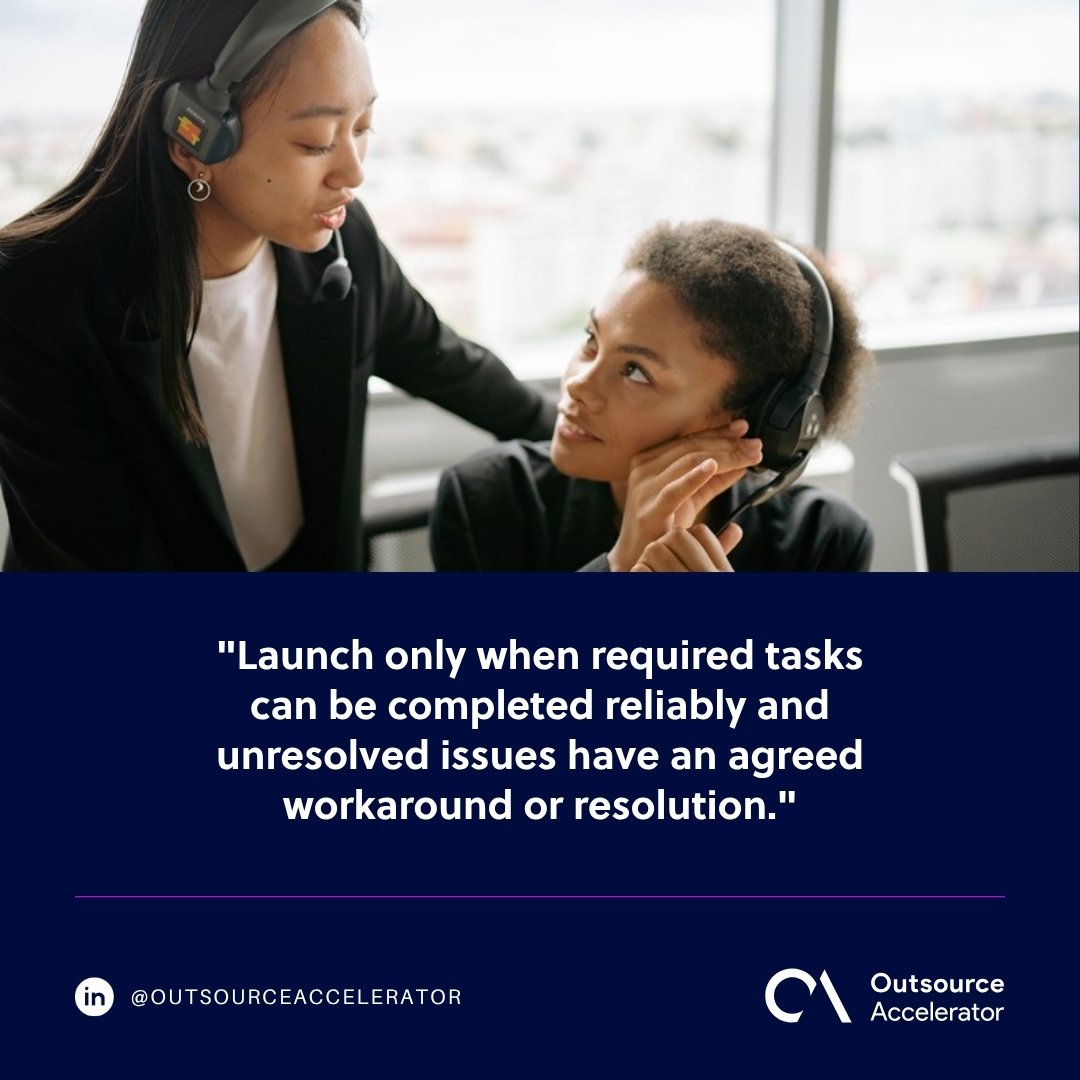
Launch only when required tasks can be completed reliably and unresolved issues have an agreed workaround or resolution.
Days 15 to 21: launch with active oversight
Start with a workload the team can supervise effectively. This might involve selected hours, a limited queue, or defined inquiry types. The aim is to observe real interactions and correct early problems before expanding responsibility.
Use quality assurance to review relevant calls or records through approved methods.
Assess accuracy, communication, documentation, and completion of the requested action. Provide specific feedback and update the knowledge base when recurring questions expose missing instructions.
Maintain a launch issue log with the problem, customer impact, responsible owner, and next action. Client contacts should remain available for decisions requiring internal authorization.
Stage deliverable: Reviewed interactions, coaching notes, and an issue log showing which launch problems remain open.
Check handoffs between teams
Follow a sample of customer requests through the entire process. A correctly recorded message can still fail if nobody reviews the queue. A transferred call can create frustration if the receiving employee is unavailable.
Confirm that each handoff includes sufficient information, a responsible recipient, and a response expectation. Establish backup contacts and handling instructions for unavailable staff. Check whether customers receive promised updates.
These reviews test the shared workflow and help prevent requests from becoming stranded between the provider and the client.
Days 22 to 30: review and decide what comes next
Review call center performance metrics against the original goal. Depending on scope, useful measures include response time, unanswered inquiries, booking accuracy, completed requests, and quality scores. Define each consistently and consider workload and inquiry complexity when interpreting results.
Document the improvements needed, responsible owners, and review dates. Expand scope when agents complete assigned tasks accurately, handoffs function reliably, and outstanding issues have workable plans. Where evidence is insufficient, continue the controlled launch and schedule another review.
Stage deliverable: A documented improvement plan and an agreed decision to maintain, adjust, or expand service.
Keep instructions after onboarding. Review process changes with agents, update escalation contacts, and revisit performance regularly so the operating routine remains useful as customer needs evolve.
Plan your call center onboarding
Planning to outsource call handling or customer support? You can reach a provider to discuss your systems, expected workload, and coverage needs. Use that conversation to define responsibilities, identify preparation requirements, and develop a practical call center onboarding scope for your business.






 Independent





