
What is healthcare IT support?

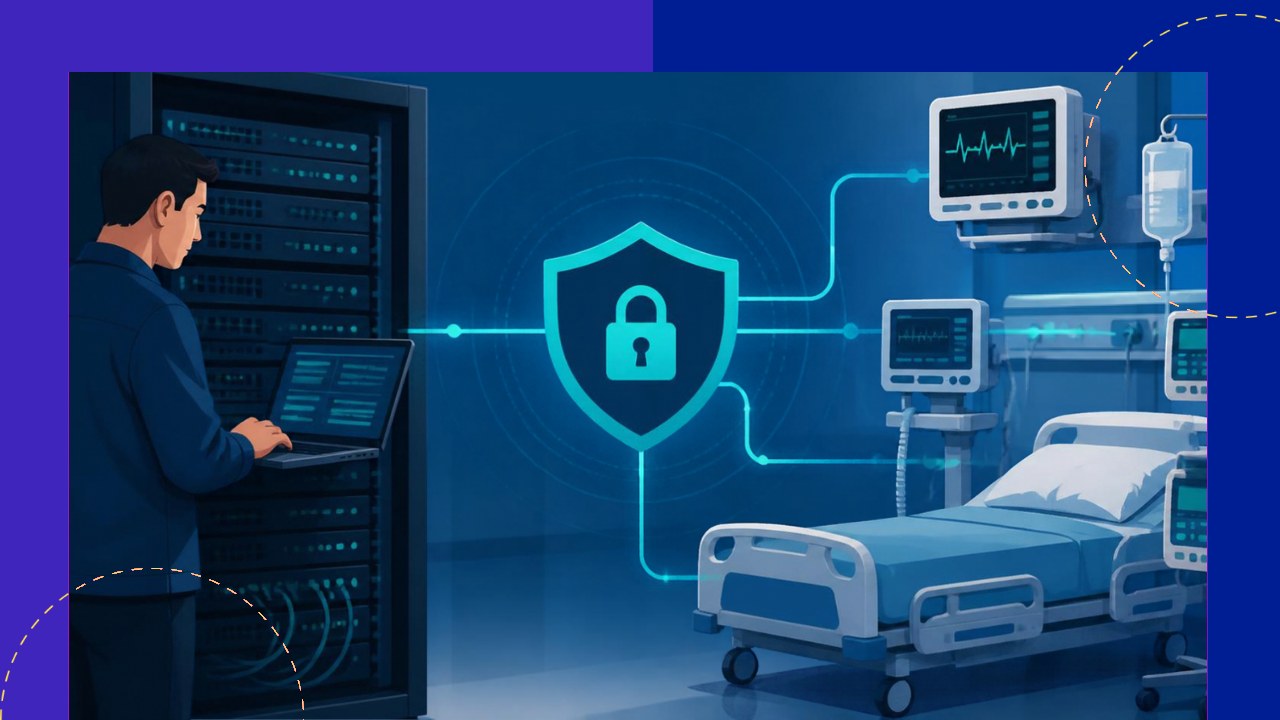
- Healthcare IT support keeps clinical systems, medical devices, and networks running so care never stalls at the point of service.
- The work spans a service desk, EHR support, infrastructure, and security safeguards, usually organized into tiers of increasing skill.
- Many practices and hospitals extend their in-house team with an outsourcing provider to cover nights, weekends, and specialist gaps.
Healthcare IT support is the team that keeps a provider’s computer systems working, safe, and easy to use. When a nurse cannot open a chart, or a scanner freezes mid-shift, this team gets it running again. The stakes are high here. Downtime can stall patient care, not just paperwork.
It helps to draw a line early. This is IT support, not clinical support staff. These people fix the computers, the software, and the wiring behind care. They are not medical assistants or scribes. They keep the tools running so clinicians can focus on patients.
Below we cover what the work involves, how teams set it up, and why many providers share the load with an offshore partner.
What healthcare IT support actually covers
The scope is broad, and it grows every year as more of care goes digital. Most teams group the work into a few core areas.
Clinical systems and EHR uptime
The electronic health record, or EHR, sits at the center of daily work. Support teams keep it fast, online, and set up right. They fix login failures, broken order sets, and errors in the links to labs, pharmacy, or imaging. Clinicians live in these screens, so even short outages hit every department.
Medical devices and endpoints
Modern facilities run on connected hardware. Infusion pumps, monitors, imaging machines, and barcode scanners all touch the network. IT support helps set up, update, and fix these devices, often with the biomedical team. A poorly set-up device can leak data or simply stop reporting. So this work matters for both safety and security.
Network and infrastructure
Wi-Fi, servers, backups, and cloud connections form the backbone. When any piece fails, systems slow or go dark. The federal cybersecurity agency notes that the healthcare sector is “highly dependent on fellow sectors for continuity of operations and service delivery, including Information Technology.” A steady backbone is a patient-safety issue.
Service desk and end-user help
The service desk is the front door. Staff call, email, or chat when something breaks. Agents then log the ticket, sort it, and either fix it or pass it on. The Bureau of Labor Statistics describes this role plainly: support specialists “either maintain computer networks or provide technical help directly to computer users.” A good desk clears most issues fast and keeps clinicians moving.
Cybersecurity and HIPAA safeguards
Security runs through everything above. Support teams control who can log in, fix known holes, watch for intruders, and act fast when something goes wrong. These duties map to the HIPAA Security Rule. NIST guidance stresses that electronic health information “must be protected against reasonably anticipated threats, hazards, and impermissible uses and/or disclosures.” In plain terms, IT support is a first line of defense for patient data.
How support is organized into tiers
Most teams sort work by how hard it is. This keeps simple fixes cheap and saves the experts for tough problems. The model is often called tiered support. It usually runs from Tier 1 to Tier 3.
| Tier | Who handles it | Typical issues |
|---|---|---|
| Tier 1 | Service desk agents | Password resets, printer faults, basic EHR questions, ticket logging |
| Tier 2 | Specialists and technicians | Device configuration, interface errors, application problems, network glitches |
| Tier 3 | Engineers and architects | Server failures, security incidents, integrations, root-cause fixes |
A clear handoff path matters. When Tier 1 cannot fix an issue fast, it moves up with good notes. That way the next person does not start over. Well-run tiers cut wait times and ease clinician frustration.
Why providers outsource part of the function
Staffing a full support team around the clock is hard and costly. Nights, weekends, and holidays still need cover, because care never stops. Hiring scarce IT talent is also tough for smaller practices. So many providers extend their team with an outsourcing provider.
The usual pattern keeps big decisions in-house. It hands routine tickets and after-hours cover to an offshore partner. This mirrors how healthcare software firms already lean on outsourced technical teams to grow their own help desks. Broader admin gaps get filled the same way, through remote support roles that plug into current systems.
Whatever you outsource, one rule holds. Any partner that touches patient data must sign a business associate agreement. They must also meet the same safeguards you do. Check their security as closely as you check their price.
What good healthcare IT support looks like
Strong programs share a few habits. They track uptime and fix times, not just ticket counts. They apply updates quickly and test changes before rollout. Above all, they treat every clinician request as time away from a patient, and they answer fast.
Weak programs react only when something breaks. They let backups go untested and updates pile up. That gap is where outages and breaches take hold. The fix is steady, well-run support, whether it sits in-house, offshore, or both.
Frequently asked questions
How is healthcare IT support different from general IT support?
The core skills overlap, but the limits do not. Healthcare adds HIPAA rules, connected medical devices, and little room for downtime during care. A frozen store checkout loses a sale. A frozen chart can delay treatment. Support staff also need to know clinical workflows. That way a fix does not break an order or a medication record.
What response times should a hospital expect?
Providers usually set these targets in a service level agreement. Issues that halt care, such as an EHR outage, often need a reply within minutes, with round-the-clock cover. Smaller tickets may allow a day or two. Agree the tiers and clocks in writing before you sign. Then check the vendor’s record against them.
Can outsourced IT support meet HIPAA rules?
Yes, when it is set up right. The partner must sign a business associate agreement and limit access to the minimum needed. They must also encrypt data and log activity for audits. Ask for recent security certificates and a clear breach-notice process. Compliance is shared, so your oversight does not end when you hand off the work.
How much should IT support cost?
There is no single figure. Size, systems, and cover hours all move the number. Small clinics may pay a set monthly fee per user or device. Hospitals run large in-house teams plus vendors. Rather than chase the lowest quote, weigh cost against risk. One outage or breach you avoid can dwarf a year of support fees.






 Independent





