
How to hire fast: Strategies to build a strong team faster

This article is a submission by Remote Employee, a Philippines-based offshore staffing and remote hiring company serving businesses across the U.S., UK, and Australia. Remote Employee provides dedicated offshore staff across customer service, accounting, IT support, creative and marketing, software development, and more.
Hiring fast sounds simple until you actually need to do it.
According to a LinkedIn 2025 survey, only around 3% of applicants, or roughly 3 out of every 100, were considered interview-worthy in 2024.
That means businesses aren’t just trying to attract more applicants. They’re competing for a much smaller group of qualified candidates, and those candidates usually aren’t waiting around for a slow hiring process.
If your goal is to hire fast without sacrificing quality, simply posting more jobs or adding more recruiters won’t necessarily solve the problem.
The truth is, a fast hiring process comes down to having the right people, systems, and recruitment strategy in place. You need to know exactly who you’re looking for, where to find them, and how to move them through the hiring process without unnecessary delays.
Here’s how to hire people fast while still finding employees who can stay, grow, and contribute to your business long-term.
Why it’s hard for companies to hire fast today
Even companies with experienced HR teams can struggle to hire quickly.
Recruiters are sourcing candidates, reviewing applications, coordinating interviews, following up with hiring managers, and trying to keep strong applicants engaged at the same time.
The problem is that traditional hiring processes weren’t always built for today’s competitive talent market. Here are some of the biggest reasons businesses struggle to hire employees fast.
1. Your local talent pool may be too small
Sometimes your recruitment process isn’t the problem. Your talent pool is.
If you’re recruiting from the same local market as every other company in your industry, you’re all competing for the same limited group of qualified professionals. That becomes even more difficult when you’re hiring for specialized roles.
You can improve job descriptions and streamline interviews, but there’s only so much you can do when the people you need simply aren’t available in your market. Expanding where you recruit can give you access to a much larger pool of qualified candidates.
2. Fewer qualified applicants can mean longer hiring cycles
Application volume doesn’t always equal candidate quality.
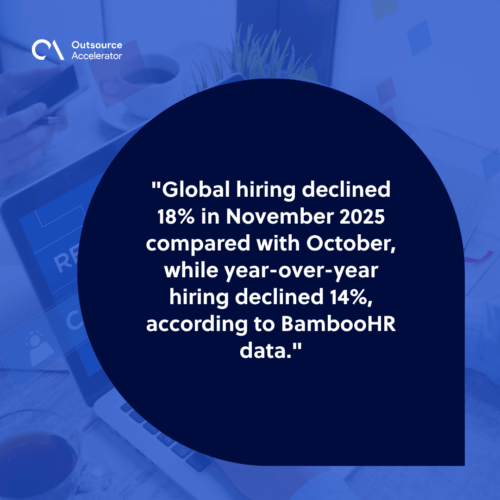
When fewer qualified candidates are available, every part of the hiring process becomes more important. Your job posting needs to reach the right people. Your screening process needs to identify qualified candidates quickly. And once you’ve found someone good, your hiring team needs to move.
3. Candidates are ghosting employers
Ghosting isn’t just something candidates experience.
Why does it happen? Candidates may accept another offer, lose interest, or become frustrated with a hiring process that takes too long. If a qualified candidate waits days for interview feedback or weeks for a final decision, there’s a good chance another employer is already talking to them.
4. HR teams are already overloaded
Hiring is rarely the only responsibility sitting on an HR team’s desk. Recruiters and HR professionals may be managing multiple open roles while handling onboarding, employee questions, compliance, workforce planning, and other responsibilities.
That creates a bandwidth problem. Even when your team knows how to hire fast, they may not have enough time or resources to consistently source, screen, interview, and follow up with candidates.
5. Your competitors may be moving faster
Strong candidates don’t stay available forever. In fact, top candidates can be off the market within around 10 days.
If your interview process takes several weeks, you may be losing qualified people before you even reach the offer stage. That’s why speed matters. Not because you should rush your hiring decision, but because unnecessary delays give your competitors more time to hire the people you want.
The 5 biggest myths about how to hire quickly
If you want to quickly hire employees, it’s also important to understand what doesn’t work. Hiring fast isn’t about cramming more candidates into your pipeline or skipping important steps. It’s about making the entire hiring process more efficient.
| Myth | What companies often believe | What actually happens |
|---|---|---|
| Myth 1: Posting jobs everywhere helps you hire fast. | More job boards mean more qualified applicants. | More applications can create more screening work if the applicants aren’t qualified. |
| Myth 2: Hiring more recruiters automatically speeds things up. | A bigger recruitment team means faster hiring. | If the talent pool is still limited, more recruiters may simply compete for the same candidates. |
| Myth 3: Fast hiring means lowering your standards. | Moving quickly means compromising on quality. | A streamlined process can remove delays while keeping the same screening and hiring standards. |
| Myth 4: Great candidates will wait. | Strong applicants will stay interested until you’re ready. | Top candidates often have several opportunities and may accept another offer first. |
| Myth 5: Global hiring makes recruitment slower. | Recruiting internationally automatically creates more complexity. | Access to larger talent pools and an experienced global recruitment partner can remove sourcing bottlenecks. |
The biggest mistake is assuming that doing more will automatically make recruitment faster. Sometimes you don’t need more, you need a better system.
What does a fast hiring process actually look like?
Companies that hire fast don’t simply tell recruiters to work faster; they remove friction from each stage of recruitment. That means looking at the entire process, from defining the role and sourcing candidates to scheduling interviews and making the final offer. Here’s what that can look like.
1. Build a talent pipeline before you need it
Starting from zero every time you need an employee will always slow you down. A stronger approach is to recruit continuously.
Keep track of previous applicants, referrals, passive candidates, and professionals who may be a good fit for future positions. Then, when a role opens, you already have a talent pipeline of people you can contact.
2. Start with pre-vetted candidates
Think about how much time your team spends reviewing applications that don’t meet the basic requirements. Pre-screening candidates before they reach the hiring manager can eliminate a huge amount of unnecessary work.
Your initial screening process should confirm things such as:
- Relevant experience
- Required skills
- Availability
- Communication ability
- Role-specific qualifications
The goal is simple: hiring managers should spend their time interviewing candidates who actually have a realistic chance of getting the job.
3. Screen for skills, not just résumés
A résumé can tell you where someone has worked. It doesn’t always tell you what they can actually do. Skills assessments, work samples, portfolios, structured questions, and role-specific evaluations can give you a clearer picture of whether someone can perform the job.
This can help you identify stronger candidates earlier instead of waiting until several interview rounds later.
4. Make interviews easier to manage
Scheduling shouldn’t be the reason you lose a candidate. Create a predictable interview process and make sure everyone involved knows their role.
If three people need to interview the candidate, decide whether those conversations really need to happen separately. If an interview doesn’t give you new information about whether someone can succeed in the role, ask yourself whether you need it at all.
5. Make offers faster
You found the right person, they passed the interviews, everyone agrees they’re a strong fit, then nothing happens for five days. This is where many businesses lose candidates.
If you’re serious about how to hire people fast, your offer and approval process needs to move just as quickly as your recruitment process. Speed is leverage when the candidate is also talking to other employers.
A fast hiring process isn’t rushed. It’s designed to remove the waiting.
How to hire people fast without sacrificing quality
One of the biggest hiring myths is that speed and quality work against each other. They don’t have to. You can move quickly while still properly evaluating candidates.
Replace long job descriptions with clear competency profiles
Before recruiting, define exactly what someone needs to know, do, and deliver. Focus on essential skills and outcomes instead of creating a huge wish list of qualifications.
Clearer requirements make it easier for candidates to determine whether they’re a fit and easier for recruiters to screen them.
Reduce unnecessary interview stages
More interviews don’t automatically mean better hiring decisions. Every interview should answer a question that helps you decide whether to hire the candidate. Once you have enough information to make a confident decision, move.
Recruit before the vacancy becomes urgent
Don’t wait until your team is already overwhelmed. If you know you regularly hire accountants, customer support professionals, marketers, developers, or administrative staff, build those pipelines before you desperately need someone.
Expand beyond your local market
You can have the best hiring process in the world and still struggle if your local candidate pool is too small. This is where global recruitment can completely change your options.
How global talent can help you hire quickly
Hiring globally gives businesses access to professionals they may never find through local recruitment alone. Instead of relying on a single city, state, or even country, companies can recruit from established talent markets around the world.
That can give you:
- Access to larger talent pools
- More candidates with specialized skills
- Faster candidate sourcing
- Consistent pipelines for frequently hired roles
- More flexibility when local talent is limited
- Access to professionals with experience working with international companies
Offshore recruitment can be especially useful for businesses that know what they need but simply can’t find enough qualified candidates locally.

The challenge, of course, is building the recruitment infrastructure. You still need to source candidates, screen them, conduct interviews, manage employment requirements, onboard new hires, and support them once they’re working.
That’s why some businesses choose to work with a global recruitment agency. Instead of building an offshore recruitment operation from scratch, you can tap into an existing talent network and hiring infrastructure.
Why businesses are looking to the Philippines for talent
The Philippines has become one of the world’s leading outsourcing and offshore staffing markets. Businesses hire Filipino professionals across accounting, customer service, IT, marketing, operations, administrative support, healthcare support, and many other roles.
For companies struggling with limited local talent pools, this creates another option. You aren’t limited to the people who happen to live within driving distance of your office. And you’re not simply hiring freelancers for short-term projects.
With the right offshore staffing model, businesses can build dedicated teams of professionals who work as long-term extensions of their existing workforce. This can be especially valuable when you need to scale but your internal recruitment team doesn’t have the bandwidth to continuously source and screen candidates.
When does an offshore staffing partner make sense?
You don’t necessarily need a staffing partner to recruit globally. If you already have an international recruitment team, local market expertise, HR infrastructure, and the resources to manage offshore employees, you may be able to handle the process internally.
But that’s a lot to build just to access a new talent market. An offshore staffing partner can help manage areas like:
- Candidate sourcing
- Initial screening
- Interview coordination
- Recruitment support
- Onboarding
- Employment administration
- HR support
- Workforce management
You still interview candidates and decide who joins your team. The difference is that you’re not spending weeks building the recruitment infrastructure required to find them.
Companies like Remote Employee® help businesses access skilled professionals in the Philippines while supporting the recruitment, employment, HR, and infrastructure needed to build long-term offshore teams. For an overloaded HR department, that can mean spending less time searching for candidates and more time choosing the right one.
Hiring faster starts with changing how you recruit
Hiring fast sounds easy in theory. In reality, even businesses with strong HR teams can struggle when they’re recruiting from a limited talent pool, sorting through unqualified applications, coordinating too many interviews, or waiting too long for internal decisions.
You don’t fix that by rushing. You fix it by building a better hiring system. Make the role clearer, screen candidates earlier, simplify interviews, make decisions faster, and build talent pipelines before you need them.
And if your local market still isn’t giving you enough qualified candidates, expand the market. Global and offshore recruitment can give businesses access to a much larger pool of skilled professionals without forcing internal HR teams to build an international recruitment function from scratch.
That’s where an offshore staffing partner like Remote Employee® can help. Businesses can access pre-vetted professionals in the Philippines while receiving recruitment, HR, and workforce support throughout the process.
Because ultimately, knowing how to hire fast isn’t about finding shortcuts. It’s about removing the things that were slowing you down in the first place.






 Independent





