
Should you invest in outsourced customer loyalty programs?

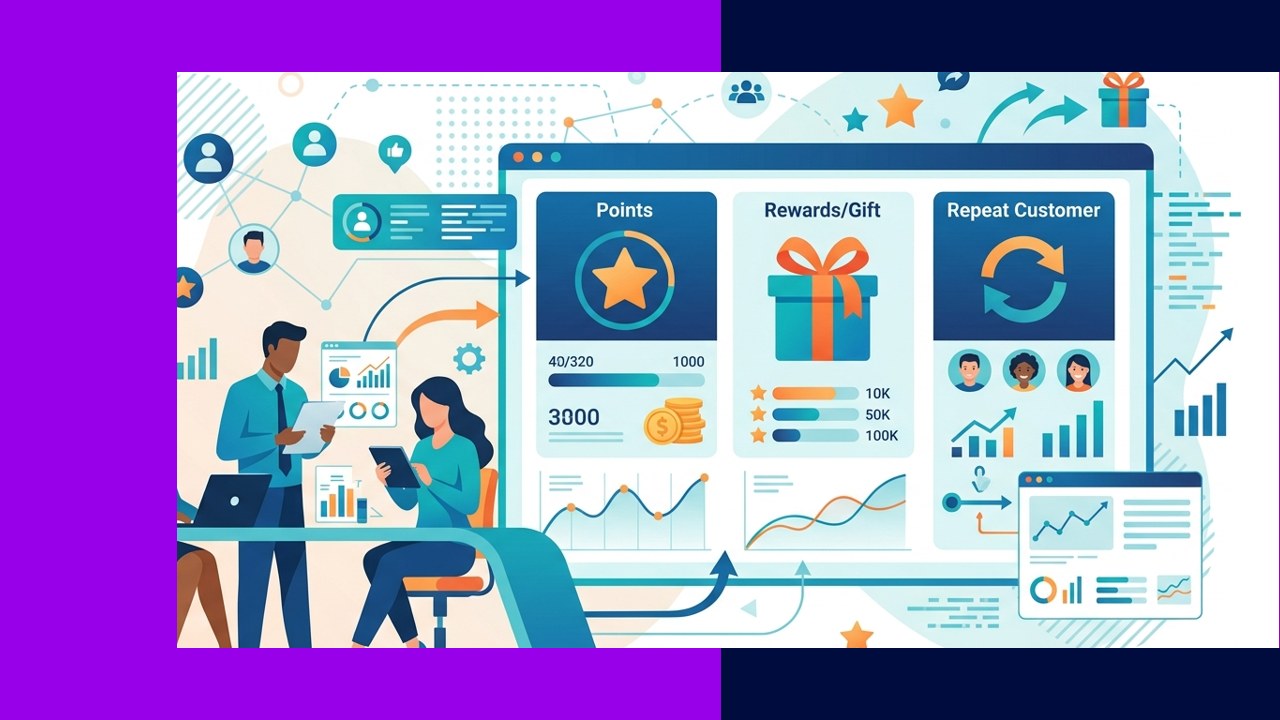
- Outsourced customer loyalty programs hand program design, enrollment, rewards fulfillment, member support, and analytics to a specialist partner.
- The main draws are expertise, scale, and lower cost, while the main risks are brand control, data security, and customer trust.
- Decide by the numbers: if a small lift in retention pays for the program, outsourcing the operation often makes sense.
Outsourced customer loyalty programs let a specialist partner run the rewards engine that keeps your customers coming back. Instead of building the machinery in-house, you hand off the design, the day-to-day operation, or both. The partner may handle enrollment, points and tiers, rewards fulfillment, member support, and reporting.
This guide explains what outsourcing a loyalty program really means. It weighs the benefits against the risks. Then it gives you a simple way to decide whether the investment is worth it for your business.
What outsourcing a loyalty program actually covers
A loyalty program is more than a points card. It is a system that tracks behavior, issues rewards, and measures results. When you outsource it, a partner takes on some or all of that system. You still own the brand and the strategy, but the partner runs the moving parts.
Most engagements cover a familiar set of functions. You can pick a few or hand over the whole stack.
Program design and strategy
The partner helps set the earning rules, the tiers, and the reward mix. Good design ties rewards to the actions you care about, such as repeat purchases or referrals. Weak design just gives away margin.
Enrollment and member management
The partner signs members up and keeps their records clean. This includes consent, preferences, and profile data. Clean data matters, because it feeds every later decision.
Rewards fulfillment
Someone has to ship the gift card, apply the discount, or book the perk. Fulfillment is operational work at scale. A partner with logistics and vendor networks often does it faster and cheaper.
Member support and analytics
Members ask questions when points go missing or rewards fail. Support handles those tickets. Analytics then shows what drives repeat business and what does not. As a result, you learn which rewards actually move behavior.
Why loyalty ties directly to retention economics
Loyalty programs exist to protect one thing: repeat revenue. The math behind retention is why they earn budget. Keeping a customer is far cheaper than winning a new one. According to Harvard Business Review, “acquiring a new customer is anywhere from five to 25 times more expensive than retaining an existing one.”
The upside compounds, too. The same research notes that “increasing customer retention rates by 5% increases profits by 25% to 95%.” In short, small retention gains can produce large profit gains. A well-run program nudges those gains along.
The reverse is also true. Cutting corners on service erodes the very loyalty you are trying to build. A separate Harvard Business Review analysis warns that “this short-termism erodes loyalty, reducing the value customers create for the firm.” For a deeper look at the mechanics, see this explainer on how customer retention works and why it pays.
The benefits of outsourcing the program
Outsourcing appeals to teams that want results without building a department. The gains fall into four areas.
First, expertise. A specialist has run dozens of programs and knows what works. Second, scale. The partner already has the technology, the fulfillment network, and the support staff. Third, cost. You convert fixed overhead into a predictable service fee. Fourth, focus. Your team stays on the product and the brand instead of managing points and reward logistics.
There is a speed benefit as well. A partner can launch in weeks, not quarters, because the platform already exists. For customer-facing work, many firms pair the program with broader customer service outsourcing so support and loyalty run together.
The risks you must manage
Outsourcing loyalty is not risk-free. Three concerns deserve real attention.
Brand control comes first. The program speaks to your best customers, so tone and reward quality must match your brand. A misfire reflects on you, not the vendor. Second is data. Loyalty programs hold personal and behavioral data. You must confirm how the partner stores, secures, and uses it. Third is trust. If rewards fail or support lags, members feel the friction directly.
These risks are manageable with clear contracts and oversight. However, they are not optional to think about. Weak governance turns a loyalty asset into a liability.
In-house versus outsourced loyalty programs
The right model depends on your scale, your data rules, and your appetite for operational work. This table compares the two paths on the factors that matter most.
| Factor | In-house program | Outsourced program |
|---|---|---|
| Upfront cost | High: platform, staff, and setup | Low: partner supplies the platform |
| Time to launch | Months, often a quarter or more | Weeks, using existing systems |
| Brand control | Full and direct | Shared: needs clear guidelines |
| Data ownership | You hold everything | You own it, partner processes it |
| Scalability | Limited by your headcount | High: partner scales fulfillment |
| Best fit | Large teams with strict data rules | Lean teams wanting speed and scale |
How to decide whether to invest
Start with the numbers, not the pitch. Work out what a single point of retention is worth to you. Then ask whether the program can plausibly earn that lift. If a small retention gain covers the fee, the case is strong.
Next, weigh your constraints. Run through this short checklist before you commit.
1. Confirm the retention math
Estimate your current retention rate and average customer value. If a modest lift pays back the cost, keep going.
2. Check your data readiness
You need clean customer data to target rewards. If your data is messy, fix that first, because a program cannot rescue bad records.
3. Test the partner on control and security
Ask how they protect data and how they honor brand rules. Vague answers are a red flag.
4. Start small and measure
Launch a limited program and track redemption and repeat rates. Scale only when the data proves it works.
Frequently asked questions
What does an outsourced customer loyalty program include?
It usually covers program design, member enrollment, rewards fulfillment, member support, and analytics. You can outsource all of these functions or only the ones you lack. You keep ownership of the brand and the strategy.
Does outsourcing a loyalty program save money?
It often does, because you skip the platform build and the dedicated staff. You pay a service fee instead of carrying fixed overhead. The savings are real when the partner already has scale and fulfillment networks.
Who owns the customer data in an outsourced program?
You should retain ownership of the data at all times. The partner processes it on your behalf under the contract. Confirm storage, security, and deletion terms before you sign anything.
How do I know if the investment is worth it?
Model the retention lift the program needs to break even. If a small, believable gain covers the fee, the investment is sound. Start with a pilot and let the redemption data guide the next step.
Key takeaways
- Outsourced loyalty programs pass design, enrollment, fulfillment, support, and analytics to a specialist partner while you keep the brand.
- The economics are compelling, because retaining customers costs far less than acquiring new ones and small retention gains lift profit sharply.
- The real risks are brand control, data security, and customer trust, so demand clear contracts and oversight.
- Decide with the math: confirm the retention lift, check your data, vet the partner, then pilot before you scale.






 Independent





