
Predictive analytics in HR: a step-by-step checklist

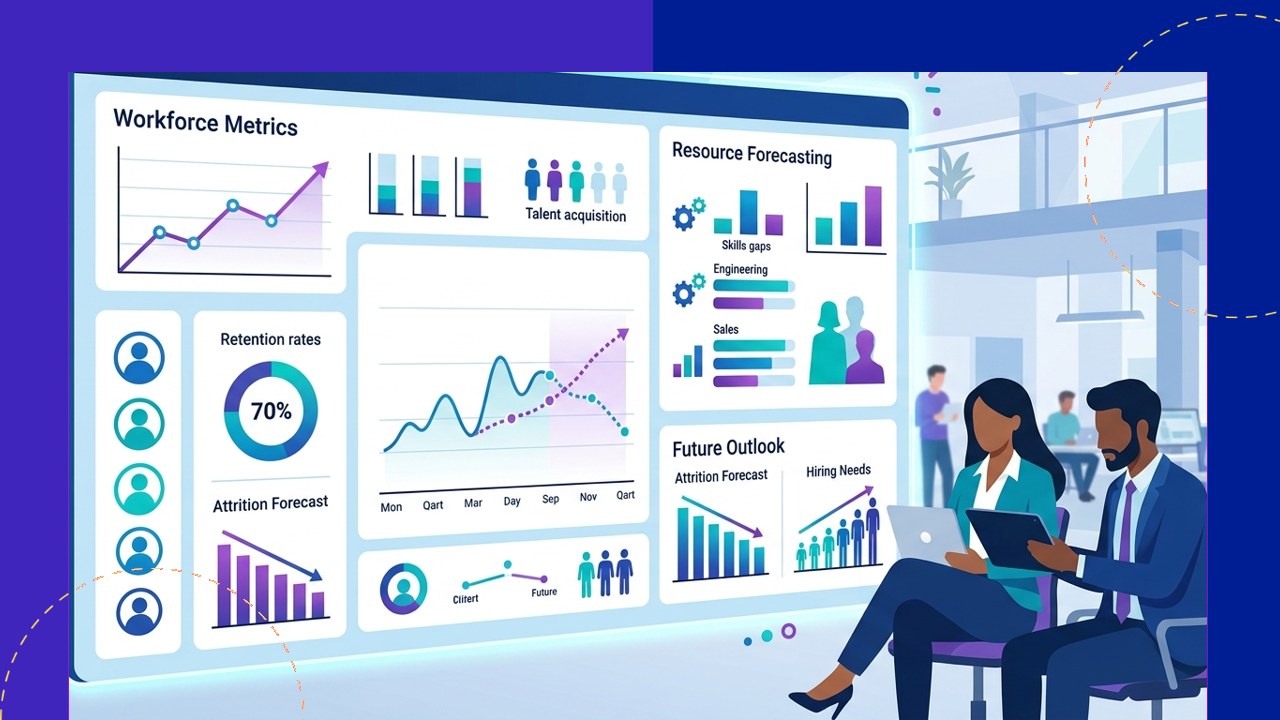
- Predictive analytics in HR uses past and present workforce data to forecast events like attrition, hiring needs, and performance.
- A clear question, clean data, and a fairness check matter far more than a fancy model.
- Start with one pilot, act on the results, then measure the impact before you scale.
Predictive analytics in HR turns employee data into forecasts you can act on. Instead of reacting to problems, your team spots them early. For example, you can flag flight-risk staff, plan headcount, and sharpen hiring long before a gap appears.
The idea sounds complex, but the process is not. You define a question, prepare your data, and test a simple model. Then you check it for bias, pilot it, and act on what you learn.
This checklist walks through each step in order. It also covers the top use cases and shows which data answers which HR question.
A step-by-step checklist for predictive analytics in HR
Work through these steps in sequence. Each one builds on the last, so do not skip ahead.
1. Define the question you want to answer
Start with a specific business question, not a tool. For example, “Which support agents are likely to quit in the next 90 days?” A sharp question keeps the whole project focused. It also tells you exactly which data you will need.
2. Gather and clean your data
Pull data from your HRIS, payroll, applicant tracking system, and engagement surveys. Then clean it. Remove duplicates, fix gaps, and standardize formats across sources. Messy data produces weak forecasts, so this step often takes the most time. In short, quality beats quantity here.
3. Pick your metrics and model
Choose the outcome you want to predict and the signals that drive it. A simple model, such as logistic regression, works well for a first project. You do not need deep learning to get value. Because simple models are easier to explain, they also build trust with managers.
4. Check privacy, fairness, and bias
Predictive models can repeat past bias if you let them. So test outcomes across gender, age, and ethnicity before you trust a score. Protect personal data and follow your local privacy rules. According to SHRM research on responsible use of people analytics, “Only 3 percent believe their organization is very well prepared to deal with the potential lack of transparency around how AI makes decisions.” Governance is not optional.
5. Run a small pilot
Test your model on one team or one location first. Keep the scope tight and the timeline short. A pilot proves value and surfaces problems while the stakes stay low. As a result, you learn fast without a costly rollout.
6. Act on the insights
A prediction only helps if someone acts on it. So give managers clear next steps for each result. For example, a high flight-risk score might trigger a stay interview or a workload review. Insight without action wastes the whole effort.
7. Measure results and iterate
Track whether your actions changed the outcome. Did turnover drop in the piloted team? Compare the results against a baseline. Then refine the model, retrain it on new data, and expand to more teams.
Match the HR question to the right data
Every HR question needs its own signals. The table below maps common questions to the data that answers them. Use it to plan step two of the checklist.
| HR question | Data and signals that answer it |
|---|---|
| Who is likely to leave soon? | Tenure, engagement scores, pay ratios, absence trends, manager changes |
| How many people will we need next year? | Growth targets, historical headcount, attrition rate, seasonal demand |
| Which candidates will succeed in the role? | Assessment scores, past performance of similar hires, source of hire |
| Where are our skill gaps? | Skills inventory, training records, project needs, promotion history |
| Which teams are at burnout risk? | Overtime hours, leave balances, survey sentiment, workload data |
Top use cases for predictive analytics in HR
Three use cases deliver the fastest return. Each one solves a costly, everyday problem.
Turnover prediction
Retention is the most common starting point for predictive analytics in HR, and for good reason. A model scores each employee on flight risk. Managers then focus their retention effort where it counts. Because you act before people resign, you cut both replacement cost and lost knowledge. You can strengthen these signals with a structured approach to measuring employee performance with HR analytics.
Workforce planning
Predictive models forecast future headcount needs. They combine growth targets with historical attrition and seasonal demand. As a result, you hire at the right time rather than scramble in a crisis. Strong forecasts also protect the budget, since one of the clear benefits of workforce planning is fewer costly staffing surprises.
Recruitment
Analytics can rank candidates by likely fit and success. It also shows which hiring sources produce your best performers. So you spend your recruiting budget where it works. However, recruitment models need the closest fairness review, because bias here affects people’s careers directly.
Frequently asked questions
What is predictive analytics in HR?
It is the practice of using past and present workforce data to forecast future events. Common forecasts include attrition, hiring needs, and performance. In short, it helps HR shift from reacting to planning ahead.
Do we need a data scientist to start?
Not always. Many HR platforms now include built-in predictive features. A simple first project can run on a spreadsheet and a clear question. You can add specialist skills, in-house or through an offshore partner, as your needs grow.
How do we keep the model fair?
Test every model across protected groups before you use it. Review the signals that drive each score, and remove any that stand in for a protected trait. Document your checks, and repeat them as the data changes.
How long before we see results?
A focused pilot can show value in one to three months. Full rollout takes longer, because you need clean data and manager buy-in. Start small so you can prove the case quickly.
Key takeaways
- Predictive analytics in HR forecasts attrition, hiring needs, and performance from data you already hold.
- A clear question and clean data drive results more than any single model.
- Check every model for privacy and bias before you trust its scores.
- Pilot on one team, act on the insight, then measure and scale.






 Independent





