
Hiring offshore medical coders for healthcare providers

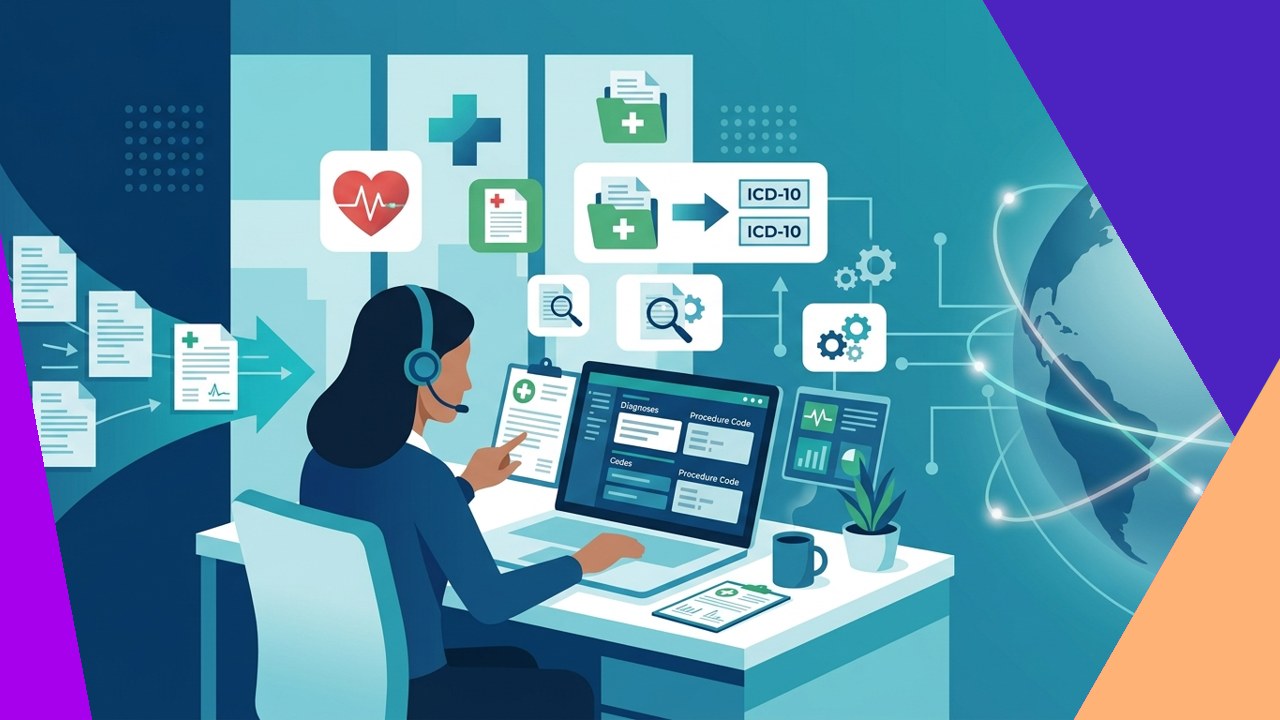
- Hiring offshore medical coders helps US and Western healthcare providers manage coder shortages, clear claim backlogs, and cut labor costs without lowering accuracy.
- Look for AAPC or AHIMA credentials (such as CPC or CCS), proven ICD-10, CPT, and HCC experience, and documented HIPAA and PHI safeguards.
- A structured hiring and management process, with clear quality checks and secure access controls, is what separates a reliable coding partner from a risky one.
Hiring offshore medical coders for healthcare providers has moved from a cost experiment to a mainstream staffing strategy for hospitals, physician groups, billing companies, and revenue cycle firms.
A persistent shortage of certified coders in the United States, combined with rising claim volumes and tighter margins, has pushed many organizations to build coding teams overseas.
Offshore coders translate clinical documentation into the standardized codes that drive reimbursement. Done well, this keeps claims moving, reduces denials, and frees in-house staff for higher-value work.
This guide explains why providers hire offshore coders, what they do, which credentials to check, how compliance works, and how to hire and manage them.
Why healthcare providers hire offshore medical coders
The core driver is a supply gap. The US Bureau of Labor Statistics reports that medical records specialists earned a median wage of “$50,250 in May 2024”, with about 14,200 openings projected each year through 2034. Demand consistently outpaces the pool of certified domestic coders.
Offshore hiring answers several pressures at once:
Cost savings
Offshore coders in the Philippines or India typically cost a fraction of a US in-house coder once salary, benefits, and overhead are included. Savings of 40 to 60 percent are common, which matters when coding is a high-volume, ongoing function.
Backlog and coverage
Time zone differences let offshore teams work claims overnight, so charts coded during the day in Manila are ready when a US office opens. This clears backlogs and shortens the accounts receivable cycle.
Scalability
An offshore partner can add certified coders as patient volume grows or during seasonal spikes, without the long recruiting cycles a domestic hire usually requires. Many providers pair coding with broader healthcare outsourcing services such as billing and transcription.
What offshore medical coders actually do
Medical coders read clinical notes, operative reports, and lab results, then assign the codes payers require to process a claim. The main code sets are:
- ICD-10: diagnosis codes that describe the patient’s condition.
- CPT: procedure codes for the services and treatments delivered.
- HCC: hierarchical condition category coding used in risk-adjusted and value-based payment models.
Strong coders also flag incomplete documentation, query physicians when notes are unclear, and stay current as code sets and payer rules change each year. Accuracy here directly affects revenue and audit risk.
Credentials to look for
Certification is the clearest signal of competence. Two bodies dominate the field: the AAPC and the American Health Information Management Association (AHIMA).
AAPC certifications
The Certified Professional Coder (CPC) is the most widely recognized outpatient credential. Specialty certifications also exist for areas such as risk adjustment (CRC) and evaluation and management.
AHIMA certifications
The Certified Coding Specialist (CCS) signals strong inpatient and hospital coding skills, while the CCA is an entry-level credential. Many offshore coders hold both AAPC and AHIMA certifications.
Beyond the credential, ask about audited accuracy rates (95 percent or higher is a reasonable benchmark), specialty experience that matches your case mix, and ongoing training on annual code updates.
In-house vs offshore medical coders
Both models can work. The right choice depends on volume, budget, and how much control you need in-house.
| Factor | In-house coders | Offshore coders |
|---|---|---|
| Cost per coder | Full US salary plus benefits and overhead | Roughly 40 to 60 percent lower, all-in |
| Coverage | Local business hours only | Overnight turnaround across time zones |
| Scalability | Slow, tied to local hiring market | Fast, partner adds certified staff on demand |
| Compliance control | Direct oversight in-house | Contractual, needs BAAs and audited safeguards |
| Best fit | Small volume or highly complex specialty coding | High, steady volume and backlog clearance |
Compliance and data security
Offshore coders handle protected health information, so HIPAA obligations follow the data wherever it goes. The offshore partner becomes a business associate, and a signed business associate agreement (BAA) is mandatory before any records change hands.
The US Department of Health and Human Services notes that the HIPAA Privacy Rule “protects all ‘individually identifiable health information’ held or transmitted by a covered entity or its business associate”, in any form. That standard does not weaken offshore.
Practical safeguards to require: encrypted connections, restricted and logged system access, no local storage of PHI on coder devices, regular HIPAA training, and independent security certifications such as SOC 2 or HITRUST. Verify these before signing, not after.
How to hire and manage offshore medical coders
1. Define scope and volume
Document your specialties, monthly chart volume, code sets, and turnaround targets so partners can staff and price accurately.
2. Vet the partner
Check certifications, audited accuracy, client references, and security posture. A short paid pilot on real charts reveals quality faster than any sales deck. Reviewing how other firms structure offshore staffing arrangements can help set expectations.
3. Set quality and reporting standards
Agree on accuracy thresholds, denial rate targets, and a monthly audit sample. Build a physician query process so coders can resolve unclear documentation quickly.
4. Manage as an extension of your team
Hold regular calls, share payer rule changes, and give feedback on denials. Coders who understand your workflows and specialties improve steadily over time.
Key takeaways
- Coder shortages, cost pressure, and claim backlogs are the main reasons US and Western providers hire offshore medical coders.
- Prioritize AAPC or AHIMA certification, proven ICD-10, CPT, and HCC experience, and audited accuracy of 95 percent or higher.
- HIPAA follows the data offshore, so a signed BAA plus encryption, access controls, and security certifications are non-negotiable.
- Treat the offshore team as an extension of your staff with clear scope, quality standards, and regular feedback.






 Independent





