
Why tech-enabled accountants are reshaping the finance function

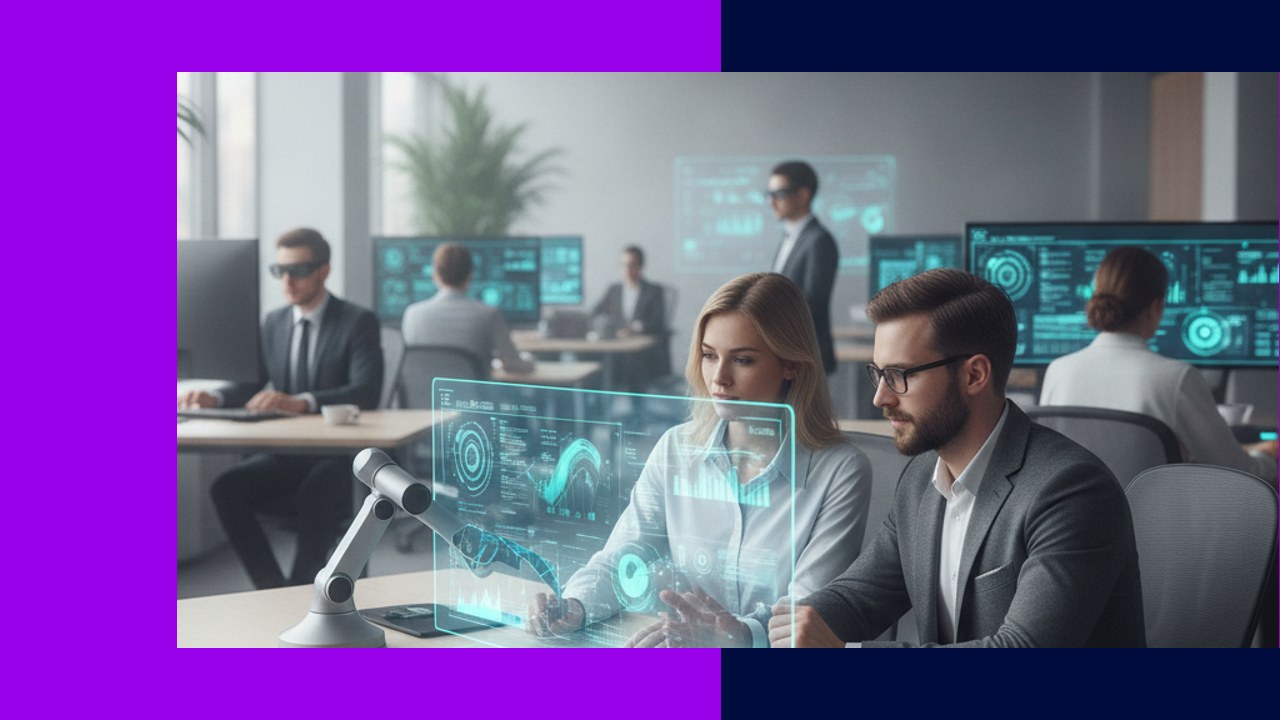
- Tech-enabled accountants use automation, cloud platforms, and AI to handle routine processing, then spend their time on analysis and advice.
- Roughly six in ten finance functions now run AI, which has moved the value of an accountant from data entry to interpretation.
- Firms and finance teams that lean into this shift report faster closes, lower costs, and more advisory revenue.
- For companies weighing in-house versus outsourced support, the technology stack matters as much as the headcount.
A tech-enabled accountant is a finance professional whose work is built around software rather than slowed by it.
Instead of keying invoices and chasing reconciliations by hand, these accountants run cloud ledgers, automated workflows, and AI assistants that clear the repetitive load, then they apply judgment to what the numbers actually mean.
The role has not been replaced by technology; it has been rebuilt on top of it. For both outsourcing providers and the companies that hire them, understanding what tech-enabled accountants do, and what they cost, is now part of any serious finance decision.
What tech-enabled accountants actually do differently
The day-to-day mix has changed more than the job title suggests. Routine processing still happens, but software does most of it while the accountant supervises and interprets.
A traditional accountant might spend the bulk of a week on data entry, transaction coding, and month-end mechanics. A tech-enabled accountant pushes those tasks to automated rules and reviews the exceptions instead.
Adoption is no longer a fringe experiment: a 2025 Gartner survey of CFOs and senior finance leaders found that 59 percent of finance functions were already using AI, roughly steady against the prior year.
The practical effect is a reordering of the workday. Bank feeds import transactions automatically, rules code most of them, and the accountant’s attention goes to the handful that do not fit.
A reconciliation that once meant ticking hundreds of lines becomes a review of the few the system could not match. That shift frees hours for higher-value work: cash-flow forecasting, scenario planning, and direct conversations with business owners about what the figures imply.
3 technologies behind tech-enabled accountants
The label rests on a fairly specific toolkit. Each layer removes friction somewhere in the close, the audit trail, or the client relationship.
1. Cloud accounting platforms
Cloud ledgers replaced the file-on-one-machine model that used to lock data to a single desk. They give a business and its accountant the same real-time view, which makes remote and outsourced arrangements practical rather than awkward. Collaboration, version control, and automatic backups come built in, and updates reach every user at once instead of waiting on a manual install. The same record can be open to a bookkeeper in one country and a controller in another, with every change time-stamped and attributable.
2. Process automation
Automation handles the rules-based middle of accounting: matching payments to invoices, flagging duplicates, posting recurring entries, and routing approvals. It is the layer most firms adopt first because the payback is obvious and the error rate drops fast. Once a rule is set and tested, it runs the same way every time, which removes the small transcription mistakes that compound into messy month-ends. The accountant’s job moves from doing the task to designing and auditing the rule that does it.
3. AI and analytics
AI is the newest and least settled piece. It drafts summaries, categorizes transactions, and surfaces anomalies a human might miss in a large ledger. Usage is widening quickly: in a McKinsey survey of CFOs, 44 percent reported using generative AI across more than five use cases in 2025, up from just 7 percent a year earlier. The technology assists; the accountant still signs off, because a model that mislabels a transaction or invents a figure is the user’s problem, not the tool’s.
Why firms are investing in tech-enabled accountants
The business case is not abstract. It shows up in close times, cost lines, and the kind of revenue a firm can charge for.
Faster month-end closes and reduced tax-prep time are the most cited operational wins. The bigger strategic gain is advisory: when processing is automated, accountants can sell guidance instead of just compliance, and advisory work carries higher margins than bookkeeping ever did.
A firm that bills for forecasting, benchmarking, and decision support escapes the price war that commodity bookkeeping invites.
There is a hiring angle too. Skilled accountants increasingly expect to work with modern tools, and firms still running manual processes struggle to compete for talent.
Younger staff in particular treat clean automation as a baseline, not a perk, and walk from roles that bury them in repetitive entry. Our guide to attracting top accountants covers how the work environment, including its technology, shapes recruitment.
Tech-enabled accountants in outsourcing arrangements
Outsourcing and technology reinforce each other. Cloud platforms make distance irrelevant, and automation makes a remote team’s output auditable in real time.
For companies hiring help, the practical question shifts. The decision is less about where the accountant sits and more about which tools the provider runs and how cleanly those tools connect to your systems.
A provider whose team lives in the same cloud ledger you do can close your books without a single file changing hands.
A primer like outsourcing accountants 101 is a useful starting point for what to expect from a modern engagement, and weighing it against in-house cost is its own exercise covered in our outsourced accounting overview.
For providers, the technology stack has become a differentiator. Offering qualified people is table stakes; offering people who work fluently inside a client’s cloud environment, and who can prove their controls, is what wins the contract.
Traditional vs tech-enabled accountants
The contrast below shows where the two models diverge in practice.
| Dimension | Traditional accountant | Tech-enabled accountant |
|---|---|---|
| Core tools | Spreadsheets, desktop software | Cloud platforms, automation, AI |
| Time on data entry | High | Low, mostly exceptions |
| Primary value | Accurate records | Analysis and advice |
| Reporting speed | Periodic, often delayed | Real-time or near it |
| Outsourcing fit | Harder to coordinate | Built for remote work |
Frequently asked questions about tech-enabled accountants
A few recurring questions come up when firms and clients weigh the shift.
Are tech-enabled accountants replacing traditional accounting jobs?
Not directly. Automation removes tasks, not the profession. The work is moving up the value chain toward analysis and advisory, and accountants who adopt the tools tend to be more in demand, not less.
Do small businesses need tech-enabled accountants?
Most already benefit from one, often without naming it. Any business on cloud accounting software with automated bank feeds is using a tech-enabled approach, and the smaller the team, the more those saved hours matter.
Is outsourcing to a tech-enabled provider secure?
It can be, provided the provider uses recognized controls. Look for standards such as ISO 27001 or relevant data-protection compliance, and confirm how client data is stored and accessed before signing.
What skills define a tech-enabled accountant?
Beyond core accounting knowledge, the differentiators are comfort with cloud platforms, the ability to set up and audit automated workflows, and the judgment to question what AI-generated output is telling them.
Key takeaways
The shift to tech-enabled accountants is less a trend than the new baseline for the profession.
- The role now centers on interpretation and advice, with software handling routine processing.
- Cloud platforms, automation, and AI form the stack that defines tech-enabled work.
- Firms gain faster closes, lower costs, and higher-margin advisory revenue.
- When outsourcing, evaluate a provider’s technology and security as closely as its people.






 Independent





