
Top 5 insurance compliance challenges US agencies will face in 2026

This article is a submission by Fusion Business Solution (P) Ltd.-FBSPL. Fusion Business Solution (P) Ltd. (FBSPL) is a Udaipur, India-based company providing Business Process Outsourcing, management, consulting, and IT services, with operations in New York, USA.
What are the top insurance compliance challenges US agencies face in 2026?
The top insurance compliance challenges are multi-state rule complexity, manual processes and human error, heavy documentation demands, data security pressure, and new AI risks.
- Rules differ by state, so multi-state agencies juggle many deadlines at once.
- Manual tracking leads to missed renewals and audit gaps.
- Data breaches and AI tools add fresh risk that regulators watch closely.
The rules for US insurance agencies keep getting more complex. From shifting state laws to stricter consumer standards, agencies must manage many insurance compliance challenges at once. At the same time, they still need to run smoothly and keep client trust.
For multi-state agencies, compliance means constant monitoring and clean records. Non-compliance can bring penalties, disruption, and lasting reputation damage. According to Fenergo, global regulatory penalties reached $4.6 billion in 2024, with U.S. regulators driving 95% of enforcement actions.
As oversight grows, agencies must rethink their approach. Instead of treating compliance as a reactive chore, smart firms build it into daily work. So by adopting structured insurance compliance management, investing in technology, and leaning on optimization and consultancy services, they can turn compliance into an edge. Many also explore insurance outsourcing to share the load.
5 key compliance pressures reshaping insurance agencies
Insurance agencies today face several structural compliance challenges. These issues come from rule complexity, weak processes, and sharper scrutiny from both regulators and customers.
1. Multi-state regulatory complexity
One of the biggest insurance agency compliance challenges is the fragmented rulebook in the US. Insurance regulation sits mainly at the state level. So each state sets its own licensing rules, reporting standards, and consumer protections.
For agencies working across many states, this creates a heavy burden. Teams must track license renewals, rule changes, and filings in dozens of states at once. Miss one deadline, and you risk fines or a license suspension. As a result, this fragmentation makes compliance especially hard for agencies expanding their reach. Strong compliance across jurisdictions becomes essential here.
2. Manual compliance processes and human error
Many agencies still rely on spreadsheets, email trails, and manual tracking. However, these outdated habits raise the risk of error and missed deadlines. Manual tracking often leads to:
- Expired licenses or appointments
- Missing documentation during audits
- Incomplete regulatory filings
- Delayed reporting to regulators
Human error can quickly turn into a violation. For this reason, Automating compliance workflows has become essential for accuracy.
3. Documentation and audit requirements
Regulators now expect detailed records of every transaction, decision, and client talk. Incomplete files can trigger scrutiny or Errors and Omissions (E&O) claims. For example, a missing client confirmation or a gap in policy records can start an investigation.
Because of this, agencies must build strong compliance practices so every policy transaction is recorded and auditable. Clear regulatory reporting routines help here too.
4. Data protection and cybersecurity compliance
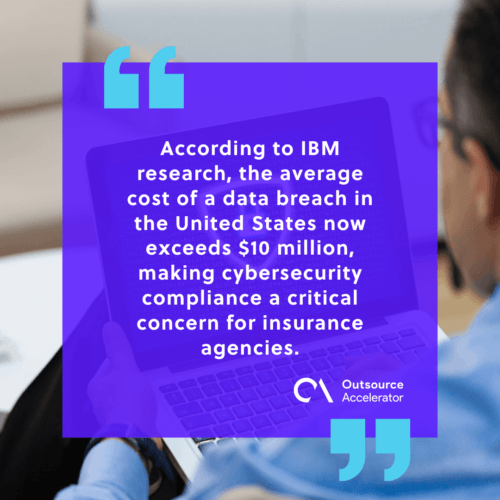
Insurance agencies hold large volumes of sensitive personal and financial data. As cyber threats grow, regulators keep tightening data rules. According to IBM research, the average cost of a US data breach hit a record $10.22 million in 2025. So cybersecurity compliance is now a critical concern.
Agencies must make sure their systems meet data protection laws, encryption rules, and breach notification steps. Otherwise, they face penalties and reputation damage. Many firms strengthen this area with data security best practices.
5. AI and digital technology compliance risks
Technology is spreading fast across insurance. While AI tools boost efficiency, they also bring new compliance risks. Automated systems used in underwriting, pricing, or claims must meet strict transparency standards.
In fact, regulators increasingly want proof that AI decisions are explainable and free from bias. So if an agency cannot explain an automated decision, it may face investigations or enforcement action.
Proven strategies to strengthen insurance compliance
Fixing these insurance compliance challenges takes more than reacting to each new rule. Instead, agencies must adopt proactive strategies to improve compliance and weave them into daily work.
1. Implement centralized compliance management systems
A centralized compliance platform lets agencies track obligations, licenses, and deadlines from one dashboard. Such systems help agencies:
- Monitor state licensing requirements
- Track agent certifications and renewals
- Maintain documentation for audits
- Generate automated compliance alerts
As a result, this structured approach cuts admin work and improves accuracy.
2. Develop standardized compliance workflows
Standardization is key to consistent compliance. So agencies should set clear workflows for:
- Policy issuance and renewal
- Documentation and record keeping
- Regulatory reporting
- Complaint management
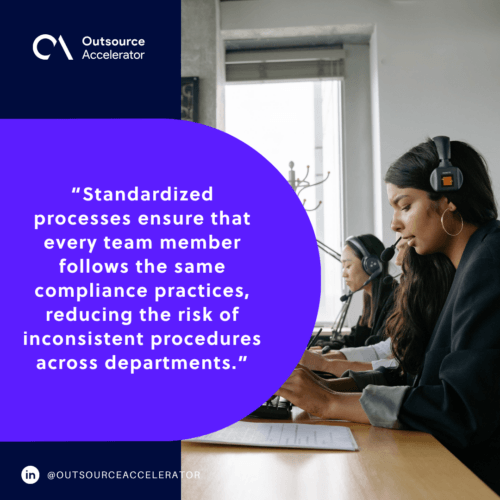
In turn, standard steps make sure every team member follows the same practices. This lowers the risk of patchy procedures across departments.
3. Invest in continuous compliance training
Compliance is not just the compliance officer’s job. Agents, account managers, and support teams must know the rules too. For that reason, regular training keeps staff updated on:
- State regulatory changes
- Licensing requirements
- Ethical sales practices
- Documentation standards
In short, well-trained teams make fewer costly mistakes.
4. Conduct regular internal compliance audits
Proactive internal audits help agencies spot gaps before regulators do. So reviews should focus on:
- License and appointment records
- Documentation completeness
- Customer communication logs
- Regulatory filings
These checks keep compliance strong even as rules change.
The role of licensed account managers in compliance
Licensed account managers play a crucial role in daily compliance. In effect, they act as the bridge between clients, carriers, and regulators. Their work often includes verifying documentation, keeping clean records, and matching each transaction to the rules.
The role of licensed account managers matters most in areas such as:
- Policy servicing and endorsements
- Documentation accuracy
- Customer disclosures and communication
- Compliance monitoring for renewals
Because they work directly with policy and client data, they act as the first line of defense against errors. As a result, agencies that invest in strong account managers cut their risk and improve service at the same time. Some firms extend this support through claims processing support as well.
Preparing for the future of insurance compliance
Compliance will stay a defining challenge in 2026 and beyond. Rising rule complexity, cyber risk, and documentation demands keep creating insurance compliance challenges across the industry.
However, agencies that act early can turn these challenges into opportunities. By building structured practices, strengthening account managers, and using optimization and consultancy services, they can create a robust framework for growth.
Ultimately, good compliance is not just about dodging penalties. Instead, it is about building trust with regulators, partners, and policyholders. So agencies that make compliance part of their culture will adapt faster and compete harder in a shifting market.
Frequently asked questions
What is the single biggest insurance compliance challenge for US agencies?
For most firms, multi-state complexity tops the list. Each state sets its own rules, so a growing agency must track many deadlines at once. As a result, one missed renewal can halt business in that state.
How does outsourcing help with insurance compliance challenges?
A specialist partner brings tools, trained staff, and current rule knowledge. So the agency gains accuracy without building a large in-house team. Meanwhile, leaders keep final control of key decisions.
Are AI tools safe to use in a regulated insurance agency?
They can be, with the right guardrails. Regulators want decisions that are explainable and free from bias. So agencies should document how each model works and review its output often.
How often should an agency run internal compliance audits?
Many firms review quarterly, with a deeper check once a year. However, high-growth agencies may need more frequent reviews. In short, the faster you expand, the more often you should audit.
What records do regulators expect agencies to keep?
They want clear records of transactions, policy decisions, and client communication. In addition, licensing and renewal files must be complete. So strong documentation habits are the best defense during an audit.






 Independent






