
The future of AI-augmented BPO services (and why you need them)

What are AI-augmented BPO services?
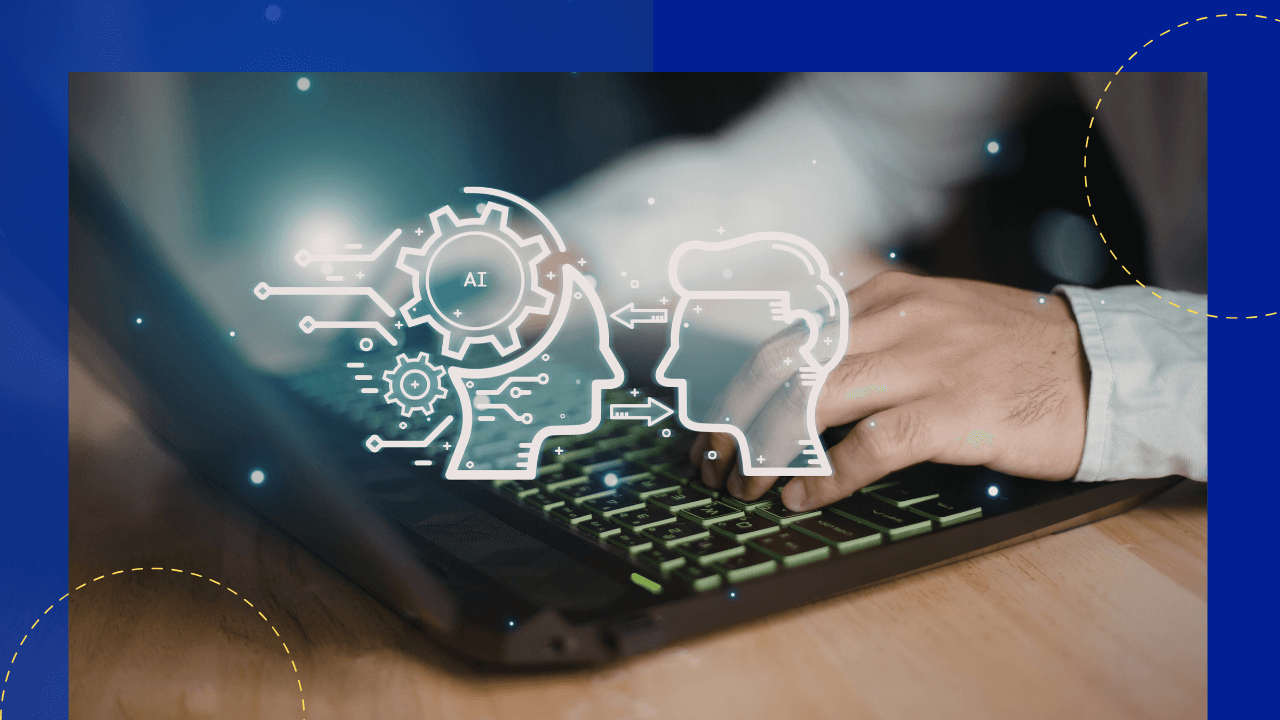
AI-augmented BPO services combine AI and automation in BPO with skilled human talent to deliver faster, smarter, and more scalable outcomes.
- AI handles high-volume, repetitive tasks like data entry and ticket routing.
- Human teams handle judgment, context, empathy, and complex cases.
- The result is faster turnaround, cleaner data, and lower costs.
Business process outsourcing has always been about efficiency. But today, efficiency alone is not enough.
Companies face rising customer expectations and huge data volumes. Meanwhile, they must move faster and keep costs in check. So traditional outsourcing models are being rethought.
As a result, the future belongs to AI-augmented BPO services. Here, smart automation works next to skilled people. Together, they deliver faster, smarter, and more scalable results.
This is not about replacing people with machines. Instead, it is about upgrading how work gets done.
The limitations of manual BPO models
Classic BPO models rely heavily on manual effort. This approach has worked for decades. However, cracks are now starting to show.
Manual processes are slower by nature. So they struggle to scale during peak demand. As a result, they often add errors when volumes spike.
Human-only workflows are also more prone to mistakes. This is especially true in repetitive tasks like data entry, ticket triage, or content review.
Then there is the cost factor. As labor markets tighten and wages rise, manual models get harder to sustain. This is true for firms that need round-the-clock work.
Add in demand for instant, personal service, and the point is clear. In short, manual BPO alone cannot keep up. This is why AI and automation in BPO now matter so much.
How AI-augmented BPO services transform operations
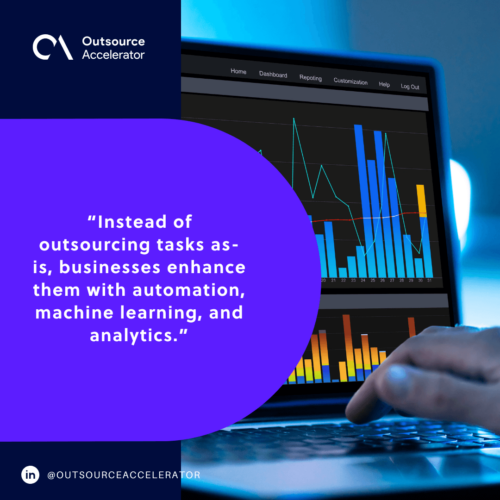
AI-augmented BPO services flip the old model around. Instead of outsourcing tasks as they are, businesses upgrade them. So they add automation, machine learning, and analytics.
A 2025 PwC Global AI Jobs Barometer found that AI exposure links to nearly fourfold productivity growth in the industries most reliant on AI.
AI handles what it does best. For example, it processes huge datasets, spots patterns, routes tasks, and automates routine work. Meanwhile, human teams step in where judgment, context, and empathy are needed.
As a result, turnaround gets faster, data gets cleaner, and outputs stay consistent.
These services also enable real-time gains. In fact, systems learn from each interaction and improve over time. So operations do not just scale; they actually get better as they grow. Many firms build this on intelligent automation that ties tools and teams together.
Key use cases of AI-augmented BPO services
Recent Gallup polling shows that 23% of U.S. employees use AI multiple times per week. Daily use of AI tools has also doubled year over year. So AI is fast becoming part of everyday work.
AI-augmented BPO services are already reshaping many areas:
- Customer support: AI chatbots and ticket classifiers handle first-line questions and routing. Meanwhile, human agents focus on complex, high-value cases. Agent-assist tools also give real-time tips, which speed up resolution. Smart artificial intelligence in customer service makes this possible.
- Trust and safety: Machine learning models flag risky content at scale. As a result, trained human moderators can review edge cases with more accuracy.
- Back-office operations: Document processing, invoice handling, and data checks get faster with AI. So expert teams work more reliably. Tools like robotic process automation take over repetitive steps.
- Data and AI enablement: Outsourced teams support data labeling, model training, and quality checks. These are key for companies building or scaling AI products.
These use cases show real value. In short, AI BPO services deliver more than cost cuts.
The human element in an AI BPO framework
Despite all the automation, people remain central to AI-augmented BPO services. After all, AI systems need training, oversight, and constant tuning. So this work needs skilled people.
Human teams provide context that AI cannot. For example, they read nuance, manage exceptions, and make judgment calls when data alone is not enough.
In customer-facing roles, empathy and clear talk still matter. Meanwhile, in data and trust work, ethical oversight and cultural understanding are key.
The strongest AI BPO services do not sideline people. Instead, they elevate them. Because AI removes routine tasks, people can focus on high-impact work that drives real value.
Business benefits of shifting to AI-augmented BPO services
Firms that embrace AI and automation in BPO gain a clear edge. Here are the main benefits.
1. Faster scaling without growing headcount
These services let businesses scale fast during demand spikes. So there is no scramble to hire or train large teams.
2. Lower costs with higher output
Automation cuts manual effort. Meanwhile, human teams focus on high-value work. As a result, output rises at a lower cost.
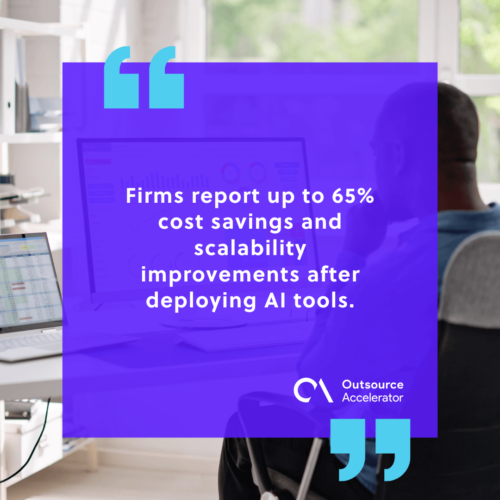
In fact, firms report up to 65% cost savings and scalability improvements after deploying AI tools.
3. Improved accuracy and consistency
AI cuts human error in repetitive tasks. As a result, data stays reliable and processes stay standard. So service quality holds steady.
4. Better customer experience
AI BPO services enable faster replies and smarter routing. Meanwhile, humans handle complex or sensitive cases. So customers get more personal service.
5. Actionable insights from operational data
AI turns daily workflows into data-rich systems. As a result, leaders get real-time insights. So they can optimize performance and make smarter choices. This is a core theme in the future of outsourcing trends.
Frequently asked questions about AI-augmented BPO services
What is the difference between traditional BPO and AI-augmented BPO?
Traditional BPO relies mostly on manual effort. AI-augmented BPO adds automation and machine learning on top. As a result, work gets faster, cleaner, and more scalable.
Will AI replace human workers in BPO?
No. AI handles routine, high-volume tasks. Meanwhile, people manage judgment, context, and empathy. So the best models pair AI with skilled human talent.
How much can AI and automation in BPO save?
Some firms report up to 65% cost savings after adding AI tools. However, results vary by task and setup. So savings depend on how well AI and people work together.
Which BPO tasks benefit most from AI?
Customer support, trust and safety, back-office work, and data services benefit most. These areas involve high volumes and repetitive steps. So AI adds speed and accuracy there.
Is AI-augmented BPO secure?
Yes, when the provider follows strong security and oversight rules. Human review and ethical checks also help. So data stays protected across workflows.
Key takeaways
- AI-augmented BPO services blend AI and automation in BPO with skilled human talent.
- Manual-only BPO struggles to scale, control costs, and avoid errors.
- AI handles repetitive work, while people manage judgment and complex cases.
- Benefits include faster scaling, lower costs, better accuracy, and richer insights.
- The strongest models elevate people rather than replace them.
Why Hugo is the ideal partner for AI BPO services
Building effective AI-augmented BPO services takes more than technology. It needs the right mix of skilled talent, operational experience, and AI readiness. This is where Hugo stands out.
Hugo builds remote teams that blend human expertise with AI-enabled workflows. From customer support and trust and safety to back-office operations and data/AI services, Hugo helps companies design outsourcing that is smart, flexible, and built to scale.
With a strong focus on quality, security, and performance, Hugo helps businesses move beyond traditional outsourcing. So they can step into the future of AI-powered service delivery.
Are you ready to modernize your operations with AI BPO services that work in the real world? Then Hugo is the partner to help make it happen.






 Independent





