
AI literacy and its impact on software development teams


What is AI literacy in software development?
AI literacy is the ability to understand core AI concepts, tools, and ethics so teams can build and use artificial intelligence well.
- It covers foundational knowledge, practical skills, critical thinking, ethics, and adaptability.
- AI-literate teams work faster, innovate more, and avoid costly mistakes.
- Strong AI literacy turns developers into strategic problem solvers.
Artificial intelligence is fast changing how businesses work across sectors. In fact, according to a recent Global Statistics study, 78% of companies worldwide now use AI in at least one function. This shows its shift from optional to essential.
Yet many firms still struggle. Often, they lack a clear grasp of AI basics and how to use them well. So this gap brings risks from flawed builds and missed chances.
At its core, AI literacy means knowing the key concepts, tools, and ethics of artificial intelligence. In turn, this equips teams to add real value to development and operations.
This article explores how AI literacy among software teams lifts collaboration, speeds innovation, and strengthens execution.
5 essential components of AI literacy in software development
Artificial intelligence is reshaping software development. As a result, teams can innovate faster and ship smarter solutions.
However, success takes more than using AI tools. It also needs a deep grasp of how AI works and how to apply it well. So building AI literacy gives software teams the skills to use AI responsibly and efficiently:
1. Foundational knowledge
Foundational knowledge covers core AI concepts, algorithms, and programming frameworks. Developers need a grasp of machine learning, neural networks, and data structures. With this base, teams can judge solutions well and build reliable systems.
2. Practical application
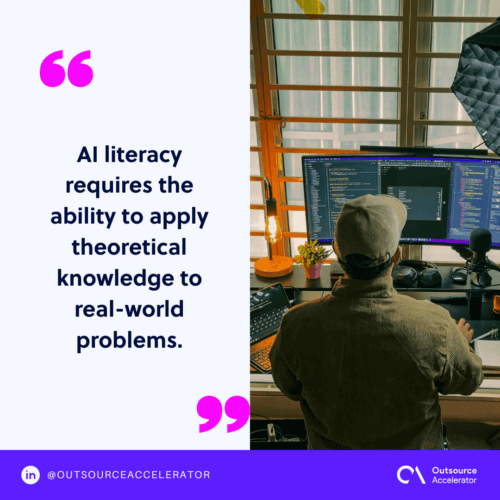
AI literacy means applying theory to real problems. So developers must turn AI concepts into working code, build models, and add them to software systems. Hands-on work helps teams learn the limits of AI tools and tune their performance. This matters most now, as generative AI reshapes how code gets written.
3. Critical evaluation
Developers must assess AI outputs, algorithms, and data sources with care. So this means spotting biases, catching errors, and checking results to keep software reliable. In turn, critical evaluation helps teams make key tweaks that lift quality and accuracy.
4. Ethical awareness
AI literacy includes understanding the ethical implications of using AI. So developers need to spot privacy issues, dataset bias, and side effects. As a result, ethical awareness guides teams to design software responsibly and build trust.
5. Adaptability
The AI field moves fast, so adaptability is key. Developers must stay current on new techniques, tools, and frameworks. Keeping up with the latest AI trends helps teams adopt fresh tech and stay competitive.
Together, these five components strengthen software teams. In turn, they can integrate AI well, responsibly, and creatively across projects and business goals.
How AI literacy impacts software development
AI is now a core part of modern software development, so teams must use it well. In truth, many developers struggle when AI tools arrive without training. So this leads to missed chances and waste. A smooth AI adoption plan helps teams avoid these pitfalls.
Building AI literacy helps teams use AI strategically. As a result, it transforms workflows, creativity, and project outcomes:
Increased efficiency
AI literacy lets developers use automation and machine learning well. So they cut repetitive tasks and speed up timelines. Teams with strong AI skills streamline coding, testing, and deployment. In turn, developers focus on high-value problem solving, and firms ship faster.
Improved innovation
Knowing AI concepts lets developers test new ideas and design smarter apps. AI-literate teams can explore advanced algorithms, predictive models, and intelligent features. As a result, deeper knowledge fuels creative use of AI beyond standard builds.
Human-AI collaboration
AI literacy boosts a developer’s ability to work with AI systems. So skilled teams can read AI outputs, adjust models, and make informed choices. In turn, this creates a strong partnership where humans and machines complement each other and lift software quality.
Risk mitigation
Developers with AI literacy can spot risks early. For example, they catch biased datasets, flawed algorithms, or privacy concerns before harm occurs. So addressing these issues upfront cuts operational and reputational risk and keeps apps reliable.
Enhanced developer role
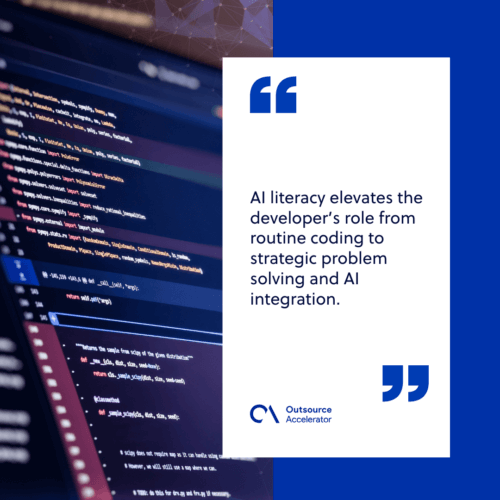
AI literacy lifts the developer’s role from routine coding to strategic work. So developers can guide AI adoption, mentor peers, and shape product design. Ongoing upskilling keeps these skills sharp as the field grows.
This wider role drives professional growth. In addition, it adds real value to the organization. So firms that invest in these skills can stay ahead in a fast-moving global market.
Fully leverage AI’s potential with Acquire Intelligence’s seasoned developers
Acquire Intelligence helps businesses unlock the full potential of AI. It pairs experienced developers with complex challenges to deliver practical solutions.
Its team of AI specialists blends technical skill with strategic insight. As a result, firms can speed up projects, optimize workflows, and innovate with confidence.
Partnering with Acquire Intelligence gives firms access to skilled people who understand AI’s nuances. In turn, they translate them into real-world results.
So take advantage of their expertise today to build smarter solutions and lift your team’s skills. Get in touch with the team and harness AI in ways that drive lasting impact and measurable growth!
AI literacy FAQ
Why does AI literacy matter for developers?
It helps developers use AI tools well, not just press buttons. With it, they judge outputs, spot risks, and build better software. So AI literacy turns a coder into a strategic contributor.
What are the core skills of AI literacy?
The core skills are foundational knowledge, practical application, critical evaluation, ethical awareness, and adaptability. Together, they let teams build and run AI responsibly. In addition, they help teams keep pace with fast change.
How can a software team build AI literacy?
Start with training on core concepts and hands-on projects. Then encourage ongoing learning as tools evolve. Many firms also partner with AI experts to close skill gaps quickly.
Does AI literacy require a data science degree?
No. Developers can build AI literacy through courses, practice, and mentoring. A degree helps, but steady learning and real projects matter more for day-to-day work.
How does AI literacy reduce project risk?
Literate teams catch biased data, weak algorithms, and privacy issues early. So they fix problems before they reach users. As a result, AI-powered apps stay more reliable and trusted.






 Independent






