
Operating expenses: Definition, types, and examples


What are operating expenses?
Operating expenses are the regular, ongoing costs a business pays to run day to day, such as rent, wages, utilities, and marketing.
- They keep the business running but do not directly make its products.
- They split into fixed costs and variable costs.
- Tracking them well guides better budgets and smarter decisions.
Operating expenses may not be the most exciting topic in business. Still, they play a big role in a company’s financial health and profit.
From office rent to staff salaries, these ongoing costs keep the wheels turning. So it helps to know them well.
In this article, we will explore operating expenses in plain terms. First, we will cover what they include. Then we will show how they are calculated.
What are operating expenses?
Operating expenses, also known as OpEx, are the regular, ongoing costs a business pays to run well.
These costs are needed to keep the business going. However, they cannot be tied to making goods or services.
Operating vs. Non-operating expenses
Operating and non-operating expenses are two clear groups of company outflows. So it helps to tell them apart.
Non-operating expenses are costs from outside core work. For example, they include:
- Interest payments on loans
- Losses from the sale of assets
- One-time legal settlements
Non-OpEx are usually one-off costs. As a result, they do not drive daily work, yet they still affect overall profit.
Knowing the split between these two groups matters. In short, it supports accurate analysis and smart planning. To see how these costs feed the bottom line, compare revenue, income, and profit.
Operating expenses vs. Capital expenditures
Capital expenditures, or CapEx, are large investments in assets that give long-term value.
Unlike operating expenses, CapEx is capitalized and depreciated over time. For example, this includes buying real estate, equipment, or vehicles.
CapEx reflects asset investments that add to growth and earning power. So balancing OpEx and CapEx is key for financial health and planning. For a related view, see capital lease vs. operating lease.
What is included in operating expenses?
Operating expenses cover many costs that are not tied to core products. In practice, these costs fall into a few groups.
Rent and utilities
Consider a retail store that pays monthly rent for its space. It must also cover power, water, and internet.
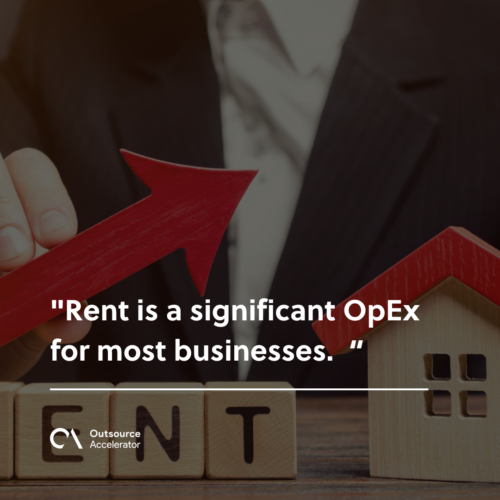
Rent is a large OpEx for most firms. It covers office space, retail space, or any premises for daily work. In addition, utilities like power, water, gas, and internet count as OpEx.
Salaries and wages
Picture an e-commerce firm with staff for orders, service, and marketing. It pays for salaries, benefits, and allowances.
Employee salaries and wages are a key part of operating expenses. This includes pay to regular staff plus their benefits. It is worth noting that salaries vary across industries, regions, and roles.
Office supplies and equipment
Office supplies count as OpEx. For example, this covers stationery, computers, printers, and furniture. These costs give workers the tools to do their jobs well.
In a remote setup, this expense can drop a lot. It also helps to partner with offshoring firms like Remote Employee.
Marketing and advertising
Say a software firm runs a campaign for a new product. As a result, it pays for digital ads, social media, and content.
Promoting a business is a core operating expense. In short, this includes ad campaigns, digital marketing, and other promotion.
Insurance and legal fees
Every business needs to guard against surprises. So insurance premiums and legal fees to protect the company’s assets count as OpEx.
Maintenance and repairs
A factory has steady costs to fix and maintain its machines. In turn, this keeps production running.
Maintaining equipment, machines, and premises is an important operating expense. Because these costs prevent bigger problems, they keep the business running well.
2 types of operating expenses
OpEx can be split into two broad types. So let us look at each one.
1. Fixed expenses
Fixed expenses stay fairly steady, no matter the sales or output level. For example, they include rent, insurance premiums, and some salaries.
2. Variable expenses
Variable expenses change with the level of business activity. These costs tie directly to sales or output. For example, they include cost of goods sold (COGS), commissions, and shipping.
How to calculate operating expenses
Calculating operating expenses is simple yet important. One way to find it is this formula:
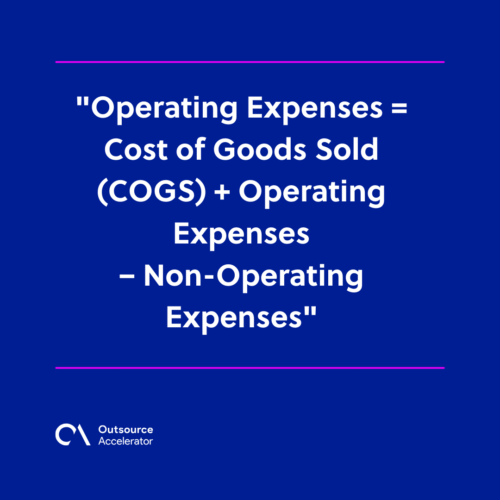
Operating Expenses = Cost of Goods Sold (COGS) + Operating Expenses minus Non-Operating Expenses
This formula sums the total cost of regular operations. Notably, it leaves out non-operating items like interest and taxes.
In short, knowing a firm’s OpEx reveals its financial health. To manage it well, many teams also study cost avoidance vs. cost savings.
For investors, OpEx shows the daily cost of running the business. For owners, it is the key to good budgeting and smart choices. As a result, both groups watch it closely.
A deep grasp of OpEx helps firms navigate financial landscapes better. It also supports sound financial management practices and helps you allocate your budget with care.
Frequently asked questions about operating expenses
What are operating expenses in simple terms?
They are the regular costs to run a business each day. For example, they include rent, wages, and utilities. In short, they keep the business going.
What is the difference between OpEx and CapEx?
OpEx covers daily running costs. CapEx covers big, long-term asset buys. So OpEx is used up fast, while CapEx is depreciated over years.
Are salaries an operating expense?
Yes. Staff salaries, benefits, and allowances count as operating expenses. As a result, they often form one of the largest OpEx lines.
How can a business reduce operating expenses?
Firms can cut OpEx in many ways. For example, they can go remote, review supplier deals, and outsource support tasks. In turn, this lowers overhead.
Why do operating expenses matter?
They shape profit and cash flow. Because they run every month, small savings add up fast. So tracking them well protects the bottom line.
Key takeaways
- Operating expenses are the ongoing costs of running a business each day.
- They cover rent, wages, utilities, marketing, insurance, and repairs.
- OpEx differs from CapEx, which funds long-term assets.
- OpEx splits into fixed costs and variable costs.
- Tracking OpEx well guides budgets and smarter decisions.






 Independent





