
10 predictive analytics tools to help your business succeed


What are the best predictive analytics tools?
The best predictive analytics tools are proven platforms like SAS Cloud Analytics, Amazon QuickSight, Amazon Forecast, Alteryx, and Tableau that turn past data into clear forecasts.
- They help you spot trends early, so you can plan with more confidence.
- They cut guesswork by scoring risk, demand, and customer behavior.
- They fit many needs, from marketing to finance to supply chains.
List of 10 best predictive analytics tools
- SAS Cloud Analytics
- Amazon QuickSight
- Amazon Forecast
- Alteryx
- Tableau
- Adobe Analytics
- Software AG TrendMiner
- Qlik Sense
- Improvado
- Domo
Good trend forecasting helps businesses make smart, proactive choices. When you can see shifts in customer taste, market trends, and the economy early, you can adjust your plans, products, and budgets in time. As a result, you lower your risks and grab more chances.
Because of this, many predictive analytics tools now exist to help you predict future trends and customer behavior. This article covers the top predictive analytics tools. First, it explains what they are and what they offer. Next, it shows how to choose the right one and when to use it. For a wider view, you can also read our guide on the impact of data analysis in running your business.
What is predictive analytics?
Predictive analytics is a branch of data science that looks ahead. In short, it pulls useful meaning from large pools of past and real-time data. Then it uses that meaning to guess what might happen next, often with strong accuracy.
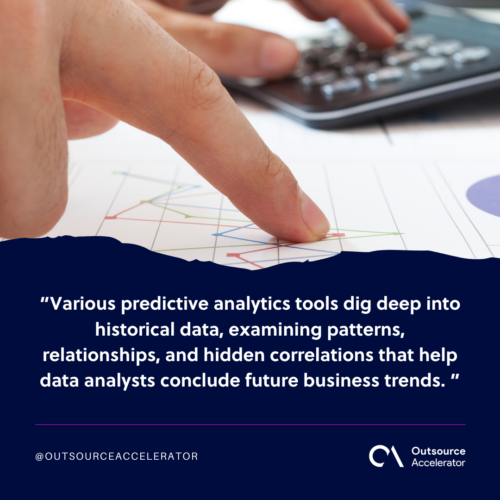
So data scientists can turn raw data into knowledge they can act on. To do this, they use statistics and modern machine learning algorithms. Predictive analytics tools dig into past data and study patterns, links, and hidden ties. Because of this, analysts can draw clear conclusions about future business trends. To see how these methods differ, compare the two main paths in this look at business intelligence vs. business analytics.
Where are predictive analytics tools used?
Predictive analytics tools fit many settings across many industries. For example, in sales and marketing, this software helps businesses do the following:
- Forecast customer demand
- Set better prices
- Aim marketing campaigns well
In addition, teams can study past sales and buyer habits to lift revenue and customer engagement. Predictive analytics tools also matter in finance. There, they help predict market trends, flag fraud, and score credit risk.
Healthcare is another case. By studying patient data and trends, providers can plan staffing, use resources well, and improve care. Meanwhile, manufacturing and supply chains lean on these tools to do the following:
- Predict equipment maintenance needs
- Plan production schedules
- Manage stock well
For instance, predictive maintenance can stop costly downtime. It flags when a machine may fail based on wear and use. Finally, human resources teams gain too. These tools help spot strong employees, predict staffing needs, and guide hiring. Because of this, HR pros can make data-driven calls on talent, succession, and recruiting. To go deeper, see the different types of business analytics you should know.
Key benefits of predictive analytics tools
Predictive analytics tools offer many gains across industries. Here are the four key benefits.
Enhanced decision-making
First, these tools help teams make data-driven choices. They give a clear view of future trends and outcomes. So instead of leaning on gut feel or old habits, leaders can act on accurate, real-time forecasts.
Cost savings
Next, a predictive analytics solution can save real money. When you forecast events and trends well, you can plan operations and resources better. For example, in supply chains, it supports smarter stock control. As a result, you cut excess stock and storage costs.
Risk mitigation
These tools also help you spot risks and threats early. Because of this, you can set up plans in advance and limit any harm.
Revenue growth
Finally, predictive analytics can fuel revenue growth. When you understand buyer behavior, market trends, and new chances, you can shape plans that bring in more sales.
How to choose a good predictive analytics tool
Here are a few simple guides for picking the right predictive analytics tool for your team:
- Data compatibility: make sure it fits your current systems and databases. Poor fit can slow your work down.
- Ease of use: look for a clear interface that needs little coding. So more people on your team can use it.
- Customer support: check for quick help and good training materials.
- Integration: see how well it links with the other tools you use.
- Model flexibility: confirm it supports many methods, such as regression, decision trees, clustering, and neural networks.
Cloud options can make this easier, as this look at cloud business intelligence shows.
10 predictive analytics tools to use
1. SAS Cloud Analytics
SAS Cloud Analytics is a strong predictive analytics tool. It offers a wide set of data analysis and modeling features. It also gives you advanced statistics, machine learning, and data visualization. Because it runs in the cloud, it is easy to reach and scale.
Pros
- Advanced analytics: it offers predictive modeling, machine learning, and optimization in one suite.
- Scalability: its cloud base grows with your data needs.
- Data integration: it links with many data sources, so you can work with varied datasets.
- Extensive support: SAS gives strong support, training, and a large user community.
Cons
- Higher cost: it can be pricey, especially for smaller firms.
- Learning curve: its many features can be a lot for new users.
2. Amazon QuickSight
Amazon QuickSight is Amazon’s data visualization and business intelligence tool. It also has predictive analytics features. So you can build interactive dashboards and reports with ease.
Pros
- Integration with AWS: it links well with other AWS services.
- Scalability: it handles large datasets, so it suits growing firms.
- Cost-effective: its pay-as-you-go pricing stays competitive.
Cons
- Limited advanced analytics: for deep modeling, a specialized tool may serve you better.
3. Amazon Forecast
Amazon Forecast is built for time-series forecasting. It uses machine learning to predict future trends from past data.
Pros
- Time-series forecasting: it shines at time-based data, so it fits demand and stock planning.
- Integration with AWS: it links with AWS services, which eases setup.
- Scalability: it manages large forecasting jobs well.
Cons
- Narrow focus: it excels at forecasting but may not suit broader tasks.
- Requires expertise: users may need some machine learning skill to get the most from it.
4. Alteryx
Alteryx is one of the most flexible predictive analytics tools. It gives you a friendly interface for blending, cleaning, and modeling data. As a result, people from many backgrounds can use it.
Pros
- User-friendly: its drag-and-drop design suits non-technical users.
- Data integration: it connects to many sources, so prep is simpler.
- Workflow automation: it lets you build repeatable, automated workflows.
Cons
- Expensive pricing: it can cost a lot for smaller firms.
- Limited advanced modeling: deep modeling may need a specialized tool.
5. Tableau
Tableau is best known for data visualization. Still, it also offers predictive analytics features. So you can build interactive dashboards, explore data, and find insights fast.
Pros
- Data visualization: it makes clear, interactive visuals.
- Active user community: its large community offers help and resources.
Cons
- Limited predictive analytics: it covers the basics but may not match dedicated tools.
6. Adobe Analytics
Adobe Analytics is a web and marketing analytics platform with predictive features. So it helps you study customer behavior, track campaigns, and predict trends.
Pros
- Marketing-focused: it gives clear insight into customer journeys and campaign results.
- Integration with Adobe products: it links with other Adobe marketing tools.
Cons
- Specialized use: its focus is marketing, so its reach for broader tasks is limited.
7. Software AG TrendMiner
Software AG TrendMiner is a process data analytics tool. It is used mostly in industry. It studies time-series data to improve processes and predict equipment failures.
Pros
- Process analytics: it is great for predictive maintenance and process work.
- User-friendly: its clear interface suits engineers and process experts.
Cons
- Industrial focus: it is built for industry, so it may not fit general tasks.
8. Qlik Sense
Qlik Sense is a flexible data visualization and business intelligence tool with predictive features. So you can build interactive dashboards and dig into data to find value.
Pros
- Data exploration: it helps you find insights through interactive dashboards.
- Associative data model: it helps you spot unexpected links in your data.
Cons
- Limited advanced predictive analytics: it may not match specialized tools.
- Learning curve: users may need time to master its model and visuals.
9. Improvado
Improvado is a marketing data platform. It pulls marketing data from many sources into one place. So it appeals most to marketing teams who want insight fast.
Pros
- Marketing data consolidation: it gathers data from many sources, which eases prep.
- User-friendly: its clear interface suits marketers and analysts.
Cons
- Specialized use: its focus is marketing data, so its wider use is limited.
- Limited predictive capabilities: it may not match dedicated modeling tools.
10. Domo
Domo is a full business intelligence and data visualization platform with predictive features. So it aims to give real-time insight and support for firms of all sizes.
Pros
- Real-time data: it stresses live data, so you can act on the latest facts.
- Integration options: it connects with many data sources and apps.
Cons
- Limited predictive analytics depth: it offers predictive features but may not match specialized modeling tools.
Frequently asked questions about predictive analytics tools
What are predictive analytics tools?
They are software platforms that study past and current data to forecast future outcomes. In short, they help you predict demand, risk, and behavior so you can plan ahead.
Who uses predictive analytics tools?
Many teams use them. For example, sales, marketing, finance, healthcare, manufacturing, and HR all rely on them to make data-driven choices.
Do I need coding skills to use them?
Not always. Some tools, such as Alteryx and Tableau, use drag-and-drop designs. So non-technical users can still get real value from them.
How do I pick the right predictive analytics tool?
First, check data fit, ease of use, and support. Next, look at how well it links with your other tools. Finally, confirm it supports the modeling methods you need.
Are predictive analytics tools worth the cost?
For most growing firms, yes. Because they cut guesswork and waste, they often pay back through better planning and lower costs.
Key takeaways
- Predictive analytics tools turn past data into clear forecasts, so you can plan with confidence.
- Top options include SAS Cloud Analytics, Amazon QuickSight, Amazon Forecast, Alteryx, and Tableau.
- These tools help many teams, from marketing and finance to healthcare and supply chains.
- When choosing one, weigh data fit, ease of use, support, and modeling flexibility.
- Used well, predictive analytics tools cut risk, save money, and grow revenue.






 Independent





