
Understanding and addressing aggressive communication in the workplace


What is aggressive communication in the workplace, and how do you address it?
Aggressive communication in the workplace is speech or behavior meant to intimidate, demean, or hurt others, and leaders address it by spotting the signs early and modeling respect.
- It shows up as yelling, insults, threats, sarcasm, or passive-aggressive digs.
- Over time, it harms well-being and drives absenteeism and turnover.
- Leaders can curb it with calm responses, clear boundaries, and a culture of respect.
Good communication is key to strong teamwork. Still, it can get messy and turn into aggressive communication that harms work relationships and well-being.
In this article, we help you understand aggressive communication in the workplace. First, we cover how to spot it, its causes, and its impact on staff.
We also look at how leaders can build respect and healthy ties within their teams.
Defining aggressive communication in the workplace
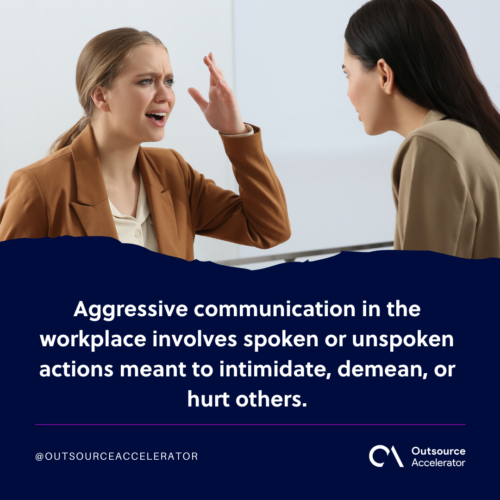
Aggressive communication in the workplace involves spoken or unspoken acts meant to intimidate, demean, hurt, or stir up bad feelings in others.
It also covers off-putting patterns of speech. As a result, these can lead to physical violence, broken ties, and an unhealthy workplace.
Recognizing passive aggressive communication in the workplace
The first step in dealing with aggressive communicators is to spot the signs. So watch for both the obvious and the subtle ones in your workplace.
The table below shows the signs and examples of aggressive communication in the workplace.
| Signs | Example | |
| Raised voice and yelling | Speaking very loudly or shouting during conversations. | “I can’t believe you messed up that report again! How many times do I have to tell you?” |
| Name-calling and insults | Using mean words or calling someone names. | “You’re such an idiot for not understanding this simple concept.” |
| Blame-shifting | Not taking responsibility and always blaming others. | “This project failed because of your incompetence, not mine.” |
| Threats and intimidation | Trying to make someone scared or threatened to get what you want. | “If you don’t do what I say, you’ll regret it.” |
| Sarcasm and mockery | Making fun of someone in a hurtful way. | “Oh, great job on that presentation. You should be a stand-up comedian.” |
| Interrupting and talking over others | Not letting others speak, cutting them off. | “Let me finish. You don’t know what you’re talking about.” |
| Passive-aggressive behavior | Being mean indirectly through sneaky comments or actions. | “Oh, I’m sure your way is the best. We should all do it your way.” |
| Excessive criticism | Always finding faults in what others do without being helpful. | “Your performance is always subpar. You can never meet our standards.” |
| Ignoring and ostracizing | Leaving someone out on purpose to hurt them. | “Your performance is always subpar. You can never meet our standards.” |
| Defensive communication | Getting upset and defensive when someone gives you feedback. | “Why are you always picking on me? You’re just trying to make me look bad.” |
| Invasion of personal space | Standing too close to someone to make them uncomfortable. | Standing too close to a colleague while arguing. |
| Excessive swearing or inappropriate language | Using bad words or offensive language during conversations. | Cursing and using offensive language when frustrated. |
Root causes of aggressive communication style in the workplace
To fix the issue, you first need to know its roots. So let us look at what drives aggressive communication and how to set healthy boundaries.
Stress and pressure
An aggressive communicator often faces heavy stress and pressure. As a result, verbal aggression can become their way to cope or take control.
So firms must build a supportive work environment. In turn, this helps staff handle stress and hard feelings well.
Lack of communication skills
Clear communication is hard for some people, especially in tough talks. As a result, they may turn to aggressive tactics to get their point across.
Still, training can help. For example, coaching builds healthier and more productive habits.
Unresolved conflict
Colleagues sometimes feel overwhelmed and clash. As a result, communication issues can grow at work.
So open talks and common ground help a lot. In turn, they stop small disputes from turning aggressive.
Insecurity and low self-esteem
Some aggressive communicators have low self-esteem. For example, a passive-aggressive person may use insecurity as an excuse to assert control.
So a supportive culture that builds confidence helps. In turn, it can ease this problem.
Workplace bullying and harassment
Bullying and harassment add a lot to aggressive communication. As a result, they need a firm response.
So set a strict zero-tolerance policy for such acts. In addition, put clear reporting and resolution steps in place.
Aggressive communication in the workplace: Impact on employee well-being
Aggressive communication in the workplace hurts staff well-being. So it matters that leaders address it fast.
Low self-esteem and confidence
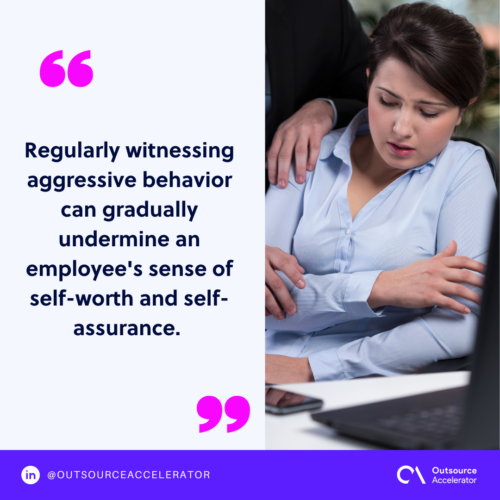
Seeing aggressive behavior often can wear down a person’s sense of worth. As a result, they may start to doubt their own skills and value.
Reduced job satisfaction
When staff face aggression at work, they feel less happy. Because they feel disrespected, they may view the job and firm badly. In turn, motivation and commitment drop.
Physical health issues
Ongoing exposure to an aggressive coworker can harm the body. For example, it can cause:
- Headaches
- Disrupted sleep patterns
- Possible cardiovascular issues
Staff may also lose the drive to stay active. As a result, the risk of issues like obesity and joint problems can rise.
Mental health issues
Ongoing aggression can also harm mental health. For example, it can trigger or worsen depression and anxiety.
When it involves harassment, bullying, or threats, the effect can be severe. In fact, some staff feel symptoms like Post-Traumatic Stress Disorder (PTSD).
These can include flashbacks, nightmares, and being on high alert. As a result, they hit both emotions and mental well-being hard.
Absenteeism and turnover
Aggressive communication can raise absenteeism and turnover. In turn, this hurts output and culture.
Staff who face aggression may start to avoid it. For example, they may call in sick to skip tense talks or a stressful setting. As a result, absences climb.
How leaders should navigate aggressive communication in the workplace
Leaders play a key role in managing aggressive communication. So here are some strategies they can use.
Stay calm and composed
Leaders should stay calm when facing aggression. As a result, tension eases and respectful dialogue grows.
Active listening
Listen closely to what staff say. This means you focus on words and body language, show respect, and truly want to understand.
So make eye contact and nod to show you are engaged. Also, do not interrupt while others speak.
Empathize and validate
Leaders should empathize with staff who face aggression. In turn, this makes people feel heard and supported.
Set clear boundaries
Define what behavior is acceptable at work. So leaders should share and uphold these limits often to curb aggression.
Lead by example
Leaders must own their actions and choices. For example, if they make a mistake, they should admit it and fix it. As a result, staff see that accountability matters.
Private discussion
Handle aggression in private talks. In turn, this invites honest dialogue without shame or defensiveness.
Practice assertive communication
Leaders can model assertive communication. So they state their needs clearly and calmly while respecting others.
This means active listening, eye contact, and “I” statements. As a result, the message lands without aggression or passivity.

Create a respectful workplace culture in your company
Leaders should push for teamwork and collaboration. So build a space that values many views and welcomes input from all.
As a result, people feel they belong. In turn, the risk of aggressive communication drops.
Also, reward people and teams that communicate well. For example, praise those who help build a culture of respect.
Finally, a culture of thanks sets the tone. As a result, it shows why courteous communication matters.
Aggressive communication in the workplace FAQs
What is the difference between aggressive and assertive communication?
Aggressive communication tries to control or hurt others. Assertive communication, however, states needs clearly while respecting others. So the goal is honesty, not dominance.
What are common signs of aggressive communication?
Common signs include yelling, insults, threats, and sarcasm. In addition, watch for blame-shifting, constant criticism, and passive-aggressive digs.
How does aggressive communication affect employees?
It lowers confidence and job satisfaction. Over time, it can also cause stress, poor sleep, and mental health issues. As a result, absences and turnover often rise.
How can a manager respond to an aggressive employee?
First, stay calm and listen. Next, address the issue in private and set clear limits. Finally, model respectful, assertive communication yourself.
Can training reduce aggressive communication at work?
Yes. For example, communication training builds healthier habits. In addition, a clear zero-tolerance policy helps stop bullying and harassment.
Key takeaways
- Aggressive communication in the workplace is speech or behavior meant to intimidate, demean, or hurt others.
- Common causes include stress, weak communication skills, unresolved conflict, and bullying.
- Left unchecked, it harms well-being and drives absences and turnover.
- Leaders curb it by staying calm, setting clear boundaries, and modeling assertive communication.
- Above all, a culture of respect and thanks keeps teams healthy.






 Independent





