
DTMF phone: Applications, advantages, and limitations

What is a DTMF phone?
A DTMF phone is a telephone that dials by sending two tones at once, one from a row frequency and one from a column frequency.
In short, the DTMF phone made calling faster and smarter. It replaced slow rotary dials, and it opened the door to automated menus. Here is the quick view:
- DTMF stands for dual-tone multi-frequency, also called touch-tone.
- Each key sends a unique pair of tones down the line.
- Many call centers still use it to power IVR menus today.
As a result, the DTMF phone remains a core part of everyday communication. Because of this durability, it is worth understanding how it works and where it fits.
Evolution of the DTMF phone
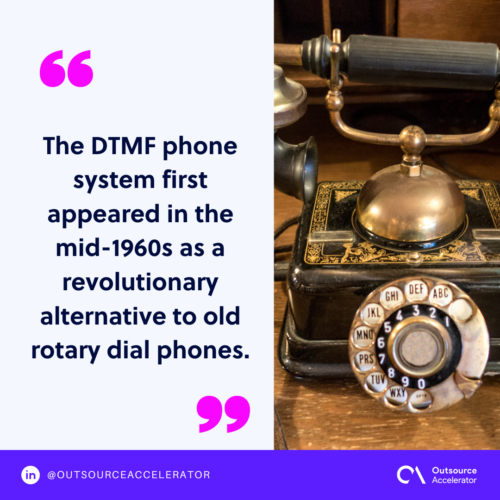
The DTMF phone first appeared in the mid-1960s. So it arrived as a bold alternative to old rotary dial phones.
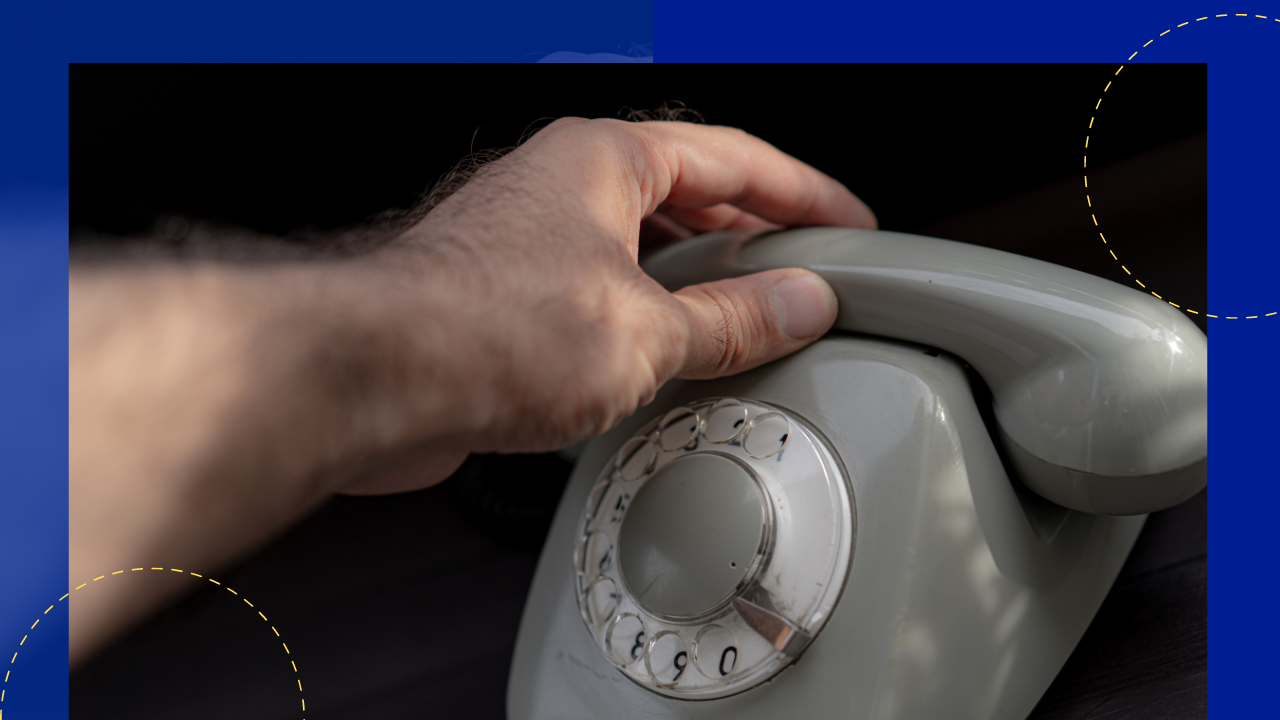
Before DTMF technology, rotary dial phones used a slow mechanical system. Users had to spin a dial to enter each digit. However, this method was slow and prone to errors.
The switch to tones brought clear gains. For example, calls connected faster and dialing mistakes dropped. In addition, the new tones helped engineers build automated systems.
How a DTMF phone works
A DTMF phone makes specific tones through its keypad. The keypad has 12 buttons, which cover the numbers 0 to 9 plus the star and hash symbols.
Each button sends two distinct frequencies at the same time. So the tone pair travels across the telephone network as one signal.
These tones sit within the range that people can hear. As a result, DTMF decoders at the other end can read them and turn each pair back into a digit or command.
Applications of a DTMF phone
The DTMF phone has many uses across different sectors. Because of this range, it stays useful in modern communication.
Its simple design fits many systems with ease. Here are the main applications of the DTMF phone.
Telecommunication systems
The DTMF phone is common in telecommunication networks. First, it lets people dial numbers and reach services. It also supports voice calls, call routing, and other contact center tasks.
Automated systems and IVR
The DTMF phone also drives automated systems and interactive voice response (IVR) tools. For example, callers can answer voice prompts by pressing keys on the phone.
Security systems
Alarm panels and access controls also rely on DTMF phones. So users can arm or disarm a system by entering a code or password. As a result, sites gain an extra layer of safety.
Banking and financial services
DTMF phones give safe and simple access to banking services. For instance, customers use the keypad to check balances, move money, and confirm their identity. Meanwhile, the process stays quick and easy to follow.
Industrial automation and control
Industrial control systems lean on the DTMF phone as well. In fact, it supports remote equipment monitoring. As a result, operators can send commands and receive status updates through simple tones.
Remote equipment management
DTMF phones also manage devices from afar in many fields. For example, utility firms use them to run power distribution systems.
With DTMF tones, staff can flip switches and track power use. They can also troubleshoot gear in substations. So workers fix issues and adjust settings without a site visit.
Emergency services
DTMF phones sit inside emergency service networks too. Because of this, people can dial for help fast when every second counts.
Advantages of using a DTMF phone
The DTMF phone offers several clear benefits. Here are the main ones.
Speed and efficiency
DTMF phones shine on speed. The keypad lets users dial numbers fast, so contact is almost instant.
As noted above, this speed helps in urgent moments. For example, it matters for emergency calls and time-sensitive business tasks.
Versatility and compatibility
The DTMF phone works on a classic landline. It also works on a modern Voice over IP (VoIP) network.
So people can use it at home, in the office, or in public spaces. In addition, this flexibility boosts connection and teamwork across settings.
Enhanced functionality
DTMF phones pair well with interactive tools and automation. As a result, the device does more than place calls.
It can also handle self-service tasks. So both users and service providers save time and money.
Limitations of a DTMF phone
A DTMF phone brings many benefits. Still, it has real limits. Knowing them gives a fair view of the technology.
Limited input options
First, a DTMF phone relies on a 12-button keypad. So the range of input stays small.
It works well for dialing numbers and picking menu options. However, complex text entry is hard. As a result, tasks with many letters or messages can feel clumsy on the device.
Vulnerability to noise and interference
Next, DTMF signals are sensitive to noise. For example, background sound, cross-talk, and poor lines can distort them.
In loud settings, decoders may misread the tones. As a result, the signal can fail. So this weakness matters in critical or noisy uses.
Lack of multimedia integration
Finally, a DTMF phone cannot match a smartphone. It offers no video calls, no web browsing, and no media messages.
Because of this, it suits voice and command tasks only. For richer needs, a softphone is a better fit for real-time video.
Still, the DTMF phone keeps a firm place in today’s networks. Over time, it will keep adapting to new demands.
Frequently asked questions about the DTMF phone
What does DTMF stand for?
DTMF stands for dual-tone multi-frequency. In simple terms, each key sends two tones at once. So the network reads that pair as one digit.
Is a DTMF phone the same as a touch-tone phone?
Yes, the two names mean the same thing. Touch-tone is the common brand-style label. Meanwhile, DTMF is the technical term for the same tone system.
Do call centers still use DTMF phones?
Yes, many call centers still rely on DTMF input. For example, it powers IVR menus that route callers. As a result, customers can self-serve before reaching an agent.
Can a DTMF phone work over VoIP?
Yes, a DTMF phone can work over VoIP. However, the tones are often sent as special digital events. So the signal stays clear across internet calls.
What are the main drawbacks of a DTMF phone?
First, it has limited input options. Next, it is sensitive to noise. Finally, it lacks multimedia features like video and web access.
Key takeaways
- A DTMF phone dials by sending two tones at once, one per key.
- It replaced rotary dialing and made IVR and automated menus possible.
- Common uses include telecom, banking, security, and remote control.
- Its strengths are speed, wide compatibility, and self-service support.
- Its limits are small input, noise sensitivity, and no multimedia.






 Independent





