
Leveraging the power of a walk-in interview for better hires


What is a walk-in interview and how does it work?
A walk-in interview is a hiring method where applicants visit a company in person, without an appointment, to be screened on the spot.
- Candidates show up during set walk-in hours.
- Recruiters run quick screenings to assess many people fast.
- It suits high-volume and urgent hiring.
Finding the right employees for open roles can be hard. Companies constantly seek innovative ways to attract top talent and streamline hiring.
Still, time-tested methods can be a wise choice for faster, better hires. One reliable method is the walk-in interview.
Read on to learn how a walk-in interview can help your organization. You will also learn the best ways to run one.
What is a walk-in interview?
A walk-in interview is a screening process where applicants go straight to a company’s premises. So they do not need to set up an appointment first.
Unlike phone calls or emails, a walk-in interview lets candidates present themselves in person. As a result, they can show their skills on the spot.
Walk-in applicants may go through initial screenings or mini-interviews. These check if they suit the role they want. Many teams pair this with proven screening methods to keep the process fair.
A walk-in interview helps both job seekers and recruiters. For job seekers, it means no long preparation or planning. For recruiters, it means they can assess a larger pool in a shorter time.
For this reason, the method has grown popular with employers. In short, it is a dynamic and effective way to acquire talent.

Walk-in interview vs. Scheduled interview
Another common way to run job screenings is the scheduled interview.
Unlike a walk-in interview, a scheduled interview needs applicants to arrive at a set time and date. Because of this, it works on a fixed plan.
There are other differences too, beyond the need to show up on time. The tables below show how the two methods differ. For a deeper split, see how a structured interview compares with these formats.
| Scheduling | |
| Walk-in interview | Scheduled interview |
|
|
| Flexibility | |
| Walk-in interview | Scheduled interview |
|
|
| Time efficiency | |
| Walk-in interview | Scheduled interview |
|
|
| Candidate pool | |
| Walk-in interview | Scheduled interview |
|
|
Advantages of accommodating a walk-in interview
A walk-in interview does not just help applicants. It also brings clear benefits to employers.
Some of the advantages include the following.
Efficient screening of applicants
A walk-in interview lets employers process more applicants in less time. Since candidates arrive without appointments, initial screenings move fast.
A walk-in interview also allows on-the-spot interviews. So recruiters can gauge skills and fit firsthand.
As a result, it helps employers identify potential matches for the job requirements quickly. It works even better alongside a group interview for busy hiring days.
Cost-effective recruitment
A walk-in interview removes the need for long pre-screening steps. So shorter hiring cycles lead to lower overall costs.
Cost savings are one of its key benefits. Walk-in interviews let the hiring manager assess candidates without heavy scheduling and planning.
Traditional interviews may take weeks to coordinate. Meanwhile, this format speeds things up and saves both time and resources. It pairs well with job fair recruitment when you need to hire in bulk.
Creating positive candidate experience
A walk-in interview gives candidates an easy, open way to engage with your company.
Even if they are not selected, a good experience still helps. For example, it can lead them to apply again or refer others. As a result, it lifts your brand image.
How to best handle a walk-in interviews
A walk-in interview needs careful planning to run well. So aim for a smooth experience for both the company and the candidates. Strong talent acquisition habits make this easier.
Below is some practical advice to help you pull off a successful walk-in interview.
Preparation is key
Before the event, put all your prep in place. First, train the interviewers on the evaluation process and the key criteria.
Next, have all materials ready in advance. This includes evaluation forms and candidate sign-in sheets.
Even without a prior appointment, treat the chance with full professionalism. So handle it with the same care as a scheduled interview.
Remember, good prep helps you shine even in fast-paced settings.
Create a welcoming environment
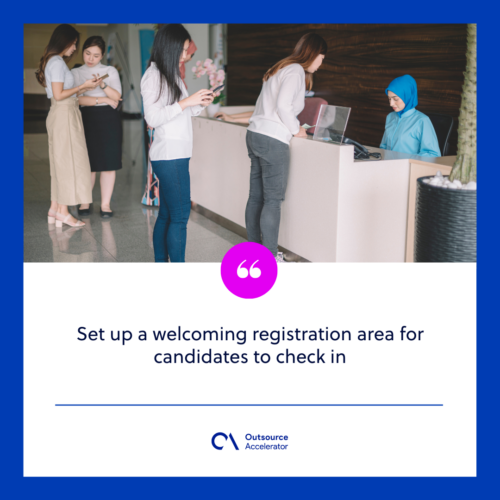
Set up a friendly check-in area for candidates. Then give clear steps on the process and any paperwork they need on arrival.
Friendly staff or volunteers can guide candidates. As a result, they create a positive first impression of your company.
Know your job requirements
Clearly define the roles and skills you want. So you can spot suitable candidates fast during the first screening.
You should also prepare relevant questions. These help you assess each candidate’s skills and experience with accuracy.
Career fairs are a useful chance to network and gather information. For example, they can give you insight into strong candidates and their goals.
It also helps to learn the hiring managers’ preferences early. Because of this, you can align the process with what they need.
Finally, stay professional and positive with each candidate. This leaves a lasting impression on everyone involved.
Frequently asked questions about walk-in interviews
What should I bring to a walk-in interview?
Bring several copies of your resume and a valid ID. In addition, bring any documents the job posting requests.
How is a walk-in interview different from a scheduled one?
A walk-in interview needs no appointment, while a scheduled one uses a set time. So walk-in interviews are faster but often shorter.
Are walk-in interviews good for high-volume hiring?
Yes. They let recruiters screen many people in a short time. As a result, they suit urgent or bulk hiring.
How do employers keep walk-in interviews fair?
They use clear criteria and the same questions for everyone. So each candidate gets a consistent, honest review.
Key takeaways
- A walk-in interview lets applicants get screened in person without an appointment.
- It helps recruiters assess many candidates fast.
- The method lowers hiring costs and shortens the cycle.
- Good preparation and a warm welcome drive the best results.
- It works well for high-volume and urgent hiring.






 Independent





