
How a virtual scribe can improve your workflow


What is a virtual scribe?
A virtual scribe is a trained professional who documents patient visits in real time from a remote location, so doctors can focus on care instead of paperwork.
- A virtual scribe captures patient history, exams, and treatment plans as the visit happens.
- Remote scribes cost less than in-house staff. In addition, they scale up or down with demand.
- They cut admin work, which lowers burnout and lifts patient satisfaction.
Hiring the right medical scribe locally can be hard. Demand for healthcare staff is high, and the job market is tight. So finding a qualified person who fits your practice is often a challenge.
This issue is not limited to healthcare. Today, businesses across all sectors tap into offshore talent for specialized roles. In healthcare, that trend opened a clear path through healthcare outsourcing: the virtual scribe.
In this guide, we explain why virtual medical scribes may be the right move for your practice. As a result, you can weigh the benefits and the flexibility they bring.
What a virtual scribe does
A medical scribe is a trained professional. They help providers by documenting patient encounters, so the physician can focus on care.
As technology has advanced, virtual scribes have grown popular. So they now offer similar services from remote locations.
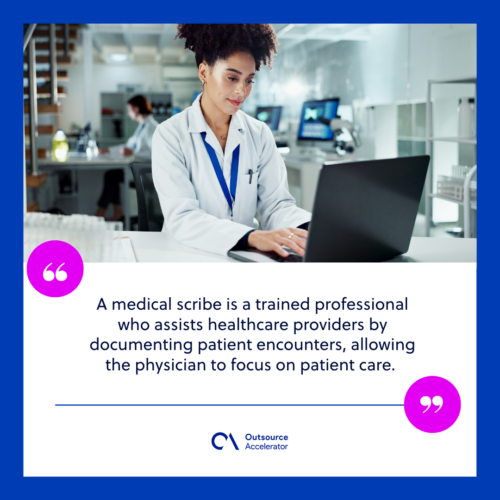
A virtual scribe’s duties include:
- Documenting patient interactions. They capture patient history, exams, and treatment plans in real time.
- Managing electronic health records (EHRs). They update and organize patient files to reflect current visits and medical details.
- Transcribing medical dictations. They turn physician notes into clear, accurate written formats.
- Assisting with order entry. They help physicians place lab orders, prescriptions, or referrals.
- Streamlining workflow. They manage documentation tasks well, so providers spend more time with patients.
Virtual scribes help improve practice efficiency. In addition, they reduce the administrative burden on healthcare professionals. Strong electronic health records habits make that support even more valuable.
5 Benefits of hiring a virtual scribe
Hiring a virtual scribe brings several advantages to healthcare practices. So it helps teams streamline operations and improve patient care:
1. Increased efficiency
A virtual scribe handles time-consuming documentation. As a result, providers can focus on direct patient care. Physicians can also see more patients, which improves the practice workflow as admin duties shift off their plate.
2. Cost-effective
A full-time, in-house scribe can be costly. Salaries, benefits, and training add up fast.
Virtual scribes offer a cheaper option. Many work on a contract or per-hour basis, so you avoid in-house staff and lower overhead. In addition, a pay-as-you-go model means you pay only for the hours you need. So it is easier to manage costs and use resources well.
3. Flexibility
Virtual scribes work remotely, which adds flexibility in scheduling. As a result, practices adapt to changing demand, such as busy seasons or extra cover, without hiring more full-time staff.
Medical teams can also scale scribe support fast. So they stay ready for shifts in patient volume. Many practices pair scribes with healthcare virtual assistants for wider admin cover.
4. Reduced burnout
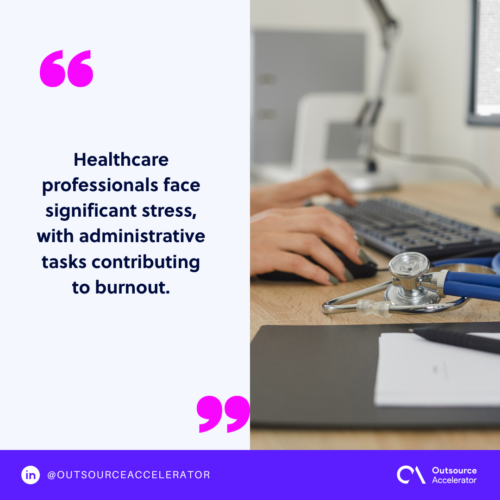
Healthcare professionals face heavy stress, and admin tasks add to burnout. By using a virtual medical scribe, providers cut their workload. So they improve job satisfaction and keep a better work-life balance.
Physicians can also boost their time with patients. As a result, the workday feels more rewarding and less overwhelming.
5. Access to skilled talent
Virtual scribes often come from a pool of highly trained professionals with specialized experience.
So practices tap a global talent pool. They find people who know medical terms and EHR systems well, which keeps documentation accurate and efficient. For comparison, many teams also use medical transcription support for records.
Access to a wide range of skilled staff also helps. As a result, practices find scribes who fit their specific needs and workflows. Still, good onboarding matters, so it helps to know the common virtual scribe mistakes to avoid.
Get access to seasoned virtual scribes with Connext
Connext offers access to skilled, experienced virtual scribes. So it helps practices streamline documentation and improve efficiency.
This offshoring company’s virtual scribes are equipped to meet each practice’s unique needs. As a result, a partnership with Connext can improve workflow, optimize operations, and boost patient satisfaction.
Get in touch with Connext today and discover how its virtual scribe solutions can make a difference.
Frequently asked questions (FAQs)
How is a virtual scribe different from a medical transcriptionist?
A virtual scribe documents the visit live, as the doctor and patient speak. A transcriptionist, on the other hand, types notes after the visit from a recording. So a scribe works in real time, while a transcriptionist works after the fact.
Are virtual scribes trained to protect patient data?
Yes. Reputable virtual scribes follow strict privacy rules and sign confidentiality agreements. In addition, good providers train staff on data security and secure access to EHR systems. So patient records stay protected.
Which specialties use virtual scribes the most?
Busy, high-volume fields gain the most. For example, emergency medicine, primary care, cardiology, and orthopedics often use scribes. Still, almost any practice with heavy documentation can benefit.
How quickly can a practice onboard a virtual scribe?
Timelines vary by provider and system. Many practices get started within a few weeks. First, the scribe learns your EHR and templates. Next, they shadow a few visits before working on their own.






 Independent





