
What is virtual patient support?

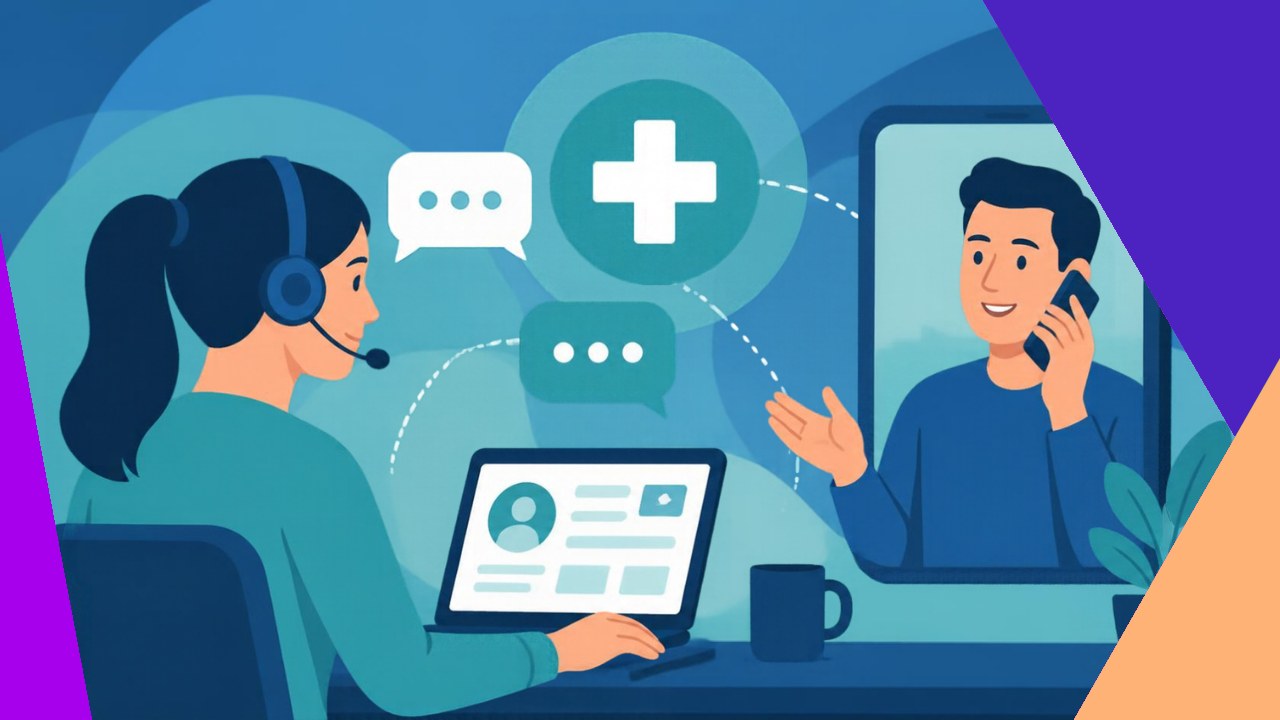
- Virtual patient support is remote, non-clinical help that guides patients through scheduling, reminders, follow-up, education, and portal or billing questions.
- It is not tele-nursing. Support staff do not diagnose or give medical advice. They remove admin friction so clinical teams can focus on care.
- Done well, it lifts appointment attendance, patient satisfaction, and staff capacity, which is why many clinics now outsource it to a remote team.
Virtual patient support is remote, non-clinical help that guides patients through the admin side of their care. Think appointment booking, reminders, follow-up messages, portal setup, and simple billing questions. A support team handles these tasks by phone, chat, email, or secure message. As a result, patients get quick answers, and clinical staff stay focused on treatment.
The demand is real. Patients now expect fast, digital service, and many already live inside the patient portal. Yet most clinics do not have spare admin hours. That gap is exactly what virtual patient support fills, and it is why the model has spread well beyond large hospital systems.
What is virtual patient support?
At its core, virtual patient support is the human help that surrounds a visit but sits outside the clinical exam. A support agent might confirm an appointment, explain a form, reset a portal password, or chase a missing referral. None of that requires a license to practice medicine. However, all of it shapes how a patient experiences care.
The role is patient-facing but strictly administrative. Agents follow scripts and clear escalation rules. When a question turns clinical, such as a symptom or a medication concern, they hand it straight to a nurse or provider. In short, they guide and coordinate. They never advise on health.
What virtual patient support teams do
Most programs cover four practical areas. Each one removes a common source of friction for both patients and front-desk staff.
1. Navigation and scheduling
Agents help patients book, reschedule, or prepare for visits. They also guide people to the right service, verify insurance details, and flag what to bring. This kind of navigation matters. A systematic review of cancer care found that “71%” of studies saw better treatment adherence and “87%” reported higher patient satisfaction when patient navigation programs guided people through their care.
2. Reminders and follow-up
Missed appointments cost clinics time and revenue. So support teams send reminders, confirm attendance, and follow up after a visit. They check that patients booked the next step, picked up a prescription, or understood their discharge notes.
3. Education and portal help
Patients often stall on small digital hurdles. Agents walk them through portal sign-up, help them find test results, and point them to trusted educational material. Access is now mainstream. Per federal survey data, “in 2024, 65% of individuals nationally” were offered and accessed their online medical records or patient portal.
4. Billing and account questions
Bills confuse people, and confusion delays payment. Support agents explain statements, take payments, set up plans, and route disputes to the billing team. They do not code claims. Instead, they act as the calm first point of contact.
How it differs from tele-nursing
This is the line that trips people up. Tele-nursing and clinical virtual care involve licensed professionals making clinical judgments. Virtual patient support does not. The table below sums up the split.
| Virtual patient support | Tele-nursing / clinical virtual care |
|---|---|
| Non-clinical, administrative help | Clinical assessment and advice |
| Trained support agents | Licensed nurses or providers |
| Scheduling, reminders, portal, billing | Triage, symptom review, care instructions |
| Escalates clinical questions upward | Delivers the clinical answer directly |
Both models can run remotely. Both can even sit in the same team. The key is a firm boundary, so support work never drifts into clinical territory.
Why clinics use it
The benefits stack up quickly. First, patients get faster answers and a smoother experience, which builds loyalty. Second, front-desk and clinical staff shed repetitive admin, so burnout eases. Third, better reminders and follow-up mean fewer no-shows and cleaner revenue.
There is also a coordination gain. Support agents keep records tidy and hand-offs clean, which helps with keeping care connected across different providers. That continuity reduces errors and repeated tests. Over time, it protects both outcomes and margins.
How to set it up
Many clinics start by outsourcing the function to a remote team rather than hiring locally. An offshore partner can staff evenings and weekends, scale during busy seasons, and often trim costs. To do it safely, cover a few basics.
Set clear scripts and escalation paths, so agents know exactly when to pass a case to a clinician. Insist on HIPAA-compliant systems and signed business associate agreements. Train agents on your tone, your portal, and your billing rules. Then track a few metrics, such as no-show rate and response time, to prove the value. If you are weighing roles and models, it helps to map out how a remote support team fits a clinic before you commit.
Frequently asked questions
Can virtual patient support agents access medical records?
Yes, but only what their role requires. Under HIPAA’s minimum necessary rule, access is limited to the data needed for a task, such as a phone number or appointment history. Agents work inside audited, role-based systems, and every session is logged. This keeps sensitive clinical detail restricted to staff who genuinely need it.
How is this different from a standard call center?
A general call center answers calls across any industry. A virtual patient support team is built for healthcare. Agents understand insurance terms, portal workflows, and privacy rules, and they follow clinical escalation paths. The training and compliance layer is what sets the two apart.
Does virtual patient support work for small practices?
It does, and small clinics often gain the most. A solo or two-provider practice rarely justifies a full admin team. A shared or part-time remote agent can cover reminders, portal help, and billing calls at a fraction of that cost, which frees the on-site staff for in-person needs.
What skills should these support agents have?
Look beyond phone manner. Strong agents combine clear written and spoken communication with patience and empathy. They also need comfort with EHR and portal software, plus a solid grasp of privacy rules. A healthcare background helps, though many providers train capable agents from a customer-service base.






 Independent





