
12 tips for employers to conduct a successful virtual interview


Data from Noveresume shows that 70% of recruiters now consider virtual recruiting the standard. For employers, this shift is more than just a temporary response to remote work trends.
It has become a practical way to reach a wider pool of candidates, speed up recruitment, and reduce hiring costs.
But running a virtual interview successfully requires more than just sending out a video link. Employers need to understand how to prepare, what to focus on, and how to create a fair and engaging experience for candidates.
Done right, virtual interviews can make hiring smoother and more effective.
Let’s break down what online interviews are, why businesses are increasingly relying on them, their benefits compared to in-person interviews, and the best practices to follow.
What is a virtual interview?
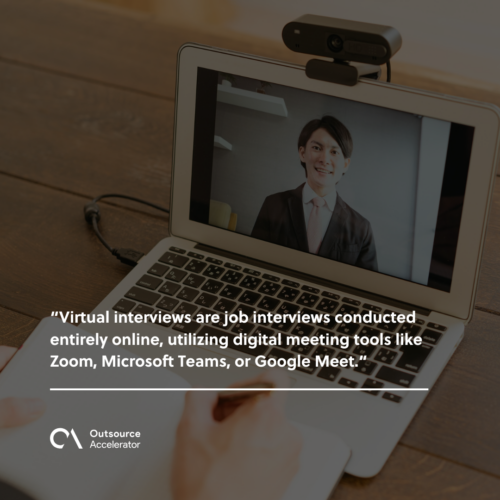
Virtual interviews are job interviews conducted entirely online, utilizing digital meeting tools like Zoom, Microsoft Teams, or Google Meet. Instead of meeting face-to-face in a physical office, employers and candidates connect online.
This approach has become the standard in many industries because it allows companies to screen applicants more efficiently while saving time and resources.
According to a Gartner report, 86% of organizations now use virtual technology for at least part of their hiring process. This shift reflects a broader trend towards remote work and global recruitment.
Why companies are doing virtual interviews
Businesses of all sizes are moving toward virtual interviews because they align with the realities of modern hiring. They are no longer confined to a single location when searching for the right person for the job. Instead, they can access professionals from across the globe.
Virtual interviews also streamline recruitment. Instead of coordinating travel schedules or managing office space for multiple interviews, employers can set up an online call. This efficiency allows HR teams to meet more candidates in less time.
Another reason is cost. Companies save up to 67% on recruitment expenses when switching from in-person to virtual interviews, as per Harver. The reduction covers travel reimbursements, lodging, and time away from work.
Finally, candidates now expect flexibility. As remote and hybrid work gain popularity, job seekers value employers who adapt to digital hiring methods.
Conducting interviews online signals that a company embraces modern practices.
Benefits of conducting virtual interviews vs in-person interviews
Virtual interviews offer several clear advantages compared to traditional in-person meetings.
- Wider talent pool – Employers can reach qualified candidates worldwide, not just those within commuting distance. This is especially valuable for specialized roles where local talent is limited.
- Reduced costs – Again, both employers and candidates save money on travel, accommodation, and related expenses.
- Time efficiency – Scheduling online interviews is easier, and back-to-back sessions can be managed more effectively.
- Consistency – Many platforms allow interviews to be recorded, which helps hiring teams review and compare candidates more fairly.
- Accessibility – Virtual interviews are more inclusive. Candidates with mobility challenges or those living in rural areas can participate without extra hurdles.
- Faster decision-making – With fewer logistical delays, hiring managers can move through the recruitment process more quickly.
12 best practices when holding virtual interviews
Conducting a successful virtual interview requires preparation. Employers need to focus on both technology and candidate experience.
Here are 12 tips to follow:
1. Test technology before the interview
Always check the video platform, microphone, and internet connection. An interview can be thrown off course by technical glitches, which may create a negative impression. Encourage candidates to do the same before joining.
2. Choose a professional setting
Conduct interviews in a quiet, well-lit room. Background distractions can affect communication and make the meeting feel less professional.
3. Provide clear instructions
Send candidates detailed instructions ahead of time. Include the meeting link, login requirements, and the expected duration. A structured process reduces anxiety and ensures punctuality.
4. Dress professionally
Even though the meeting is online, employers should maintain the same dress code they would use in person. Professional attire communicates seriousness and respect.
5. Open with small talk
Starting with a brief, casual conversation helps candidates relax. Virtual environments can feel formal, so a short introduction builds rapport.
6. Explain the interview structure
Outline how the interview will proceed. Candidates should know what to expect, whether it’s a skills assessment, a panel discussion, or behavioral questions.

7. Maintain eye contact through the camera
Looking at the camera instead of the screen helps create the feeling of direct eye contact. This small detail makes communication more engaging and personal.
8. Ask behavioral and situational questions
Focus on real-world examples and problem-solving scenarios. This approach gives better insight into a candidate’s skills and adaptability than simple yes-or-no questions.
9. Take notes carefully
Employers should take notes without breaking focus. Some platforms allow private note-taking within the call, which helps maintain a smooth conversation.
10. Be mindful of time zones
When interviewing global candidates, schedule meetings at reasonable hours for both parties. This consideration shows respect for the candidate’s time.
11. Record the interview when possible
With the candidate’s consent, recording allows other decision-makers to review later. This improves fairness and reduces bias in the hiring process.
12. Follow up promptly
After the interview, communicate the next steps clearly. Candidates appreciate transparency, whether it’s an update on the hiring timeline or additional requirements.
Hire talent from anywhere with a virtual interview
The greatest advantage of virtual interviews is that they remove geographic limits. Companies can hire the best candidates, whether they live in the same city or on another continent. This flexibility is especially valuable in competitive industries where local talent is scarce.
McKinsey found that 87% of employees would choose to work remotely if given the option. Virtual interviews support this trend by enabling employers to hire people who prefer remote arrangements.
For businesses expanding internationally, virtual interviews also simplify compliance. Instead of flying candidates in, HR teams can assess skills remotely and then use Employer of Record (EOR) services or global payroll solutions to onboard new hires legally.
In short, virtual interviews can be a long-term strategy for building strong, diverse, and future-ready teams.






 Independent





