
How RPA and AI combine in modern BPO

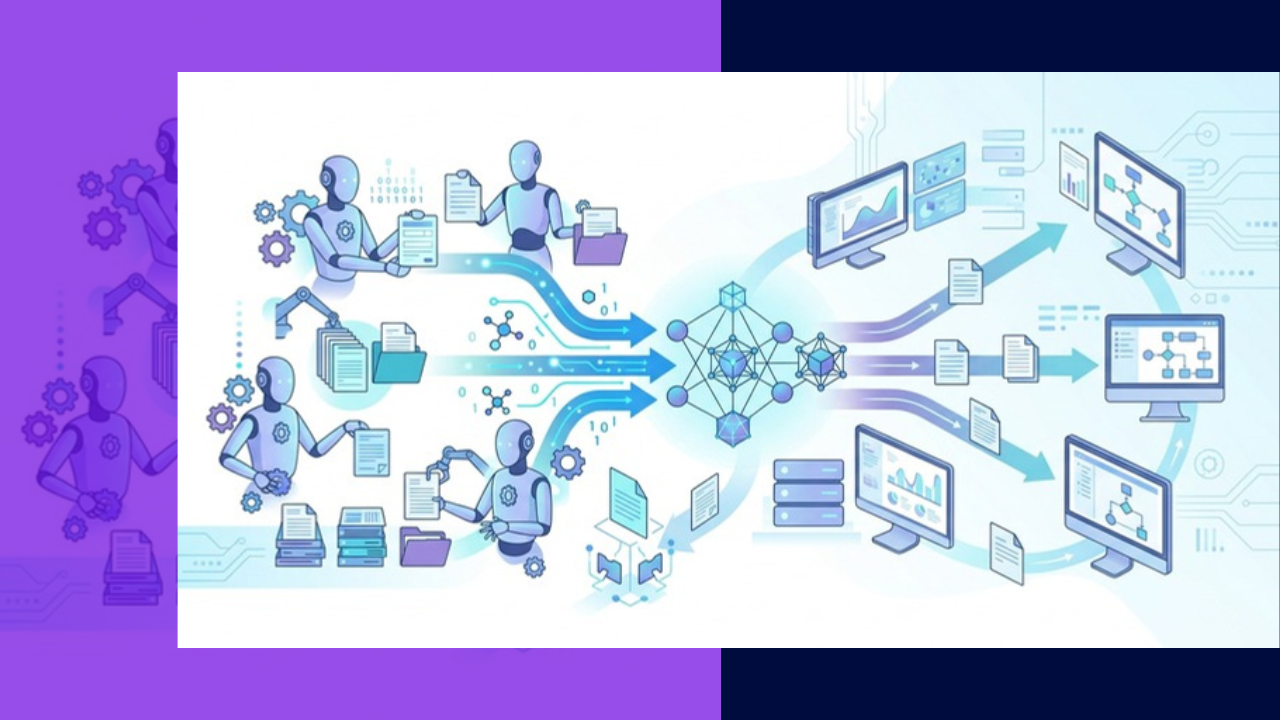
- RPA handles rule-based, repetitive digital work, while AI adds reading comprehension, prediction, and decision support.
- Combined, they form intelligent automation, the model behind much of modern BPO delivery.
- The pairing widens what providers can automate, from structured data entry to unstructured documents and conversations.
- People stay central, shifting into oversight, exception handling, and process design.
The conversation around RPA and AI has moved to the center of how BPO providers design, staff, and price their services. Buyers want faster turnaround with fewer errors, and providers need to deliver both without simply adding headcount.
Robotic process automation, or RPA, lets software robots mimic the clicks, keystrokes, and screen navigation that staff perform every day.
Artificial intelligence sits on top of that foundation, giving those robots the ability to read messy inputs and choose a sensible next step.
This explainer breaks down what each technology does, how the two merge into intelligent automation, and where people fit in a modern outsourcing operation.
What robotic process automation actually does
RPA is best understood as a tireless digital worker that follows explicit instructions.
A bot logs into applications, copies fields between systems, fills forms, and triggers the same steps a person would, only faster and around the clock. It shines on structured, high-volume tasks such as invoice matching, payroll updates, and data migration.
The catch is rigidity. Traditional RPA does not learn or interpret. If a screen layout shifts or an input arrives in an unexpected format, the robot stalls and waits for a human.
These are the software robots that handle repetitive back-office tasks, and on their own they stay firmly inside the rules you give them.
What artificial intelligence adds
AI contributes the judgment that plain RPA lacks.
Machine learning models spot patterns in historical data, natural language processing reads emails and documents, and computer vision interprets scanned images. Instead of following a fixed script, an AI component can estimate, classify, and recommend.
That means unstructured inputs stop being a dead end. A model can pull the vendor name from a PDF invoice, gauge the sentiment in a support ticket, or flag a transaction that looks unusual, then pass a clean result to the next step.
How RPA and AI combine into intelligent automation
Bringing the two together produces what the industry calls intelligent automation, and it changes what a provider can promise a client.
RPA supplies the hands that move work through systems, while AI supplies the perception and reasoning that decide what the hands should do.
Academic research on intelligent process automation frames this as a sub-field of AI aimed at coordinating tasks across many systems, which is exactly the terrain BPO teams cover.
The result is a workflow that can start with an unpredictable input, interpret it with AI, and then execute the downstream steps with RPA, escalating to a person only when confidence is low.
| Dimension | RPA alone | AI alone | Combined (intelligent automation) |
|---|---|---|---|
| Core strength | Executes rule-based steps | Interprets and predicts | Decides, then acts end to end |
| Input type | Structured data | Structured and unstructured | Handles both in one flow |
| Handles exceptions | Poorly, stalls on change | No execution layer | Routes edge cases, learns over time |
| Typical BPO fit | Data entry, reconciliation | Document reading, triage | Claims, onboarding, support |
Common use cases in BPO
Providers apply the combined model across several service lines.
In finance and accounting, AI reads invoices and RPA posts them to the ledger. In customer support, a model classifies incoming messages and drafts replies while bots update the CRM. In insurance, claims are read, scored, and routed with limited manual touch.
These patterns sit at the heart of broader AI transformation across the outsourcing industry.
Benefits for buyers and providers
The appeal cuts in two directions, which is why adoption keeps rising.
Buyers gain speed, consistency, and lower error rates, plus the ability to scale volume without a matching rise in staff. Providers gain a sharper margin story and a way to differentiate beyond raw labor cost, which matters as clients weigh AI outsourcing options.
Both sides also benefit from richer data. Every automated step leaves a clean audit trail, which supports reporting, compliance, and continuous tuning of the process.
Limits and the human role
Intelligent automation is powerful, yet it is not a set-and-forget solution.
Models can drift, training data can carry bias, and a confident wrong answer is still wrong. A United States government technology assessment on AI notes that the technology could improve competitiveness but also poses new risks, a caution that applies squarely to automated operations.
So people move up the value chain rather than out of it. Staff design the workflows, review low-confidence exceptions, monitor model quality, and manage the client relationship.
The strongest BPO teams treat the technology as a colleague to supervise, not a replacement to switch on and ignore.
Frequently asked questions
Here are quick answers to the questions buyers and providers ask most about pairing these technologies.
Is RPA the same as AI?
No. RPA follows fixed rules to move work through systems, while AI interprets data and makes predictions. They are complementary, and the value shows up when they run together.
What is intelligent automation?
Intelligent automation is the combination of RPA and AI in a single workflow. AI reads and decides, RPA carries out the steps, and the process handles both structured and unstructured inputs.
Will this technology replace BPO jobs?
It reshapes them more than it erases them. Routine tasks shrink, while demand grows for people who design, supervise, and improve automated processes.
Where should a BPO start?
Begin with a high-volume, rule-heavy process, add RPA first, then layer AI where unstructured inputs or judgment calls create bottlenecks.
Key takeaways
Pairing RPA and AI is less about swapping people for bots and more about redesigning how outsourced work flows.
- RPA executes, AI interprets, and the combination automates end to end.
- Intelligent automation lets providers handle unstructured inputs that stalled older bots.
- Buyers gain speed and consistency, while providers gain margin and differentiation.
- Human oversight, model monitoring, and process design decide whether the results hold up.






 Independent





