


Software Developer
HR Manager
Team Leader
Accountant
Copy Writer
Customer Service
Virtual Assistance
 Join the upcoming Outsource Insights live session. OA's Zoom room is open! Come chat with our outsourcing expert now.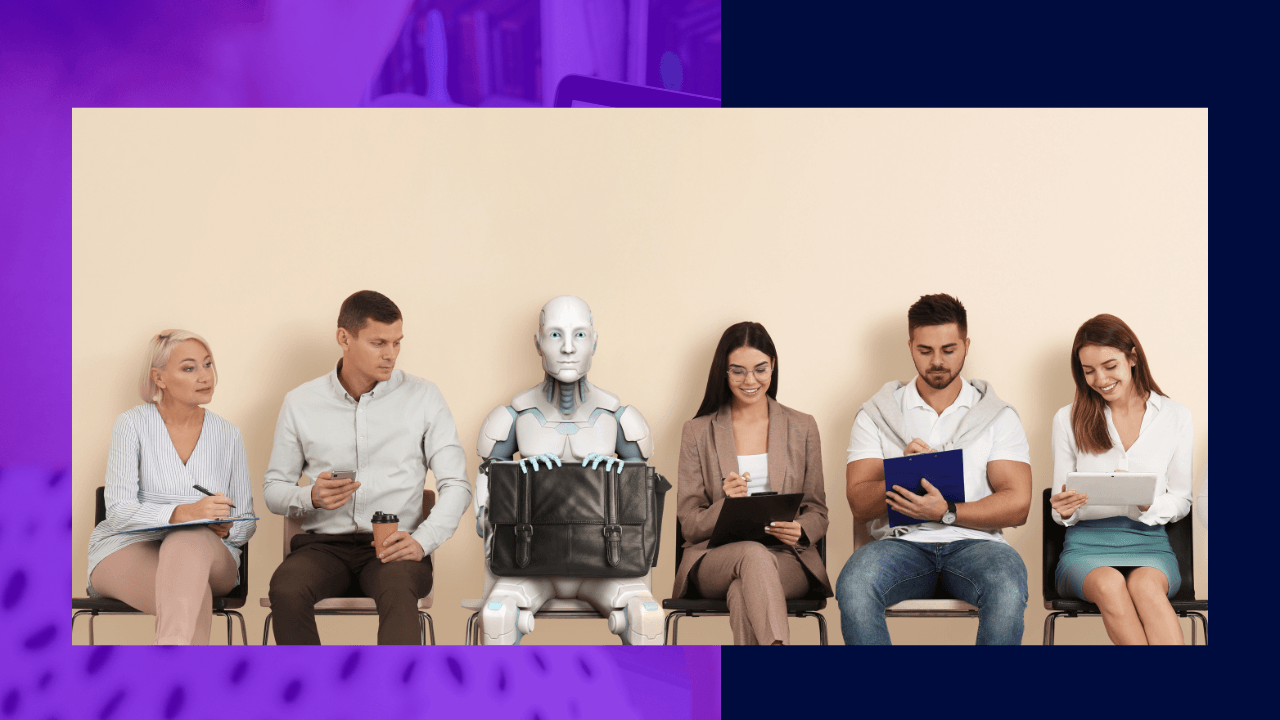


The company most responsible for convincing the world that AI will replace human workers just announced plans to double its own workforce. OpenAI, the organization whose products have triggered mass layoffs across industries, will grow from 4,500 to 8,000 employees by the end of 2026, according to the Financial Times. It is hiring engineers, researchers, salespeople, and — in a delicious bit of irony — “technical ambassadors” whose job is to help other companies figure out how to use AI. The machines, it turns out, still need a lot of people around them.
Let’s sit with the absurdity for a moment. OpenAI’s flagship product, ChatGPT, launched a thousand LinkedIn posts about which jobs would vanish first. CEOs waved it around boardrooms like a machete aimed at headcount. Nearly four in ten companies told the World Economic Forum they planned to replace workers with AI by 2026. And yet the company that built the machete is now on a hiring spree that would make a recruitment agency blush.
The timing is exquisite. While Amazon, Salesforce, Meta, and Oracle have all been trimming staff — often citing AI-driven efficiency — OpenAI is moving in the opposite direction. It isn’t just backfilling. It’s scaling aggressively, adding 3,500 new roles across product development, engineering, research, and sales.
Even Sam Altman himself has called out what he terms “AI washing” — companies using AI as a convenient excuse for layoffs driven by garden-variety cost-cutting. Of 108,000 job cuts tracked recently, AI was explicitly cited in only about 7 percent. The rest? Restructuring, market conditions, overhiring hangovers. The robots weren’t taking jobs. The spreadsheet was.
OpenAI is not the only cautionary tale hiding in plain sight. Klarna, the buy-now-pay-later darling, slashed 700 customer service jobs between 2022 and 2024, proudly declaring that its OpenAI-powered chatbot could do the work of all of them. Then it quietly started rehiring.
CEO Sebastian Siemiatkowski conceded: “We went too far.” Customers complained about generic, repetitive responses. Satisfaction scores dropped. The bots, it turned out, needed colleagues — human ones who could handle nuance, empathy, and the kind of messy, context-dependent thinking that large language models still fumble.
Klarna is not an outlier. Research shows that 55 percent of companies that executed AI-driven layoffs now regret it. Seventy-nine percent of firms that tried full automation have backtracked, returning work to human hands. Forrester has baked this pattern — aggressive AI claim, quiet capability gap, sheepish rehire — into its 2026 workforce predictions as a structural expectation, not an anomaly.
Here’s the part the displacement narrative consistently misses: AI doesn’t just eliminate tasks. It generates entirely new categories of work. Someone has to train the models, evaluate their outputs, build the infrastructure, design the products, onboard the customers, and — as OpenAI’s new “technical ambassador” roles make clear — sit across the table from a confused enterprise client and explain what any of this actually does.
This pattern is not new. The outsourcing and BPO industry learned it two decades ago. When companies offshored call centres to the Philippines and India, the prediction was mass unemployment in the West. What actually happened was more interesting. The global BPO market grew to over $328 billion — and it didn’t just shift jobs, it created them. New roles in quality assurance, client management, data analytics, and process design emerged on both sides of the equation. India’s hiring intent for 2026 is up 11 percent, driven in large part by AI-adjacent demand.
The same dynamic is playing out now. AI doesn’t remove the need for human judgment — it raises the premium on it. The BPO industry is pivoting from cost arbitrage to knowledge process outsourcing, hiring lawyers, data scientists, and medical professionals. The service model of the future isn’t “AI instead of people.” It’s “AI with human oversight” — and that oversight has to come from somewhere.
Meanwhile, European companies adopting AI are hiring more, not fewer workers. As one researcher noted, AI has “not yet significantly transformed production processes” — its primary effect so far has been to create demand for people who can work alongside it. The apocalypse, it seems, has been postponed.
There’s a competitive subtext to the hiring blitz, of course. Anthropic is eating OpenAI’s lunch in the enterprise market, capturing 70 percent of new business deals. OpenAI’s share of enterprise spending has dropped from 50 percent to 27 percent. When your competitor is winning with white-glove human support for AI products, you don’t respond by building more bots. You hire more people.
But the deeper lesson transcends one company’s competitive anxiety. The entire AI industry is discovering what the outsourcing sector has known for years: technology is an accelerant, not a replacement. Every wave of automation — from the loom to the laptop to the large language model — has created more work than it destroyed. The work just looks different.
The question was never whether AI would change work. Of course it will. The question is whether we’ll be honest about how. The narrative of mass displacement makes for good headlines and convenient cover for executives who needed to cut costs anyway. The reality is messier, more human, and — as OpenAI’s own hiring plans make embarrassingly clear — far more labour-intensive than anyone promised.
The future of work isn’t a world with fewer workers. It’s a world where the work is distributed differently — across borders, across skill sets, across a global talent pool that AI has made more accessible, not more redundant. OpenAI just proved it. They’re hiring 3,500 people to help the world need fewer people. Read that again.
Are you cutting headcount based on what AI delivers — or what it promises?
 IndependentSecureTransparent
Scale your business fast while reducing costs —
the average all-in employment costs
in the
Philippines are typically 70% less than its
Western counterparts
You can save 70% on staff costs, whilst driving quality & growth. Connect with an outsourcing expert to see how outsourcing can transform your business.







How many staff to outsource?



Outsource Accelerator is the trusted source of independent information, advisory and expert implementation of Business Process Outsourcing (BPO).
Outsource Accelerator offers the world’s leading aggregator marketplace for outsourcing. It specifically provides the conduit between world-leading outsourcing suppliers and the businesses – clients – across the globe.
The Outsource Accelerator website has over 5,000 articles, 450+ podcast episodes, and a comprehensive directory with 4,000+ BPO companies… all designed to make it easier for clients to learn about – and engage with – outsourcing.
Derek Gallimore has been in business for 20 years, outsourcing for over eight years, and has been living in Manila (the heart of global outsourcing) since 2014. Derek is the founder and CEO of Outsource Accelerator, and is regarded as a leading expert on all things outsourcing.
Outsource Accelerator in the media
See all media mentions