
A practical guide to risk management in healthcare

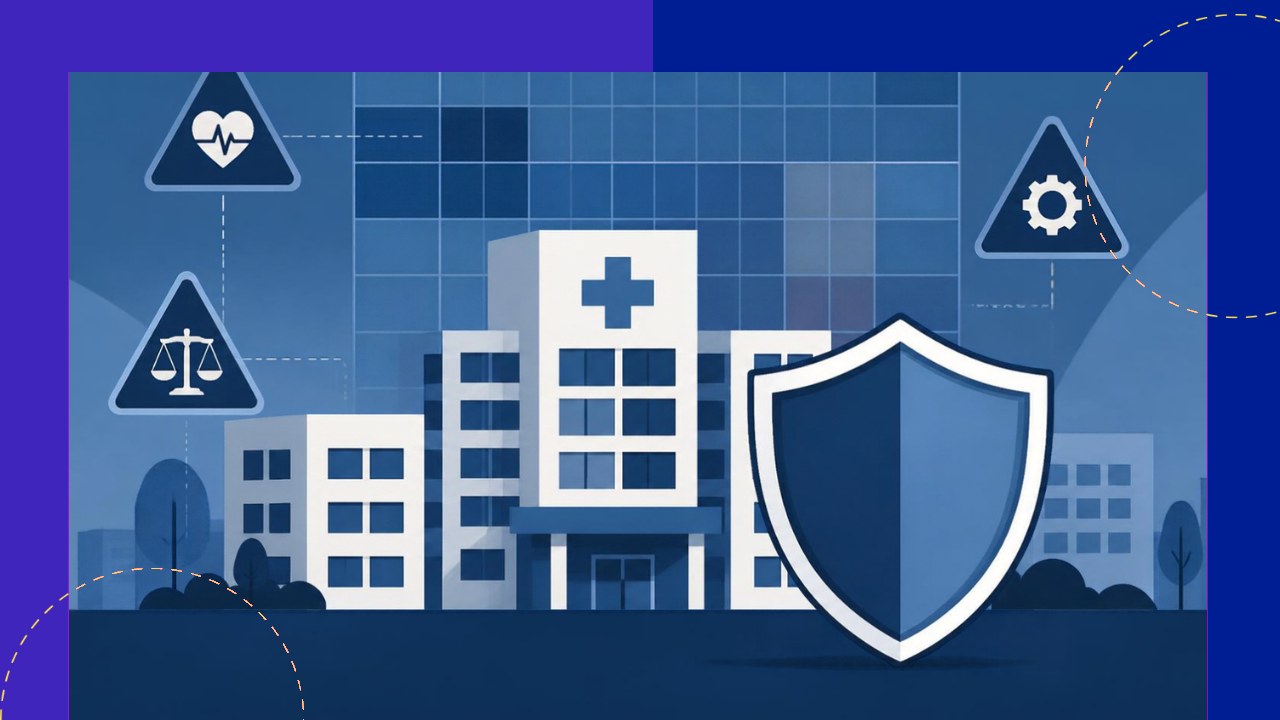
- Risk management in healthcare finds, ranks, and reduces threats to patients, staff, and the organization before they cause harm.
- The work spans four fronts: clinical and patient-safety risk, compliance and regulatory risk, malpractice and liability risk, and broad operational risk.
- A repeatable five-step process, plus support from an outsourcing partner for the routine tasks, keeps a program running without draining clinical time.
Risk management in healthcare is the ongoing job of spotting what could go wrong and acting before it does. A missed medication, a lost consent form, a late compliance filing: each one can hurt a patient and cost a provider dearly. So the goal is simple. Find the hazard early, size it up, and shrink it.
This is not the same as financial hedging or investment risk. Here the stakes are patient safety, regulatory standing, and legal liability. A clinic, a hospital, or a physician group all carry these risks every day. This guide walks through the main types of risk, the steps of the risk management process, and how many providers now share the load with an offshore partner.
What risk management in healthcare actually covers
Risk in a provider organization is broad. It helps to sort it into a few plain buckets. Each one needs a slightly different response, but they all feed the same program.
Clinical and patient-safety risk
This is harm that reaches the patient. It includes medication errors, wrong-site procedures, falls, and infections picked up during care. The CDC notes that “healthcare-associated infections (HAIs) can spread from person to person, through hands, medical equipment and more,” which shows how everyday routines create real patient-safety hazards. Tracking incidents and near misses is how teams catch these patterns early.
Compliance and regulatory risk
Rules govern almost everything providers do. HIPAA, billing standards, and payer requirements all carry penalties when a provider slips. The HHS Office of Inspector General publishes compliance guidance to “help identify risk areas in particular industry segments,” and it points every provider toward a formal compliance program built around known risk areas. Staying current here also means you keep written policies and procedures up to date as regulations change.
Malpractice and liability risk
When care falls short, lawsuits follow. Malpractice claims are costly, slow, and damaging to reputation. Good documentation, informed consent, and clear clinical protocols are the best defense. Most of this risk traces back to gaps in the two buckets above.
Operational and enterprise risk
Finally, there is the risk of the business itself failing to function. Think staffing shortages, cyberattacks, or a system outage during a busy shift. Enterprise risk management pulls these threads together so leaders see the full picture.
The healthcare risk management process, step by step
Most strong programs follow the same loop. It repeats on a schedule, so new risks get caught as the organization changes. Here are the five steps.
1. Identify the risks
Start by listing what could go wrong. Pull from incident reports, patient complaints, audit findings, and staff interviews. Near misses matter too, because they often warn you before a real event happens.
2. Assess and rank them
Next, weigh each risk on two things: how likely it is and how bad the outcome would be. A rare event with severe harm may still top the list. Ranking this way keeps the team focused on what matters most.
3. Reduce the risk
Then decide what to do. You can prevent the risk, lessen its impact, transfer it through insurance, or accept it when it is small. For example, a new double-check step can cut medication errors. Many federal programs, including those in the CMS provider manuals, spell out control steps that providers must follow to stay in good standing. You can review these in the CMS Internet-Only Manuals.
4. Monitor and report
After that, track whether the fix works. Dashboards, incident logs, and regular reviews show if a risk is shrinking or growing. Reporting the numbers up to leadership keeps risk on the agenda rather than buried in a folder.
5. Review and improve
Finally, close the loop. Revisit the plan on a set schedule, retire old controls that no longer help, and add new ones for fresh threats. Because healthcare keeps changing, a program that stands still soon falls behind.
Comparing the four risk types at a glance
| Risk type | Main concern | Typical control |
|---|---|---|
| Clinical / patient safety | Direct harm to patients | Incident tracking, protocols, safety checks |
| Compliance / regulatory | Penalties and lost accreditation | Compliance program, audits, current policies |
| Malpractice / liability | Lawsuits and reputation loss | Documentation, consent, insurance |
| Operational / enterprise | Business disruption | Contingency plans, cybersecurity, staffing |
Where an outsourcing partner fits in
Running this program takes steady, detailed work. Much of it is administrative, not clinical. That is why many providers now hand the routine parts to an outsourcing provider or an offshore partner.
A partner can log incidents, track compliance deadlines, prepare audit files, and keep documentation clean. Trained remote teams can also check that records meet clinical and quality standards before an audit ever begins. This frees nurses and physicians to focus on care instead of paperwork.
Handing off these tasks does not hand off accountability. The provider still owns every decision and every patient outcome. A good partner works inside your rules, follows HIPAA, and reports back with clear numbers. Used well, outsourcing adds capacity to a lean risk team without adding payroll.
Frequently asked questions
Who owns risk management in a small practice without a dedicated officer?
In a small clinic, the practice manager or a lead physician usually carries the role part time. The key is naming one clear owner in writing. Without a named person, risks fall through the cracks because everyone assumes someone else is watching. A shared checklist and a monthly review meeting can cover the basics until the practice grows enough to justify a dedicated role.
How is risk management different from quality improvement?
The two overlap but aim at different targets. Risk management works to prevent harm and limit loss. Quality improvement works to raise the standard of care above the baseline. One asks “what could hurt us,” while the other asks “how do we get better.” Smart organizations run both together, since the same incident data feeds each one.
How often should a provider run a risk assessment?
Plan on a full review at least once a year. On top of that, run a fresh assessment whenever something big changes: a new service line, a new electronic system, a merger, or a major regulation. Many providers also do lighter quarterly check-ins so no risk sits unwatched for twelve months.
What is enterprise risk management in a hospital setting?
Enterprise risk management, or ERM, looks at the whole organization at once rather than one unit. It links clinical, financial, operational, and reputational risks into a single view for the board. This wider lens helps leaders spot how one problem, such as a cyberattack, can ripple into patient safety and finance at once.






 Independent





