
Remote hiring strategies that work

At a glance
- Remote hiring strategies focus on choosing the right person well when you never meet them in person.
- Structured interviews, work samples, and sharp video calls replace the cues you lose without an office.
- A fast, fair, and human process helps you win strong candidates who have plenty of other options.
Hiring is hard enough in person. Doing it remotely, where a handshake becomes a video call, adds a new layer of difficulty. Strong remote hiring strategies close that gap, so you can judge candidates accurately and close offers smoothly without ever sharing a room. The payoff is better hires and a wider talent pool.
Remote hiring is the process of evaluating and selecting candidates who apply, interview, and join without visiting an office. It picks up after sourcing and runs through to a signed offer.
Here is how to get those decisions right from a distance.
Why remote hiring needs its own playbook
Remote hiring is now mainstream, not a workaround. Stanford’s WFH Research project notes that remote work “was growing before the pandemic and is now permanently higher,” so hiring without an in-person meeting is normal.
Competition is fierce, too. The U.S. Bureau of Labor Statistics counted 7.1 million job openings in August 2026. Strong candidates have choices, so a clumsy remote process can cost you the best people.
Use structured interviews
Without an office visit, gut feel is a poor guide. Structured interviews fix that by asking every candidate the same core questions and scoring answers the same way.
This makes comparisons fair and reduces bias, which matters even more on video. Prepare your questions in advance, agree on what a good answer looks like, and have each interviewer score independently. Consistency beats charm when you cannot read a room.
Add work samples and assessments
Talk is cheap, especially on a call. The best way to judge remote candidates is to see them do the work.
Give a short, realistic task tied to the role, such as a writing sample, a small analysis, or a mock problem. Asynchronous assessments, which candidates complete on their own time, also respect their schedule and reveal real skill. Keep tasks short and relevant, and pay for anything substantial.
Master the video interview
The video call is your main window into a candidate, so run it well. Technical glitches and awkward pauses can sink an otherwise good conversation.
Test your setup, share an agenda, and give the candidate time to settle in. Watch for communication skills, since clear remote communication is part of the job itself. A calm, well-run call also shows candidates that your company has its act together.
Check references remotely
Reference checks matter more when you have never met someone face to face. They add outside evidence to your own impressions.
Speak with past managers by phone or video, and ask specific questions about how the person worked, especially in a remote or independent setting. A quick call often confirms a strong hire or raises a useful flag.
Sell the role and close remotely
Great candidates interview you too. Without an office tour or team lunch, you have to sell the opportunity through the screen.
Be clear about the role, the culture, and how remote work actually functions day to day. Move quickly once you decide, because a slow offer loses people. Sound hiring fundamentals still apply, just delivered over video and email rather than in person.
Keep the process fast and fair
Speed and fairness are your biggest advantages. A remote process that drags or feels random pushes candidates toward quicker rivals.
Set clear stages, respond promptly, and tell candidates where they stand. Treat everyone to the same steps and scoring. A smooth, respectful experience leaves even rejected candidates with a good impression of your brand.
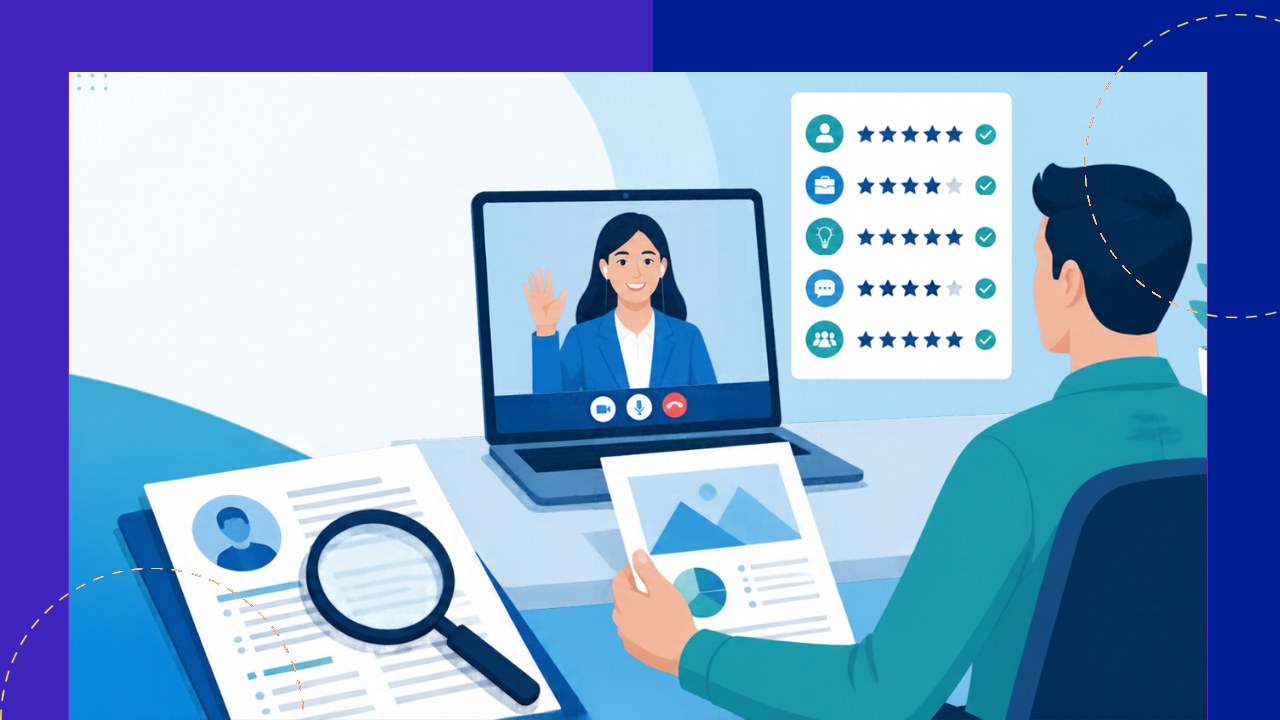
Standardize with a scorecard
A simple scorecard pulls your whole process together. It lists the skills and traits the role needs, with a clear rating scale for each.
Every interviewer fills it in after their session, which keeps decisions grounded in evidence rather than memory. When the team compares scores side by side, the strongest candidate usually stands out, and the choice is easy to explain.
Frequently asked questions
What is the difference between remote hiring and remote recruitment?
Remote recruitment is about sourcing and attracting candidates from a distance, while remote hiring covers the selection steps that follow, such as interviews, assessments, and offers. Recruitment fills the pipeline, and hiring decides who actually gets the job.
How do you spot red flags in a remote candidate?
Watch for vague answers, poor written communication, and reluctance to do a work sample. Because you lose in-person cues, lean harder on concrete evidence like assessments and reference checks rather than on how confident someone sounds on a call.
Are video interviews as reliable as in-person ones?
They can be, as long as you run them with structure and clear criteria. The format matters less than the method, so a well-planned video interview often beats a casual in-person chat that relies on gut feel.
How can small teams hire remotely without a big HR function?
Keep it simple with a short structured interview, one relevant work sample, and a quick reference check. This lightweight process gives a small team reliable signal without the overhead of a large hiring operation.






 Independent






