
How to avoid remote employee burnout


How do you avoid remote employee burnout?
You avoid remote employee burnout by watching for early warning signs and supporting work-life balance with breaks, clear limits, and open talks.
- Spot the signs early, from fatigue to falling output.
- Encourage breaks, fair workloads, and clear work hours.
- Check in often and offer real support and growth.
Remote employee burnout is a real risk for any team. Working from home may seem more comfortable. However, remote staff are no less prone to burnout than on-site staff. So, leaders must stay alert to it.
The data backs this up. For example, Gallup found that 43% of respondents across more than 100 countries reported feeling burned out at work. Meanwhile, global engagement has stayed low in recent years. As a result, burnout remains a top concern for employers.
If you run a business with remote staff, the job is clear. As a leader, you must stay vigilant about burnout and how to prevent it. For a wider view, see these remote employee perks that help teams stay engaged.
What is remote employee burnout?
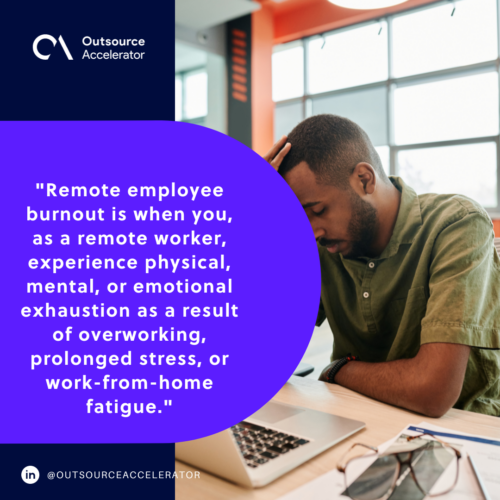
Remote employee burnout is when a remote worker feels drained in body, mind, or emotions. It builds from overwork, long stress, or work-from-home fatigue. So, it creeps up over time.
Several factors add to this burnout. For example, longer hours, poor communication, and constant pressure to be available all play a part. A study from Indeed showed that 61% of employees work more hours than normal. In addition, many say the problem has only gotten worse over time.
This is a common issue in remote jobs. Staff often fail to balance work and personal life. As a result, it is hard to switch off, which leads to burnout.
Symptoms of remote employee burnout
Symptoms of remote employee burnout are not always obvious. So, you must stay aware of the following signs.
- Physical symptoms – Burnout may show up as headaches, dizziness, stomach problems, fatigue, or body pain.
- Decrease in productivity – If output drops over time, it may mean an employee is overworked.
- Change in attitude – Staff may face mood swings or negativity when they do not care for themselves.
- Working after hours – If an employee has not logged off at day’s end, they may still be working mentally. As a result, exhaustion grows.
- Increased leaves – Using more leave than usual is a clear sign that an employee needs rest.
Causes of remote employee burnout
Remote employee burnout can stem from several factors. Here are the main ones to watch.
Overworking
Overworking usually happens when workload or client demands rise. So, staff face added expectations and spend more energy. In fact, a Bloomberg study found that remote staff often work extended hours and fail to disconnect. As a result, the risk of burnout climbs. To ease this, many teams now focus on work-life blending.
Isolation
Surveys have found that nearly half of remote employees lack emotional support from coworkers. Because of the nature of remote work, staff rarely get meaningful contact with colleagues. Instead, they often stay confined at home. So, they miss the collaboration and social contact a healthy workplace needs.
Unclear expectations
Unclear expectations are a common hiring challenge for any company. According to Buffer’s research, 17% of employees experience difficulty with communication when working remotely. Companies must share their expectations clearly. However, if those expectations are vague, staff feel confused and stressed.
5 tips to prevent remote employee burnout
When staff struggle to care for themselves, the company must step in. So, these five tips can help you fight burnout.
1. Encourage regular break times
Remote staff manage their own time. So, do not hold it against them when they take a break. Regular breaks protect both mind and body. In turn, they boost productivity. As a result, workers return to tasks feeling refreshed.
2. Schedule consultations
One-on-one chats can make a huge difference. So, use them to let staff talk about their problems. As a leader, take this time to listen with empathy. Then offer ways to help if someone feels burnt out. As a result, staff feel supported and less alone.
3. Offer professional development
Staff may burn out from a lack of fulfillment. So, give them chances to grow and learn new skills. For example, offer workshops, mentorship, or online courses. As a result, they feel empowered and aim for more.
4. Evaluate workload
Burnout often comes from doing more than one can handle. So, check your team’s workloads often. Then decide if tasks need to be reassigned or postponed. In turn, no one gets buried in work.
5. Keep work hours separate from non-work hours
Remote work lets people stay in contact at any time. However, messages outside work hours can raise stress and anxiety. So, encourage staff to set clear boundaries between work and personal life. As a result, they can reach a healthy work-life balance. For more ideas, explore these employee wellness programs and simple ways of managing stress at work. In addition, you can review these ways to boost remote employee wellness.
Offshore global talent with Remote Employee
Managing remote employees and keeping them well is a priority. As remote firms evolve, hiring skilled staff is key to success. So, Remote Employee is the partner you need to make that happen.
We help businesses of all sizes grow. We do this by leveraging our skilled team and putting our clients’ needs first. So, visit Remote Employee’s official website to learn more about its BPO services. Then see how this trusted firm can help your business thrive.
Frequently asked questions about remote employee burnout
What causes remote employee burnout?
The main causes are overwork, isolation, and unclear expectations. In addition, long hours and constant availability add to the strain. So, these factors slowly wear people down.
What are the warning signs of burnout in remote workers?
Watch for fatigue, falling output, and mood changes. In addition, working late and taking more leave are red flags. So, early action helps prevent deeper harm.
How can managers prevent remote employee burnout?
Managers can encourage breaks and fair workloads. In addition, they can hold regular check-ins and set clear hours. As a result, staff feel supported and less stressed.
Is remote work more likely to cause burnout than office work?
Not always, but the risks differ. For example, remote staff can feel more isolated and work longer hours. So, without clear limits, burnout can set in fast.
How can employees protect themselves from burnout?
Employees can set clear work hours and take regular breaks. In addition, they can speak up early when workloads feel heavy. So, open talks with managers go a long way.






 Independent






