
Innovative project management techniques in software outsourcing

What are the best project management techniques in software outsourcing?
The best project management techniques in software outsourcing are Agile methods like Scrum, Kanban, Lean, and Extreme Programming, backed by clear roles and steady communication.
- They keep remote teams aligned across time zones and cultures.
- They catch problems early through short cycles and quick feedback.
- They help you ship quality software on time and on budget.
Staying competitive in software outsourcing takes more than old habits. So it needs smart project management techniques that guide diverse teams and partners. As demand for software grows, firms must adapt and try creative ways to manage work. This article looks at the project management techniques that software talent provider Arcanys uses to deliver strong results.
Importance of project management in software outsourcing
First, good project management is the base of successful software outsourcing. It helps teams finish projects on time, on budget, and at a high standard. Strong planning also keeps scattered teams working as one. For more on this, see how firms get the most from software development outsourcing.
So project management matters in software outsourcing for several key reasons.
Efficient resource allocation
Project management makes sure resources are used well. These include time, budget, and people. As a result, teams get more done with less waste. Managers plan, schedule, and track work through every stage. Because of this, the project stays efficient from start to finish.
Team collaboration and stakeholder communication
Good project management builds communication among teams split across places, cultures, and time zones. In addition, the project manager acts as the bridge between the client and the outsourced team. So client expectations stay clear and met. These same habits help with managing offshore teams day to day.
Risk management
However, outsourced projects carry real risks. These include language gaps, cultural differences, and time zone hurdles. Still, good project management spots these risks early. Then the team builds steps to reduce them before they grow.
Timeline adherence
Fast delivery of software matters in a crowded market. Also, project management uses various tools to set clear timelines and milestones. As a result, deadlines get tracked and met. Many teams pair this with added skilled staff when deadlines tighten.
Quality assurance
Strong project management techniques also protect quality. For example, teams run regular reviews, tests, and feedback loops. Because of this, they catch issues early in the build cycle. So the final product meets a high standard.
The Agile project management methodology: Types and benefits
Agile project management techniques fit software outsourcing well. They focus on flexibility, teamwork, and steady improvement. Here is a closer look at how each one works and why it helps.
1. Scrum
Scrum stresses small, repeated steps of development. It uses three main roles.
- Product owner: defines the product features and priorities.
- Scrum master: removes blockers and guides the process.
- Development team: builds the product.
Next, work is split into sprints. These are fixed cycles that usually run two to four weeks. Each sprint holds a set of events, such as planning, stand-ups, reviews, and retrospectives. As a result, teams check progress often and adjust fast.
2. Kanban
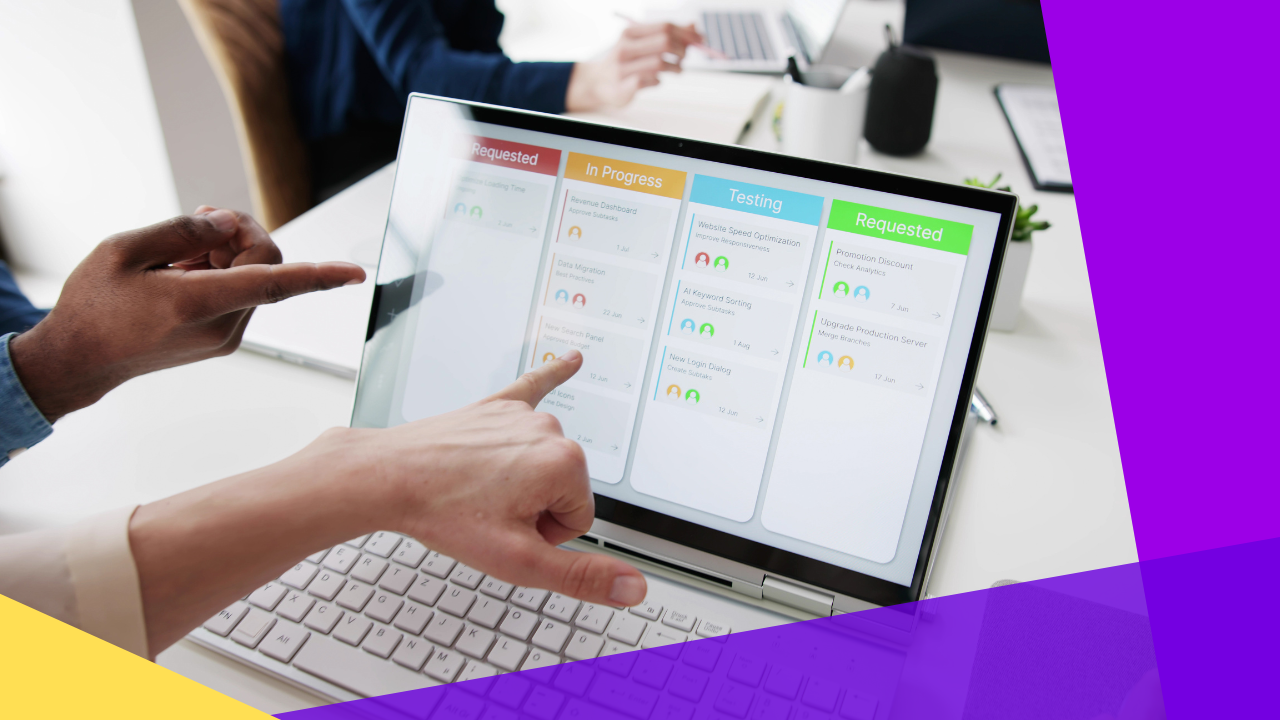
Kanban is also a visual method that improves workflow. Tasks sit on a Kanban board in columns for each stage. For example, the columns may read “To-Do,” “In Progress,” and “Done.”
Then, as tasks move forward, the team shifts them across columns. Kanban also limits work in progress to keep flow smooth. So software teams gain clear visibility and real-time tracking.
3. Lean
Meanwhile, the base of Lean project management is cutting waste. Specifically, Lean maps every action from idea to delivery. This shows where value is added and where waste hides. Teams use value stream mapping, just-in-time delivery, and steady improvement. As a result, Lean lifts efficiency and trims time and cost.
4. Extreme Programming (XP)
In addition, Extreme Programming (XP) leans on quick feedback from the system and the customer. It favors the simplest thing that works, then keeps improving the design. XP uses several key practices.
- Pair programming: two coders work on the same code together.
- Test-driven development: writing tests before the code.
- Continuous integration: frequent code merges and testing.
As a result, these habits raise code quality and reduce bugs. The frequent feedback also allows quick fixes.
5. Adaptive Project Framework (APF)
Finally, APF puts flexibility first. It accepts that needs often shift during complex projects. So it uses a phased cycle, with each phase ending in a review and fresh planning. Plans change as the team learns, rather than staying fixed. As a result, the work stays aligned with client needs and gains better visibility.
Optimizing project management with Arcanys
Arcanys focuses on custom software development and team augmentation. It gives companies a smarter way to outsource. When you partner with Arcanys, you gain a better tech hire option. Moreover, the team loves building strong, lasting partnerships that deliver real results. If you are weighing team models, compare it with the scrum master and project manager roles first.
Why choose Arcanys?
- Expertise in Agile methodologies: the Arcanys team knows Agile well, which means smooth workflows, on-time delivery, and quality output.
- Collaborative approach: Arcanys values open talk and close work with clients, so stakeholders stay informed and engaged.
- Scaled-up solutions: Arcanys offers flexible teams, so you get the right people at the right time.
Join the many companies that have outsourced with Arcanys and gained from its skill and care. Connect with Arcanys today and see how its custom software development and team augmentation services can help you reach your project management goals.
For more context, you can also review best practices in collaborative project management.
Frequently asked questions about project management techniques
Which project management technique is best for a first-time outsourcing client?
Scrum is often the easiest start. Its short sprints and set meetings give new clients steady check-ins. So you see progress every few weeks and can correct course early.
How do time zone gaps affect Agile outsourcing?
However, time zone gaps can slow live meetings. Many teams fix this with a few shared overlap hours each day. They also lean on written updates and recorded demos, so no one waits a full day for answers.
Can you mix two project management techniques on one project?
Yes. Many teams blend Scrum and Kanban into a “Scrumban” model. They keep sprints for planning and use a board for daily flow. This mix suits teams with both fixed goals and shifting support work.
What metrics show a software project is on track?
Watch sprint velocity, bug counts, and on-time delivery rate. Rising velocity with low bugs is a healthy sign. A climbing backlog of missed items is an early warning to act.
Do small businesses need a full-time project manager when outsourcing?
Not always. A good provider often supplies its own project lead. Still, a small firm benefits from one in-house point of contact to set priorities and sign off on work.






 Independent






