
7 predictive analytics in IT examples worth knowing

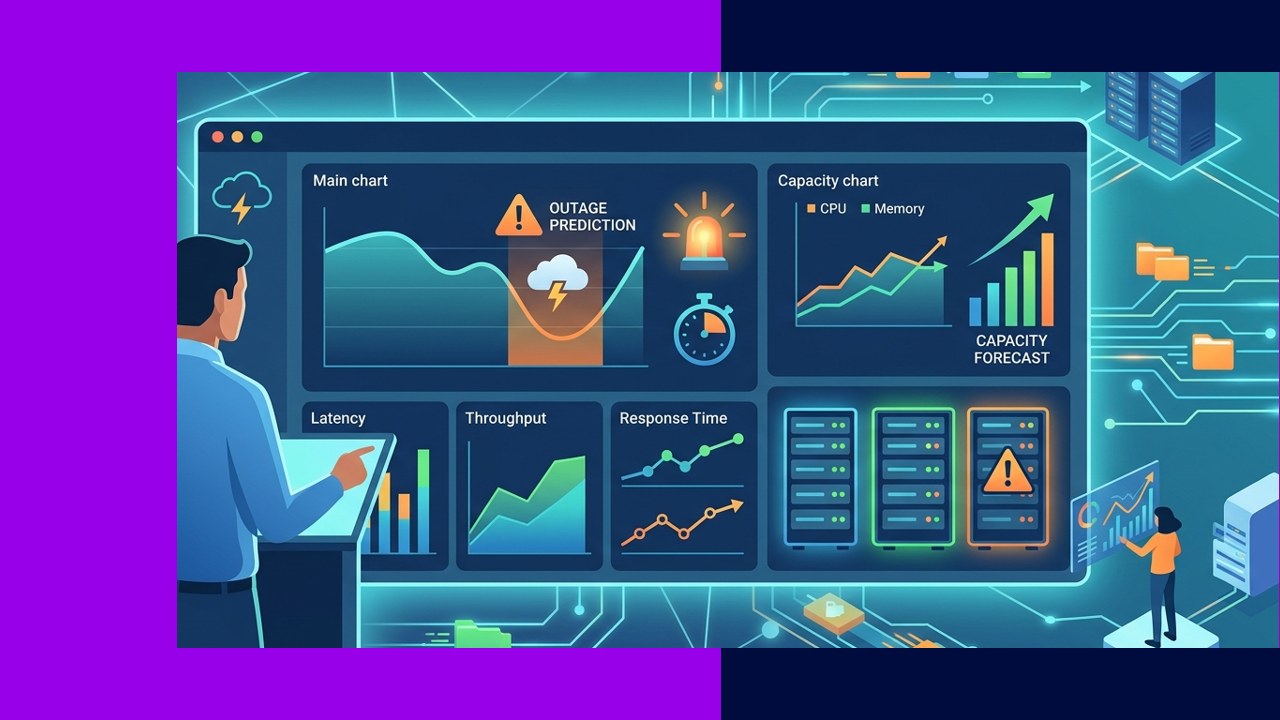
- Predictive analytics in IT uses past system data and machine learning to flag problems before they cause downtime.
- Common examples include outage prediction, capacity planning, proactive maintenance, security threat detection, and cost forecasting.
- Outsourced and managed IT teams often run these models around the clock, so smaller firms gain enterprise-grade foresight.
Predictive analytics in IT turns historical system data into early warnings. Instead of reacting to outages, teams see them coming. Models study logs, metrics, and past tickets. Then they flag risks before users notice a problem.
This matters because downtime is costly and disruptive. A single failed server can stall an entire team for hours. Because of this, managed IT providers now build predictive models into daily operations. As a result, even small companies get foresight once reserved for large enterprises.
The seven examples below show where this approach delivers the most value. Each one is a real use case for both in-house and outsourced IT teams, and each pairs well with a growing set of predictive analytics platforms for business.
1. Predicting outages and system failures
Models watch signals like CPU load, memory use, disk errors, and network latency. When patterns drift from normal, the system raises an alert. Engineers then act before a crash happens. For example, rising disk read errors often warn of a failing drive. A model can flag that drive days ahead of failure. In a Deloitte analysis of AI in predictive maintenance, firms can “use AI to analyze the information and output maintenance recommendations.” That is the same idea applied to servers and storage.
The table below shows how this shifts IT from reactive to predictive work.
| Dimension | Reactive IT | Predictive IT |
|---|---|---|
| Trigger | Failure has already happened | Warning sign detected early |
| Downtime | Often unplanned | Mostly planned or avoided |
| Cost | Emergency repairs and overtime | Scheduled, lower-cost fixes |
| User impact | High and sudden | Low and controlled |
2. Capacity planning
Every system has limits on storage, bandwidth, and compute. Predictive models study usage trends to forecast when those limits will hit. Teams then add capacity before users feel the strain. For example, a model might predict that storage fills up in three weeks. The team expands it in advance. This avoids both surprise outages and wasteful over-provisioning. In short, capacity planning keeps performance steady while controlling spend.
3. Proactive maintenance
Hardware rarely fails without warning. Sensors and logs reveal early signs of wear, such as heat spikes or error counts. Predictive maintenance uses that data to schedule repairs at the right time. According to Deloitte research on predictive maintenance, this approach “can reduce the time required to plan maintenance by 20 to 50 percent, increase equipment uptime and availability by 10 to 20 percent, and reduce overall maintenance costs by 5 to 10 percent.” Those gains apply to servers, networking gear, and data-center equipment alike. As a result, teams replace parts before they break, not after.
4. Security threat detection
Attacks often start with small, unusual actions. Predictive models learn what normal traffic and logins look like. Then they flag behavior that breaks the pattern, such as a login from a strange location. This gives security teams a head start on possible breaches. Many teams align these models with widely used frameworks, because NIST develops cybersecurity and privacy standards, guidelines, and best practices for exactly this kind of risk. Early detection can turn a major incident into a minor one.
5. Ticket volume forecasting
Help desks face predictable surges. Ticket counts often spike after a software release, on Monday mornings, or during patch cycles. Predictive models study past ticket data to forecast these peaks. Managers then schedule the right number of staff for each shift. This keeps response times low without paying for idle hours. For this reason, many providers now fold predictive staffing into their AI outsourcing services. The result is smoother support during busy periods.
6. Performance bottleneck prediction
Slow systems frustrate users and hurt revenue. Predictive analytics spots the early signs of trouble, such as a slow database query or a memory leak. Models can predict which service will degrade under heavy load. Teams then tune or scale that service before it breaks a service-level agreement. For example, a model might warn that a payment API will slow down at peak traffic. Engineers fix it ahead of the rush. This keeps the user experience fast and reliable.
7. Cost and usage forecasting
Cloud bills can climb fast and without warning. Predictive models forecast monthly spend based on past usage. They also flag waste, such as servers that run but do little work. Finance and IT then plan budgets with more confidence. Models can also predict future license needs, so teams avoid last-minute buys. Because the forecasts update often, leaders see cost changes early. In short, this example ties technical data directly to the bottom line.
Frequently asked questions
What data does predictive analytics in IT need?
It needs historical operational data. That usually means system logs, performance metrics, monitoring alerts, and past support tickets. More clean data leads to better predictions. However, teams can start small and grow the dataset over time.
Do you need a large in-house team to use it?
No. Many managed IT and outsourcing providers offer predictive analytics as a service. They supply the models, tools, and analysts. As a result, smaller firms get the same foresight as large enterprises without heavy hiring.
Is predictive analytics the same as monitoring?
Not quite. Monitoring shows what is happening right now. Predictive analytics forecasts what is likely to happen next. The two work best together, because monitoring feeds the data that the models learn from.
How accurate are the predictions?
Accuracy depends on data quality and model design. Early forecasts may be rough. However, models improve as they learn from more history and feedback. Teams should treat predictions as strong guidance, not fixed certainty.
Key takeaways
- Predictive analytics in IT shifts teams from reacting to failures toward preventing them.
- Strong use cases span outages, capacity, maintenance, security, tickets, performance, and cost.
- Good data matters more than fancy tools, so start with clean logs, metrics, and tickets.
- Managed and outsourced IT teams make this foresight affordable for firms of any size.






 Independent





