
Top OKR software to track your 2026 goals


What is the best OKR software for 2026?
The best OKR software is the tool that fits your team size, budget, and goals, with strong picks like ClickUp, Asana, Lattice, and Monday.com leading the pack.
- OKR software helps you set goals, track progress, and keep teams aligned in one place.
- Good tools offer a simple interface, clear reports, and easy customization.
- To choose well, match the software to your objectives, team size, integrations, and price.
Top OKR software
The objective and key results (OKR) method is now a popular way to set goals and measure progress. Small and large firms both use OKR to see what success should look like. However, picking the right tool to track those results can be hard on its own. Good thing OKR software exists to make the job easier.
There are many OKR software options on the market today. As a result, companies can simply shop for one that fits their needs and standards. To get you started, here are some of the top OKR software to try this year.
What is OKR software
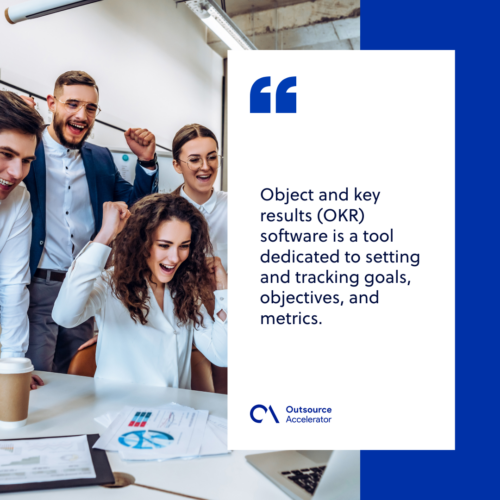
OKR software is a tool built to set and track goals, objectives, and metrics. It makes OKR adoption easier and quicker. Because it keeps all records and key updates in one place, teams stay on the same page. It also works as a strong alternative to the usual collaboration tools for tracking staff progress.
Some teams confuse OKRs with other metrics, so it helps to know the difference between OKRs and KPIs before you buy. In short, OKRs set the direction, while KPIs measure ongoing health.
How OKR software helps your business
A single tool to track your OKRs helps streamline one part of your business. Apart from that, OKR software supports your team in the following ways.
- Ensure transparency. First, OKR software keeps things clear across the whole company. Each team can see the bigger picture through their own tasks and processes.
- Align team efforts. In addition, the software shows how a team can align its work to the company’s mission and goals.
- Ease OKR adoption. As a result, the whole company can adopt OKRs faster, so each team stays focused on shared wins.
These benefits explain why OKR tools often sit next to performance management systems in a modern workplace.
Common features of OKR software
Some of the common features of OKR software include the following.
Intuitive interface
Most OKR software has a simple, easy-to-use interface that suits everyone. So staff do not waste time learning the tool. Instead, they can view their tasks and whole project in one place.
Reports generation
OKR tools can also create progress reports on demand. As a result, teams can spot bottlenecks early, predict trends, and plan the right next steps. This is where OKR software pairs well with employee engagement tools that surface the same data.
Customizability
Flexibility is a big part of running OKRs well. That is why OKR software is easy to customize to each business need. So you can shape the tool around your goals, not the other way round.
Feedback for improvement
Finally, OKRs need to be tuned over time. Because of this, OKR software usually stores feedback from its users. Over time, that feedback helps you refine each goal.
Top OKR software for tracking your goals
Here are some of the top OKR software your team can use to track its goals this year.
1. ClickUp
ClickUp is an all-in-one OKR tool used by small and large teams. It gives you one place to chat, assign tasks, and store files. As a result, it improves transparency and links company goals to daily work.
2. Asana
Asana is one of the easiest OKR tools to use. It helps teams manage work and reach clear results through project planning. In fact, more than 100,000 organizations worldwide rely on Asana for their OKRs and tasks. The platform lets teams build checklists, group projects by priority, and create full reports.
3. Lattice
Lattice calls itself a people success platform. It brings together the tools, workflows, and data that help firms engage and motivate staff. HR and operations teams use it worldwide to make better decisions. As a result, thousands of clients have built strong cultures and better outcomes with the platform.
4. Profit.co
Profit.co guides teams to run their plans in line with the OKR model. With its plan-engage-execute-learn approach, you can align plans each quarter. So you can track progress through weekly check-ins and boost engagement. It also connects with other business tools for smoother work.
5. Monday.com
Monday.com lets users build the tools they need to track results. It offers customizable blocks that improve the way teams run. As a result, it can lift productivity, align goals, and shape workflows to fit your firm.
6. Wrike
Wrike puts teams first. It helps managers track personal goals and tie them to the company vision. In addition, it links different departments to improve results at every level. Because of this, it drives success through shared communication.
7. 15Five
15Five is a people-first platform. It gives HR teams the features they need to manage staff better. For example, it can boost manager performance, raise engagement, and improve retention. The tool is best known for its High Five and 1-on-1 features.
8. Mooncamp
Mooncamp is a popular all-in-one system for agile, engaged teams. It helps every team reach its goals through task alignment and app integration. In addition, it uses check-ins and reminders that nudge each member to update goals.
9. Leapsome
Leapsome suits forward-thinking firms that want to link performance and engagement. It is popular with CEOs and HR teams at startups and big brands like Spotify and Unity. The platform blends features such as onboarding and OKR management. As a result, it helps you manage people better.
10. Quantive Results
Finally, Quantive Results is known as a strategy execution platform. It helps firms stay agile and ahead of rivals. Because it connects people to a shared mission, leaders can act fast and with confidence on every project. It works well for product teams, so it pairs neatly with a guide on OKRs for product managers.
Finding a suitable OKR software for your business
Finding the right OKR software does not have to feel hard. First, be clear on the qualities and aspects below before you choose one.
- Objectives. First, firms pick their OKR software based on their goals. So think about your culture and what you want to achieve next.
- Business size. Next, weigh how many people will use the system and how many licenses you need.
- App integration. In addition, not every tool supports many integrations. So check which third-party apps work with your chosen software.
- Pricing. Finally, prices vary by system and features. Larger firms worry less about this, but startups should budget with care.
Because collaboration matters so much here, it also helps to review what to look for in a team collaboration tool before you commit.
Frequently asked questions
What is OKR software used for?
OKR software is used to set, track, and manage goals in one place. It links daily tasks to company objectives. As a result, teams can see progress and stay aligned all year.
Is OKR software only for large companies?
No. Small teams and startups use OKR software too. In fact, many tools offer simple, low-cost plans. So a business of any size can start with OKRs quickly.
How is OKR software different from a project management tool?
A project management tool tracks tasks and deadlines. OKR software goes further, though. It ties those tasks to clear goals and measurable results, so you can see real impact.
How much does OKR software cost?
Prices vary by tool and by the number of users. Some tools offer free tiers for small teams. Others charge per user each month. So compare features and licenses before you decide.
How do I choose the best OKR software?
Start with your goals and team size. Then check app integrations and pricing. Finally, test a free trial where you can. That way, you pick a tool that truly fits your business.






 Independent





