
Job fair recruitment: Everything you need to know


What is job fair recruitment, and why use it?
Job fair recruitment is a hiring method where employers and job seekers meet in person at one event to explore roles and connect face to face.
- It brings many companies and candidates under one roof.
- It allows quick, direct interaction and fast first impressions.
- It still works well even in a digital hiring world.
Online hiring is everywhere. Still, the job fair has stood the test of time. So it helps to understand the job fair meaning before you plan one.
Job fair recruitment brings seekers and employers together. As a result, it creates a rare chance for face-to-face contact in a digital world.
These events are more than simple meetups. With many companies and candidates in one place, they are prime spots to show skills, network, and make a mark.
If you want to get the most from these busy events, you need to know how job fair recruitment works. So this guide walks you through it step by step.
What is job fair recruitment?
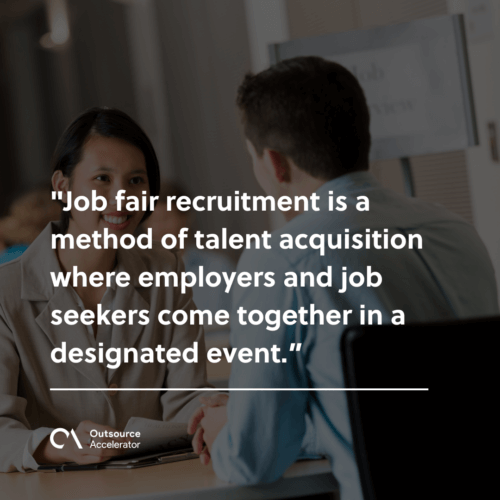
Job fair recruitment is a way to find talent where employers and job seekers gather at one event. This usually happens in a large venue. Online job fairs also exist, though they are less common.
For example, a job or career fair lets employers show their brand and open roles to candidates. On the other side, job seekers come to explore career options.
Job fair recruitment allows face-to-face contact. So both sides can quickly judge fit. As a result, strong chats lead to interviews, offers, and lasting connections.
Benefits of job fair recruitment
Job fair recruitment helps both job seekers and employers. So it stays a valuable part of the hiring process. Here is what each side gains.
Benefits for job seekers
Here are some benefits of job fair recruitment for job seekers:
- Direct interaction. Candidates can talk straight to recruiters. So they make a strong impression and get quick feedback.
- Networking opportunities. Job fairs pack many employers into one place. As a result, networking becomes faster and easier.
- Visibility. These events let seekers show skills and personality beyond a resume.
Benefits for employers
Job fair recruitment gives employers these clear wins:
- Direct engagement. Company reps can meet candidates, judge their communication, and gauge culture fit.
- Efficient talent sourcing. A job fair offers a dense pool of active seekers. So it speeds up the early hiring stages. For more ideas, see these candidate sourcing strategies.
- Brand visibility. Job fairs boost an employer’s brand visibility and affinity.
How to prepare for job fair recruitment
Job fairs are big events. So you must prepare well. By following these steps at each stage, your team can boost its chance of finding top talent.
Before the job fair
Take these steps to prepare before the job fair:
- Research participating companies. Study the other firms at the fair. Learn their industries, values, and open roles. So you can shape your own approach.
- Review job descriptions. Update your job posts so they match the skills you want. This step also keeps your pitch clear.
- Prepare a compelling booth. Bring all you need, such as brochures, business cards, and branded giveaways.
During the job fair
Remember these steps during the actual job fair:
- Provide comprehensive information. Make sure your team knows every detail about the company and open roles.
- Answer questions clearly. Be ready to explain the company, roles, hiring steps, and benefits.
- Promote diversity and inclusion. Show your commitment to diversity and inclusion through clear programs and resources.
After the job fair
After the job fair, you must do the following:
- Provide feedback. Offer helpful feedback to candidates. A good chat leaves a lasting mark and invites future applications.
- Maintain a candidate database. A database lets you revisit talent later. So it streamlines the next job fair.
- Reflect. Review your strategy. Then note what to improve next time.
9 tips on how to achieve success in job fair recruitment
To draw skilled people and get strong results, follow these tips for job fair recruitment. For a candidate-side view, these job fair tips are useful too.
1. Set clear objectives
First, define your goals for the fair. Decide how many roles to fill and which candidates you want. Also plan the key messages about your company.
Clear objectives keep you focused. So they also make success easy to measure.
2. Create an appealing booth
Design a visually appealing booth that reflects your brand and culture. A great booth draws seekers and stands out from the rest. So keep it easy to navigate and full of clear information.
3. Prepare your team
Next, invest time to train your team. Make sure they know the company culture, values, and open roles. As a result, their confidence will spark candidate interest.
4. Engage proactively
So ask your team to be warm and approachable. Create an inviting space that pulls candidates in. Then engage them with open questions about their skills, experience, and goals.
5. Highlight your company’s value
Show what makes your company unique. Share success stories and real examples of your culture and the employee experience. So you attract candidates who share your values.
6. Collect candidate information
Also set up a system to gather resumes and contact details from interested attendees. This data is key for follow-up and further review.
7. Conduct initial interviews
You can also use the fair to run brief first interviews. So you assess skills, ability, and culture fit on the spot. As a result, you spot strong candidates and speed up selection.
8. Follow up promptly
Reach out fast to candidates who showed interest. Prompt follow-up shows care and builds trust. Even if you do not hire them, stay in touch for future roles.
9. Evaluate and learn
After the event, gather team feedback and rate your success. Spot ways to improve your booth, message, or approach. Then apply those lessons to your next job fair. Because of this, many teams also compare notes against wider hiring trends.
Job fair recruitment: Attract the best potential talents
Job fair recruitment is not going away soon. Its strength is simple. It brings seekers and employers together in a lively, direct way.
Digital methods are growing, especially for remote roles. Still, career fairs remain a top way to find strong candidates. Many firms pair them with recruitment process outsourcing to scale faster. Others fold job fairs into a broader talent acquisition plan.
Finally, as you search for talent, keep the goal in mind. You want to fill roles and build a team that fits your vision and long-term success.
Frequently asked questions about job fair recruitment
What does job fair mean?
The job fair meaning is simple. It is an event where employers and job seekers meet in one place. There, companies share open roles, and candidates explore career options.
How do employers benefit from job fair recruitment?
Employers meet many active candidates at once. So they judge fit fast and speed up early hiring. Job fairs also lift brand visibility among future talent.
Are job fairs still effective today?
Yes. Online hiring keeps growing, yet job fairs still work well. They offer direct contact that a screen cannot match. As a result, they remain a strong way to find talent.
How should you follow up after a job fair?
Reach out quickly to candidates who showed interest. Send a clear message and next steps. Also keep their details on file for future roles.
Key takeaways
- Job fair recruitment brings employers and seekers together in person.
- It speeds up sourcing and boosts your employer brand.
- Good prep before, during, and after the fair drives results.
- Clear goals, a strong booth, and fast follow-up win talent.
- Job fairs still work well, even alongside digital hiring.






 Independent





