
Hybrid-first work structure 101: The basics explained

At a glance
- A hybrid-first work structure makes remote the default and treats office time as an optional, intentional choice.
- Documentation, asynchronous updates, and written decisions hold the model together when teams rarely share a room.
- Success is measured by outcomes and clear norms, not by hours spent online or days spent at a desk.
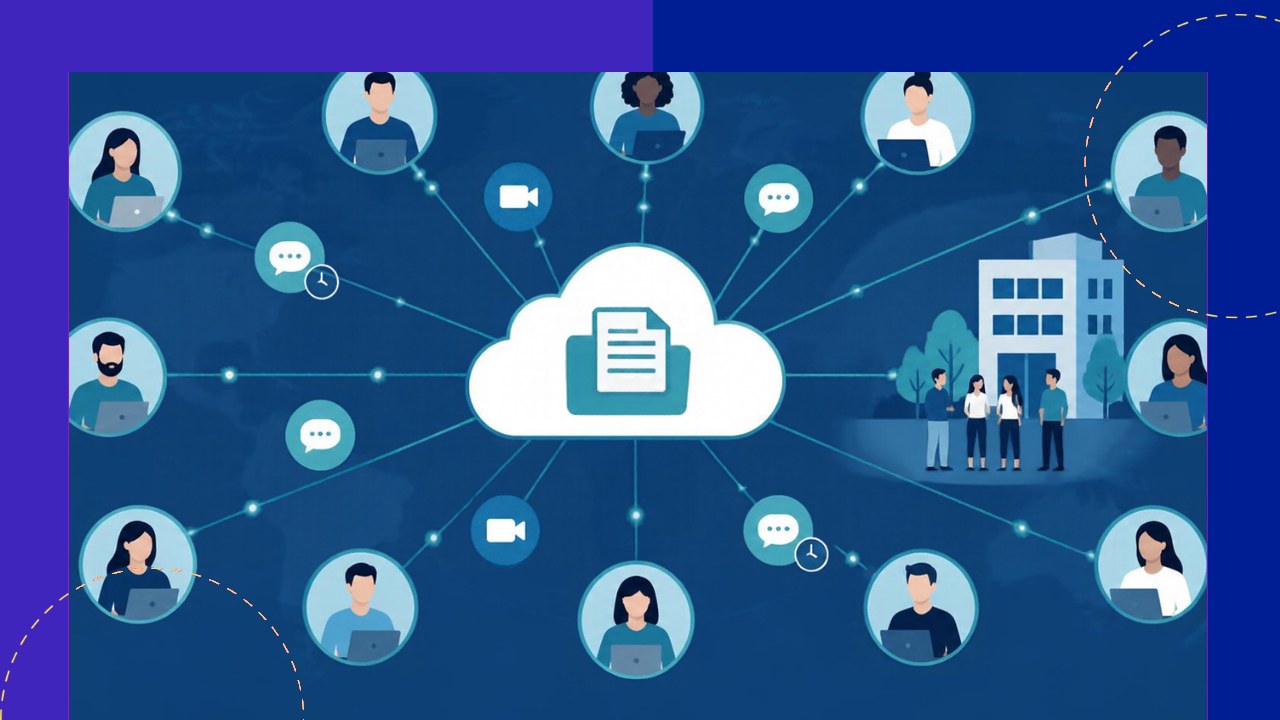
A hybrid-first work structure flips the default of traditional office life. Instead of treating the building as the main place work happens, the company treats remote work as the norm. People come together in person on purpose, for specific reasons, rather than out of habit.
This 101 guide explains how a hybrid-first company is organized and run. The focus is the operating model, not just the idea: where work happens, how decisions get made, how teams talk, and what tools and ratios hold everything together.
What makes a structure hybrid-first
Many companies call themselves hybrid. Most are still office-first underneath. They expect staff in the building three or four days a week, and a remote day is the exception you have to request.
A hybrid-first structure reverses that logic. Remote is the baseline. Office time is optional and planned. The system is designed to work even when nobody shares a room.
That single design choice shapes everything else, from meetings and documentation to promotions and the tools you buy. According to Gallup’s tracking of remote-capable workers, “As of May 2026, 52% of U.S. employees work in a hybrid arrangement.” Yet few of those firms have redesigned how they actually operate.
Remote as the default setting
In a hybrid-first setup, remote is where most real work gets done. Deep focus tasks like writing, coding, and analysis happen wherever each person concentrates best.
This creates a simple rule of thumb. If a task can be done well from home, it does not require a commute. The burden flips: you justify going in, not working remotely.
Pay and promotion follow the same logic. A person’s location should never change their access to good projects or their visibility with leaders. Worker demand supports this design, too. Buffer’s remote work survey found that “More than half of workers (64 percent) are fully remote,” and most want to keep it that way.
The office: An intentional tool
Office time does not disappear in this model. Instead, it changes purpose. Teams gather for things that genuinely benefit from one location, such as kickoffs, workshops, planning sprints, and social bonding.
Microsoft’s research makes the case plainly. It reported that “73% of employees say they need a better reason to go into the office than just company expectations.”
So hybrid-first companies plan in-person days around clear outcomes. They often book a quarter of team gatherings in advance, then protect the rest of the calendar for focused remote work.
Documentation as the single source of truth
When people are rarely in the same room, knowledge cannot live in hallway chats. It has to live in writing instead.
Hybrid-first teams document decisions, processes, and project status in shared spaces everyone can reach. A new hire should be able to understand a project by reading, not by hunting down the right person to ask.
This written record is the backbone of the whole model. It keeps remote and in-office staff equally informed, which prevents the proximity bias that quietly favors people sitting near the boss.
Asynchronous communication by default
Hybrid-first companies lean heavily on asynchronous work. Most updates happen in writing, on each person’s own schedule, rather than in live meetings.
Async communication respects both time zones and focus. A teammate in Manila and another in London can move a project forward without ever being online at the same moment.
Live conversation still has a place. It is reserved for topics that truly need real-time back and forth, like sensitive feedback or early brainstorming.
Decisions and meetings: How they run
Decision-making tends to start in writing. Someone drafts a proposal, others comment inside the document, and the final call is recorded along with its reasoning.
Meetings shrink as a result. If a topic can be handled in a shared doc, it does not become a meeting. The ones that remain have an agenda, written notes, and a clear owner.
Every meeting also produces a short summary. That way, people who could not attend, or who live in another time zone, lose nothing important.
Tooling and team ratios
The tool stack is deliberate rather than accidental. A hybrid-first company usually standardizes on a few core systems.
Most rely on four categories: a documentation hub, a project tracker, a chat tool for quick messages, and video for occasional live calls. Clear norms then tell people which channel fits which purpose.
Team ratios matter too, and there is no single correct split. Some teams are fully distributed. Others keep a small in-office core near clients, equipment, or regulated work.
The guiding question stays simple: does this role truly need a desk in a specific building? If not, the structure defaults to remote. Weighing that split fairly is the real heart of balancing on-site and remote work across a growing company.
Frequently asked questions
Is hybrid-first the same as remote-first?
They overlap, but they are not identical. Remote-first often means the company has no shared office at all. Hybrid-first keeps office space as a deliberate option, so teams can still meet in person when it adds clear value. The default is remote in both, yet hybrid-first keeps that door open.
How many days should staff come into the office?
There is no fixed number, and that is partly the point. Rather than mandating weekly days, many hybrid-first teams target a set number of in-person gatherings per quarter. A common pattern is one team week every one to three months, each planned around specific goals.
Which roles fit a hybrid-first structure worst?
Roles tied to a physical location struggle most, including lab work, manufacturing, in-person healthcare, and front-desk reception. These jobs can still borrow hybrid-first habits for their admin and planning, but their core tasks stay on-site.
How do you measure if it is working?
Track outcomes rather than hours online. Useful signals include project cycle time, staff retention, engagement scores, and whether documentation stays current. Progress on those measures beats counting badge swipes at the door.






 Independent






