
Human capital management 101: the basics explained

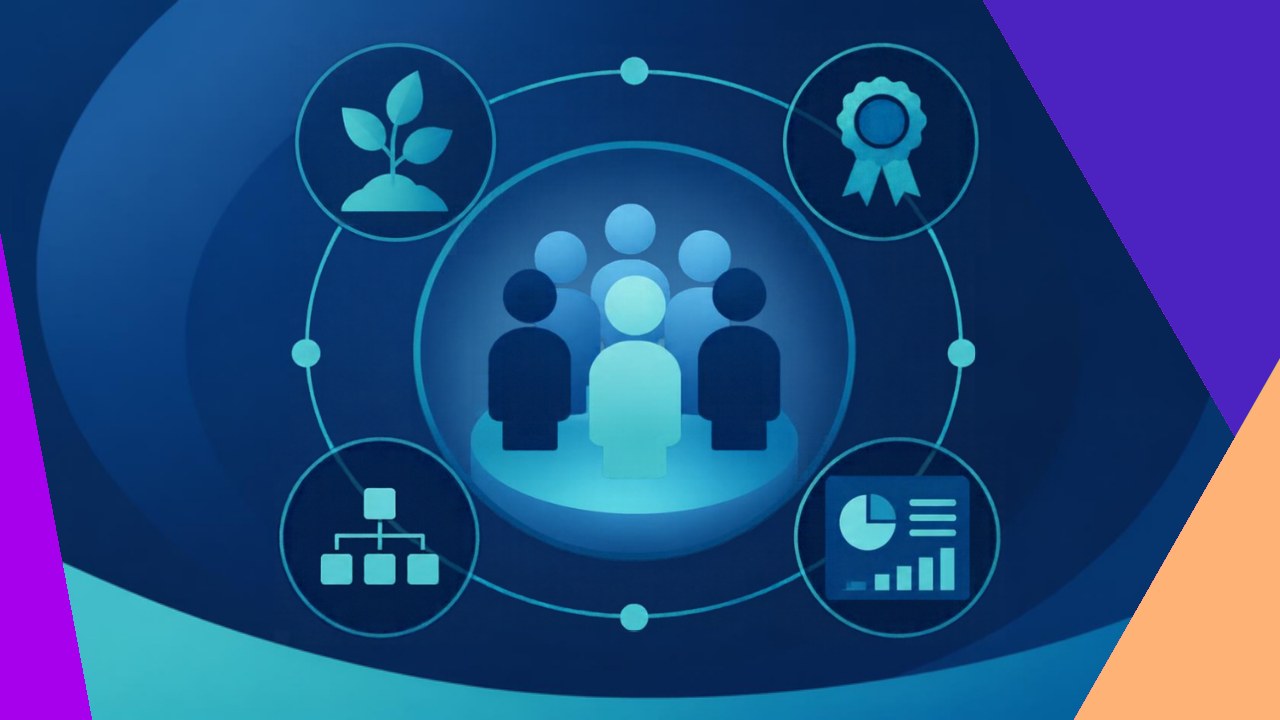
- Human capital management (HCM) treats people as assets to acquire, manage, develop, and optimize, not just a cost to process.
- It spans the full employee life cycle and sits a level above basic HR admin and payroll.
- HCM software ties recruiting, core HR, payroll, talent, and analytics into one connected system.
Every company runs on its people, yet many still treat the workforce as a line item to administer. Human capital management flips that view. It sees employees as assets worth investing in, and it builds the systems to acquire, grow, and keep them. For a growing business, that shift changes how you plan, hire, and retain good staff.
This guide explains HCM as a discipline. You will see what it covers, how it differs from plain HR and payroll, and what the software category actually does. The aim is a clear mental model, not a checklist.
What is human capital management?
Human capital management is the practice of treating a workforce as a measurable asset. The term “human capital” borrows from economics: the skills, knowledge, and experience your people hold carry real value, and that value can rise or fall. HCM is the set of strategies, processes, and tools you use to grow that value over time.
Think of it as people management with an investment mindset. Instead of asking only “how do we process this hire,” HCM asks “how do we get the most from this person, and how do we keep them.” It also spans the whole employee life cycle, from first contact to exit.
The four core jobs of HCM
Most HCM frameworks group the work into four linked jobs. Each one builds on the last.
Acquire
This is finding and hiring the right people. It covers workforce planning, recruiting, selection, and onboarding. Done well, it also means hiring for future needs, not just today’s open seats.
Manage
Once people join, HCM handles the day to day. That includes core records, pay, benefits, time, scheduling, and compliance. This is the administrative backbone that keeps everyone paid and the company within the rules.
Develop
Here the focus turns to growth. Training, coaching, performance reviews, and career paths all raise the value of your workforce. Gallup research on engagement and performance ties strong engagement to real gains, reporting an “18% [difference] in productivity (sales)” between the best and weakest teams. Development is how you move people up that curve.
Optimize
The final job uses data to improve the whole system. Analytics show where you lose people, which teams perform, and where skills gaps sit. Optimization then turns those signals into better calls on pay, structure, and headcount.
How HCM differs from HR and payroll
People often use HCM, HR, and payroll as if they mean the same thing. They do not. Payroll is one task: paying staff correctly and on time. HR is broader, covering hiring, records, and compliance. HCM is broader still, because it wraps all of that in a strategy aimed at workforce value.
The simplest way to see it: payroll and HR keep the function running, while HCM asks how people drive results. The table below sums up the gap.
| Focus | Main question | Scope |
|---|---|---|
| Payroll | Are people paid right? | Pay, tax, deductions |
| HR | Are people managed and compliant? | Hiring, records, policy |
| HCM | Are people adding value? | Full life cycle plus strategy |
Ownership of each job also depends on how your HR function is structured, so no two companies split these tasks the same way.
What HCM software does
The HCM software category brings these jobs into one connected platform. Rather than separate tools for recruiting, pay, and reviews, an HCM suite shares a single record for each employee. Data then flows across modules, so a new hire’s details reach payroll and benefits without rekeying.
Typical modules include:
- Core HR and employee records
- Payroll and benefits administration
- Recruiting and onboarding
- Time, attendance, and scheduling
- Performance and learning
- Workforce analytics and reporting
Smaller firms often start with a basic HR information system and add modules later. Larger ones tend to buy a full suite from the start. Either way, the pull toward one system is strong, because scattered tools create duplicate data and blind spots.
Why HCM matters for growing companies
As headcount climbs, informal people management breaks down. A founder who once knew every hire cannot track skills, pay, and performance by memory at 100 staff. HCM gives that structure. It also frames people as a source of advantage, not just overhead.
Deloitte makes the case plainly, noting that “competitive advantage is now primarily less driven by technology differentiation and more by cultivating the human edge.” For a scaling team, a deliberate approach to acquiring, developing, and retaining talent is what turns that edge into results.
Frequently asked questions
Is HCM only for large enterprises?
No. The discipline scales down well. A 30 person company can apply HCM thinking with a lightweight system and clear owners for hiring and development. The principles matter more than the size of the tool you buy.
How does HCM relate to human resource management?
HRM is the operational arm, handling the policies and tasks that keep people managed. HCM is the wider strategy that treats those same people as an asset to grow. In practice the two overlap, and many teams run both from one platform.
What is the difference between HCM and an HRIS?
An HRIS mainly stores employee data and handles core admin. HCM is a broader category that layers talent, development, and analytics on top. In fact an HRIS often sits as the foundation inside a fuller HCM suite.
Should a growing company outsource HCM tasks?
Many do, at least in part. Routine work such as payroll processing or benefits admin often goes to an outsourcing provider, which frees the internal team for development and planning. The strategy stays in-house even when the processing does not.






 Independent





