
7 HR tech stack optimization examples worth knowing

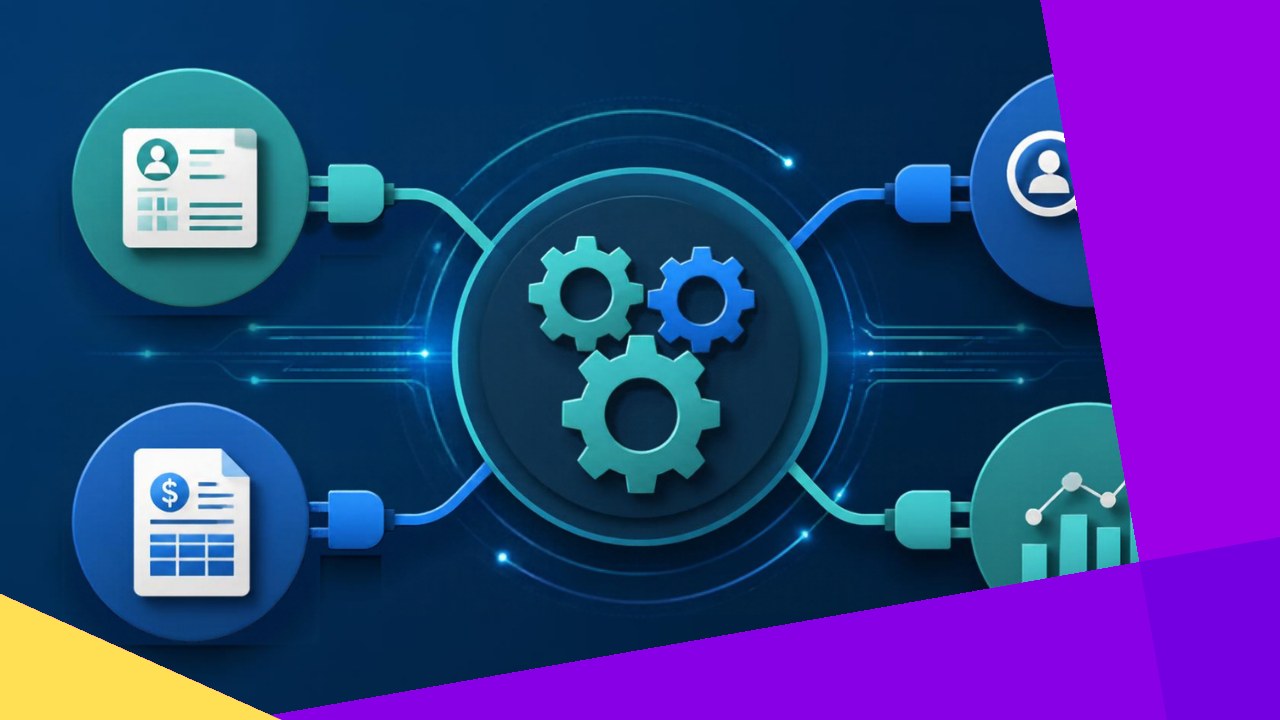
- HR tech stack optimization means connecting and trimming the tools you already own, not buying more of them.
- The biggest gains come from integration: HRIS to payroll, ATS to HRIS, and one shared source of truth.
- Self-service and analytics turn a tidy stack into faster decisions and far less manual admin.
Most HR teams do not need more software. They need the software they own to talk to each other. HR tech stack optimization is the practical work of connecting, deduplicating, and tidying your existing tools so data flows cleanly and staff stop rekeying it by hand. Done well, it cuts admin hours and sharpens almost every people decision you make.
A bloated stack is easy to recognize. You export a spreadsheet from one system to feed another. A new hire gets typed in three times. Nobody fully trusts the headcount number. These are connection problems, and they are fixable without a big new purchase.
Deloitte reports that “most organizations (59%) are taking a tech-focused approach when it comes to AI,” yet buying tools rarely pays off on its own, as its annual human capital research makes clear. The return comes from how the pieces fit together. Here are seven concrete examples of that work.
1. Integrate your HRIS with payroll
Start where errors cost the most. When your HR information system and payroll run as separate islands, someone copies new salaries, status changes, and leave balances between them every cycle. That manual bridge is slow, and it is where mistakes creep in.
A direct integration syncs those records automatically. A promotion entered once updates pay without a second touch. You reduce late paychecks, trim correction work, and give finance numbers it can rely on. For many teams, this single link delivers the clearest return of the whole project.
2. Deduplicate overlapping tools
Growing companies collect software by accident. One manager buys a survey tool, another signs up for a scheduling app, and soon three systems do roughly the same job. Each one carries a licence fee and its own copy of employee data.
So audit what you actually use. List every HR and people tool, note its purpose, and flag the overlaps. Often you can retire two or three apps and keep the strongest. You save money, shrink your security surface, and remove the confusion of staff asking which system is the real one.
3. Automate onboarding workflows
Onboarding touches IT, payroll, facilities, and the hiring manager at once. When those handoffs live in email, tasks slip and a new hire’s first week feels chaotic. That matters, because first impressions shape retention.
Turnover is already high: the Bureau of Labor Statistics counted 5.1 million total separations in a single recent month. An automated workflow triggers every step the moment an offer is accepted, so accounts, equipment, and paperwork are ready on day one. The experience improves, and your team stops chasing checklists.
4. Consolidate data into one source of truth
If three systems each claim a different headcount, you do not have reporting. You have arguments. The fix is to name one system, usually your core HRIS, as the single master record for employee data.
Every other tool then reads from that master rather than keeping its own version. When data changes in one place, it changes everywhere. Before you choose the hub, map the capabilities a central HR system should cover, because the tool holding your truth must be strong enough to carry it.
5. Add employee self-service
HR staff lose hours to requests that employees could handle themselves. Updating an address, downloading a payslip, booking leave: none of these need a ticket. A self-service portal hands those tasks back to employees and managers.
The payoff is not only speed. Giving people direct access also signals trust, and trust drives engagement. Gallup notes that only “three in 10 U.S. workers strongly agree that at work, their opinions seem to count,” and its engagement research links higher engagement to lower turnover. Self-service is a small, visible step in that direction.
6. Connect your ATS to your HRIS
Hiring and employment usually run in separate systems. Your applicant tracking system owns the candidate, and your HRIS owns the employee. Without a link, someone retypes the whole record the day an offer is signed.
A connection between the two carries a new hire’s details across automatically. Name, role, start date, and manager move once, accurately. You remove duplicate entry, close the gap between recruiting and HR, and start the onboarding workflow from clean data instead of a fresh typing job.
7. Put your analytics to work
A connected stack produces something a scattered one cannot: trustworthy numbers. Once your systems share data, you can actually read it. Turnover by team, time to hire, and overtime patterns become visible rather than buried.
So build a simple dashboard on top of your source of truth. You do not need a data science team. Even a few reliable trends let you spot a retention problem early or justify a new hire with evidence. Analytics is the reason the other six examples are worth the effort.
Frequently asked questions
How much does HR tech stack optimization cost?
Often less than you expect, because the goal is to use what you own better. Many integrations ship as built-in connectors or run through a middleware tool at a modest monthly fee. Retiring duplicate apps can even make the project cash-positive, since the licences you cancel offset the setup time.
Should we optimize the stack ourselves or use a partner?
Small integrations are well within reach of an internal HR or IT team. Larger clean-ups, such as migrating to one source of truth, often move faster with help. An outsourcing provider that specializes in HR systems can handle the technical mapping while your team focuses on process and change management.
How often should we review the stack?
Treat it as a yearly habit rather than a one-off. Tools get added between reviews, contracts renew, and needs shift as you grow. A short annual audit of what each system does, and whether anything now overlaps, keeps the stack from drifting back into sprawl.
Where should we start if everything feels tangled?
Begin with the integration that causes the most pain or risk, which is usually the HRIS to payroll link. Fixing one high-value connection builds momentum and frees up hours you can spend on the next step. Resist the urge to rebuild everything at once.






 Independent





