
Why businesses invest in HR shared services

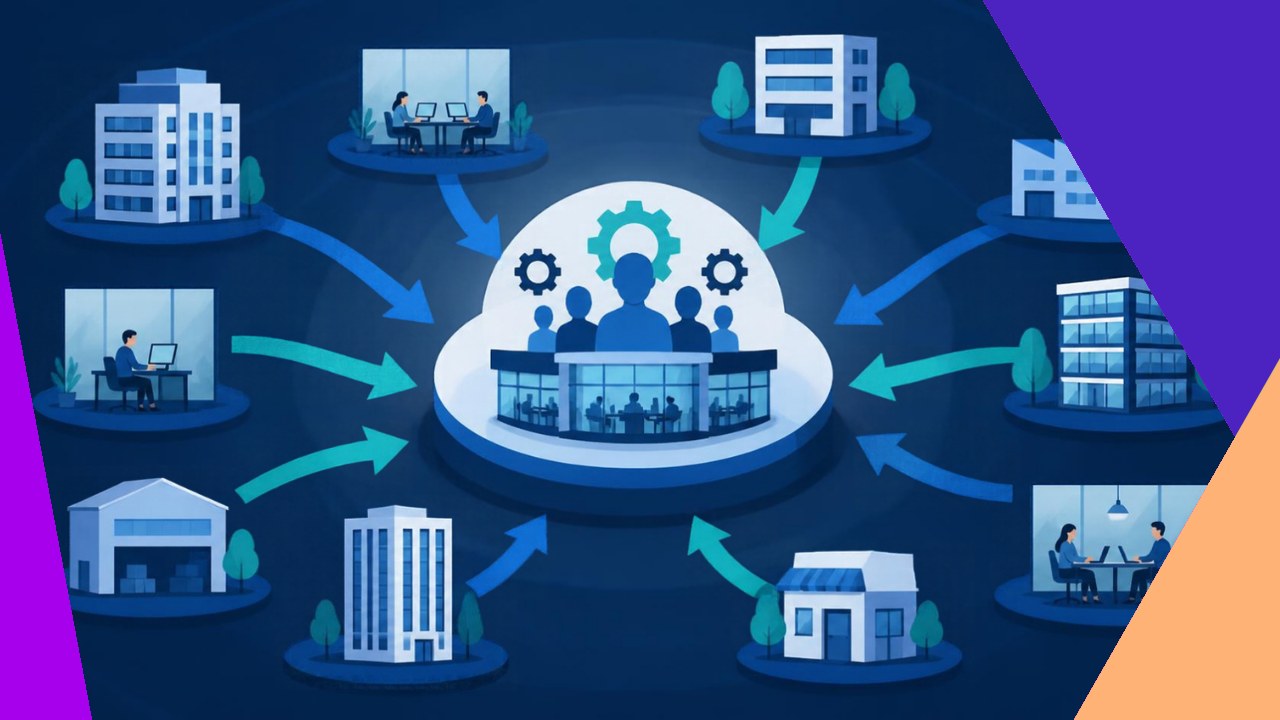
- HR shared services pulls routine, transactional HR work into one internal unit that serves the whole company.
- Businesses invest in it for lower cost per transaction, consistent service, easier scaling, and better people data.
- The real payoff is strategic: it frees senior HR staff to focus on planning instead of paperwork.
HR shared services is a simple idea with a big effect. Instead of every department or site running its own HR admin, a company centralizes the transactional work, such as payroll, employee records, benefits queries, and onboarding paperwork, into one shared unit that serves the whole organization. Everyone follows the same process, and the cost of each task drops as volume rises.
The model is not new, but interest grows as companies scale. At 50 people, scattered HR admin feels manageable. At 5,000, the duplication gets expensive and the service gets uneven. So why do businesses put real money into fixing this? The reasons fall into a few clear buckets.
Cost efficiency through volume and standardization
The first driver is money. When many small HR teams each handle the same tasks, effort gets duplicated. Centralizing the work removes that overlap. One trained team processes the same request types again and again, so the cost per transaction falls.
Standardization makes this possible. A shared unit runs one defined process for leave requests, one for new hire setup, and one for payroll changes. In its global survey of shared services centers, Deloitte found that “process efficiency and standardisation has overtaken cost reduction as a primary objective for investing in GBS.” Cost still matters, but repeatable quality matters more. Because the work is concentrated, companies can also automate it faster, as self-service portals pay off sooner when one team owns the process.
Consistency and compliance across the business
The second driver is reliability. When HR admin lives in silos, employees get different answers depending on who they ask. One manager approves a leave type, another rejects it. A shared services model ends that: the same rules apply to every worker, in every location.
That consistency also protects the business. Payroll errors, missed benefits deadlines, and sloppy record keeping all carry legal and financial risk. A central team with clear procedures is easier to audit and correct, so compliance becomes a controlled process rather than a scramble.
Scale that grows with headcount
The third driver is growth. Transactional HR volume rises with every new hire, and a shared unit absorbs that rise far better than a patchwork of local teams. The shared team already owns the process and the tools, which is why fast-growing and multi-site companies invest early. The same Deloitte survey notes that “since 2015, Finance, HR, and IT remain the top three functions performed in SSCs across industries.” HR sits at the core of the idea because its transactional load scales so predictably.
Some companies extend the model by handing parts of it to an outsourcing provider. If you are weighing that route, it helps to know the full menu of HR functions that outside partners can run.
Better data in one place
When HR transactions flow through one unit, the data flows through one system. That gives leaders a single, clean view of headcount, turnover, pay, and service volumes. Scattered admin produces scattered data, and messy data hides problems.
A central team can also track how many queries it handles, how fast it resolves them, and where delays happen. Those metrics turn HR into something measurable, and they guide smarter staffing and policy decisions.
Freeing senior HR for strategic work
The biggest reason is the least obvious. Every hour a senior HR professional spends on payroll corrections is an hour not spent on workforce planning or manager coaching. A shared unit takes that routine load off strategic shoulders.
The US Bureau of Labor Statistics notes that HR managers “plan, coordinate, and direct the administrative functions of an organization,” including “administering employee-related services such as payroll, training, and benefits.” Shared services lifts much of that weight so leaders can focus higher up.
This split sits behind the modern HR structure. As SHRM describes it, in the current operating model “HR partners and shared services manage daily tasks” while business partners and centers of expertise focus on strategy. For the other half of that picture, see how embedded HR partners shape business strategy.
When the investment pays off
A shared services model is not free to build. It takes new processes, a platform, and a transition period while old habits fade, so it suits some companies more than others.
The payoff is strongest when a business has enough transaction volume to justify the setup, more than one team or location, and leaders who want HR to do strategic work. Smaller single-site companies may get there later, or reach the same result by outsourcing instead. The question is not whether centralizing helps, but whether your scale makes the switch worthwhile.
Frequently asked questions
How is HR shared services different from outsourcing HR?
Shared services keeps the work inside the company under one internal team. Outsourcing hands it to an external provider. Many businesses blend the two, running a shared unit for sensitive tasks and sending high-volume processing to a partner. The deciding factors are control, cost, and how much internal expertise you want to keep.
What transactions usually move into a shared services unit first?
Companies tend to start with the highest-volume, most repeatable tasks. Payroll processing, record updates, benefits enrollment, and onboarding admin are common first movers. Complex work, such as sensitive employee relations cases, often stays with local HR managers because it is hard to standardize.
Does a shared services model hurt the employee experience?
It can go either way. A well-run unit with good self-service tools usually speeds up answers and raises satisfaction. A poorly staffed one can feel distant and slow. Success depends on clear service standards, a responsive help channel, and an easy route to escalate tricky issues to a person.
How long does a shared services setup take?
Timelines vary with size and scope. A focused rollout covering a few core processes can take a few months. A large, multi-country program often runs over a year, because it involves new systems, process redesign, and change management. Phasing the work by process lowers the risk.






 Independent





