
How offshoring can strengthen your brand


How does offshoring strengthen your brand?
Offshoring strengthens your brand by cutting overhead, freeing budget and time for marketing and brand building, and adding round-the-clock support that keeps results coming in.
- Lower overhead means bigger budgets for marketing, PR, and brand development.
- An offshore team gives you 24/7 back-office support.
- Your core team gets more time to grow the business.
Are you thinking about offshoring but still weighing whether it is a good move? This guide can help. Offshoring does more than trim costs. It can also give you a stronger brand identity and better results.
Offshoring is a model where companies tap into other firms that work toward a shared goal. Many businesses around the world use skilled teams in Asia to get the job done. For a sense of how it looks in practice, see these examples of offshoring.
Offshoring frees your budget for brand building
When you move back-office tasks to an offshore team, you free up your own energy. As a result, you can pour that focus into the many ways to strengthen your brand. Because your overhead drops, you can set bigger budgets for marketing, brand development, and PR. In short, the savings fund your growth.
Not every function fits this model, so it helps to know the pros and cons of offshore outsourcing before you commit. Routine, rules-based work moves over most easily, as covered in this guide to back-office outsourcing.
Offshoring gives you round-the-clock support
While you build your brand, your offshore team keeps working. In fact, they can provide 24/7 back-office support to your local team. They work while others sleep, so support never stops and results keep coming. That is two wins at once.
Of course, a remote team needs good management. For a head start, review these offshore team best practices. They help you keep quality high across time zones.
How to start offshoring
Getting started is simple. First, talk to an outsourcing expert about your goals. Next, map out which tasks to hand over and which to keep in-house. Then plan how your offshore team will support production while you manage the brand. If you are unsure where to begin, compare offshore versus onshore setups to see which fits your budget and time zone.
Why business process outsourcing is good for your business
There are many myths about outsourcing in the news. So what is the truth? And what is business process outsourcing?
Business process outsourcing is a model where one company hires another to handle certain job functions. It has been around since the 1980s. Today, small and large businesses use it worldwide. The Philippines, China, and India are three of the most common places where work is outsourced.
There are four core reasons why companies use outsourcing:
- Flexibility. You cannot finish every task in a single day. With outsourcing, however, you can adjust your time and still get things done. As a result, you reach better productivity.
- Reduce costs. In a tight market, every owner looks for an edge. That edge needs financial stability. Offshore outsourcing can cut operational costs by up to 80% and build savings.
- Core goals. Some matters need more of your time. Meanwhile, other needs still have to be met. So the provider handles your non-core work while you focus on core goals.
- Expertise and skills. Your offshore team is made up of skilled people with years in their field. Because of this, you can expect strong work, backed by clear reports.
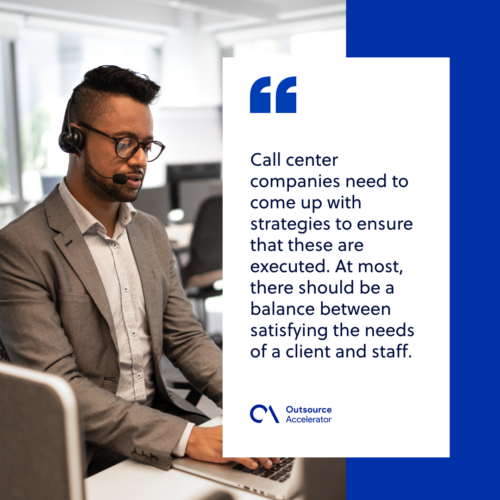
Call center companies also need a plan to deliver on these points. Above all, there should be a balance between client needs and staff needs. So how does that happen? Take a look at these tips:
- Partnership. The work does not stop once you outsource. Instead, both the provider and the company should work hand in hand. This also lets you keep full control over the processes your offshore team handles.
- Communication. Because of the distance, frequent contact matters a lot. It keeps every process on track for the best results. Regular performance reports and strict metrics help too.
- Growth. To earn staff loyalty, support their needs as well. For example, offer career growth, recognition, and a fair pay and benefits package.
Both sides should not just consider these points. They should act on them. That is how you gain the real benefits of business process outsourcing.
Offshore Business Processing (OBP) has a proven track record in freight forwarding offshore services that can increase your productivity and reduce your costs by up to 80%.
Frequently asked questions
What is the difference between offshoring and outsourcing?
Outsourcing means hiring a third party to do a task. Offshoring means that partner sits in another country, often to lower costs. In short, all offshoring is outsourcing, but not all outsourcing is offshoring.
Can offshoring really help a small brand?
Yes. Small brands often gain the most. Lower overhead frees cash for marketing and PR. Flexible contracts also let a small team use skills it could not afford to hire in-house.
Which tasks should I offshore first?
Start with routine, rules-based work. Common first picks include data entry, bookkeeping, and customer support. These jobs free your core team fast and carry low risk.
How much can offshoring save my business?
Savings vary by role and country. Many firms report up to 80% lower operational costs on offshored functions. The exact figure depends on the work, the location, and the provider you choose.
How do I keep quality high with an offshore team?
Set clear metrics and report on them often. Treat the provider as a partner, not just a vendor. Regular communication across time zones keeps results on track.






 Independent






