
How many leads does a BPO need to hit its revenue target?

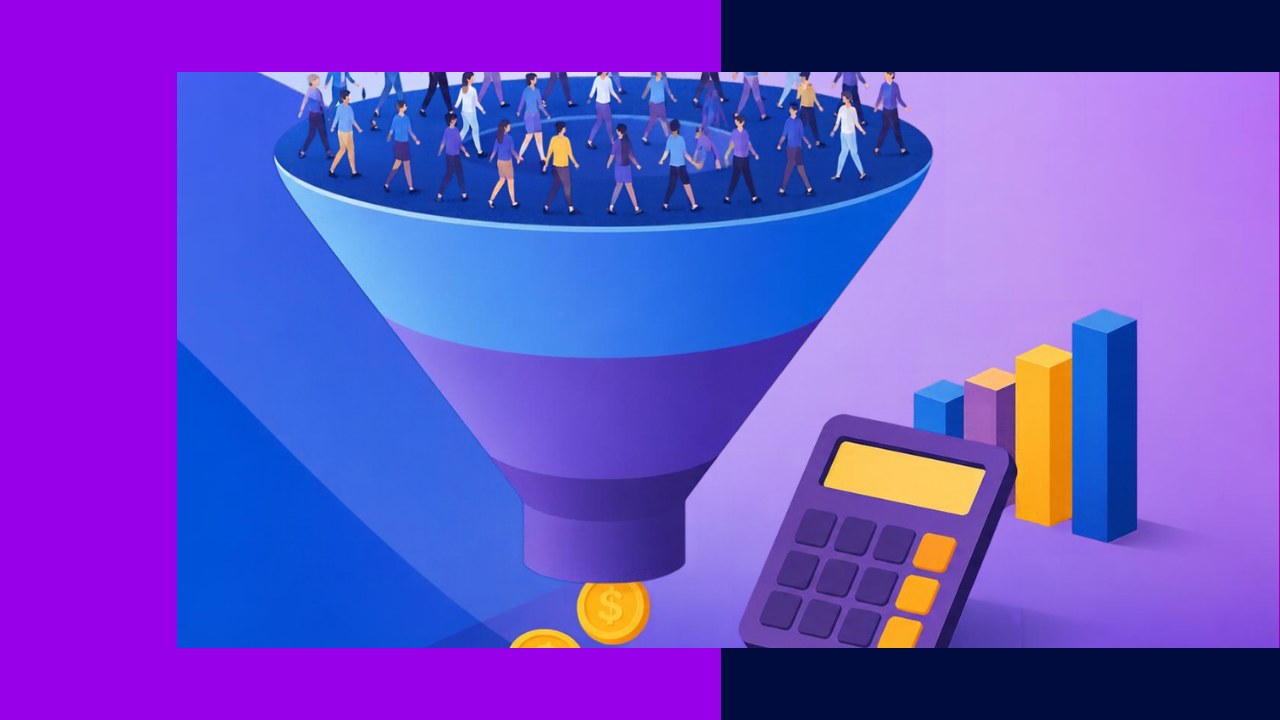
- Most BPOs set a revenue target but never work out how many leads it takes, so lead generation runs on hope rather than a plan.
- Reverse-funnel math answers how many leads you need by working backward from revenue to deals, proposals, meetings and leads.
- The key inputs are average contract value, win rate and the conversion rate at each stage, ideally taken from your own CRM data.
- Improving a single ratio, especially lead quality, cuts the leads you need far more cheaply than buying extra volume.
- Sales Hub helps you act on the math by filling the top of the funnel with targeted, enriched prospects.
“We need to double revenue next year.” Fine. But how many leads does that take? Most BPO owners cannot answer that question. As a result, their sales teams either drown in poor-fit leads or sit idle waiting for referrals.
The good news is that the math is simple. Once you know how many leads your revenue target requires, you can plan budgets, hiring and outreach volume with confidence. Here is how to work it out, step by step.
What reverse-funnel math is
A sales pipeline moves forward: leads become meetings, meetings become proposals and proposals become deals. Reverse-funnel math runs the same chain backward. You start with the revenue you want, then divide your way back to the leads required.
You need five inputs:
- Revenue target: the new annual revenue you want to win.
- Average contract value (ACV): the typical annual value of a new client, usually seats multiplied by price per seat.
- Win rate: the share of proposals that close.
- Meeting-to-proposal rate: the share of meetings that lead to a proposal.
- Lead-to-meeting rate: the share of leads that book a meeting.
Use your own data wherever possible, because published averages are a rough guide at best. HubSpot, for instance, puts the average sales close rate at 29%, but BPO win rates vary widely by service line and deal size.
A worked example: how many leads does a BPO need?
The numbers below are an illustrative example only, so swap in your own.
Imagine a 60-seat BPO in Manila that wants $600,000 in new annual revenue. Its average new client takes ten seats at $1,000 per seat per month. That gives an ACV of $120,000.
Now work backward one stage at a time. Here is the full calculation, using example rates.
| Funnel stage | Example rate or input | Result |
|---|---|---|
| Revenue target | Set by the business | $600,000 |
| Deals needed | $600,000 divided by $120,000 ACV | 5 deals |
| Proposals needed | 25% win rate | 20 proposals |
| Meetings needed | 40% meeting-to-proposal rate | 50 meetings |
| Leads needed | 10% lead-to-meeting rate | 500 leads |
So this example BPO needs around 500 leads a year, or roughly 42 a month, to hit its target. That is a number a sales team can plan around.
Fifty meetings sounds manageable. However, each one needs prep, follow-up and often a tailored proposal. Salesforce reports that sales reps spend 60% of their time on non-selling tasks, so check that your team has the hours before you raise lead targets.
How to improve each ratio
Every ratio in the chain is a lever. Small gains compound, because each stage multiplies the next.
Raise your lead-to-meeting rate
Better targeting does most of the work here. Leads that match your ideal customer profile and show a trigger, such as recent funding or fresh job postings, book meetings far more often. Before chasing volume, agree as a team on what counts as a qualified outsourcing lead.
Raise your meeting-to-proposal rate
Strong discovery calls drive this number. Ask about volumes, decision makers, budget and timeline, so proposals only go to buyers who are ready for one.
Raise your win rate
Tailored proposals, clear transition plans and fast follow-up all lift win rates. Focus matters too: LinkedIn research found that top-performing sales professionals are 2x more likely to hit quota, partly by prioritizing high-opportunity accounts.
Raise your contract value
Bundling services or setting a minimum seat count lifts ACV. Consequently, you need fewer deals, and every earlier stage shrinks with it.
How lead quality changes the math
This is where the numbers get interesting. Go back to the example and lift the lead-to-meeting rate from 10% to 20% by targeting better-fit accounts. Suddenly, the BPO needs 250 leads, not 500.
In other words, doubling lead quality has the same effect as doubling lead volume, at a fraction of the cost and effort. Buying more poor-fit leads, by contrast, inflates activity without moving revenue. Reps burn hours on calls that were never going to close.
That is why effective BPO lead generation starts with tight targeting rather than bigger lists. Track your ratios monthly, and you will see quickly whether a new lead source is actually helping.
How Sales Hub helps you hit your lead targets
Once you know how many leads you need, Sales Hub helps you find the right ones. Its Explore tool searches 10M+ verified business contacts, with filters for companies with offshore teams, companies hiring remote roles, recent funding and job postings from the past 24 hours. These point you toward high-fit leads.
Enrich then adds revenue and headcount data, so you can estimate seat potential before outreach. Engage runs multichannel sequences across email, LinkedIn and phone, with open, reply and click tracking plus campaign analytics to monitor your ratios over time.
You can start on the Free Forever plan, which includes 50 credits per user per month and a strategy call with the OA team.






 Independent





