
What is healthcare administrative support?

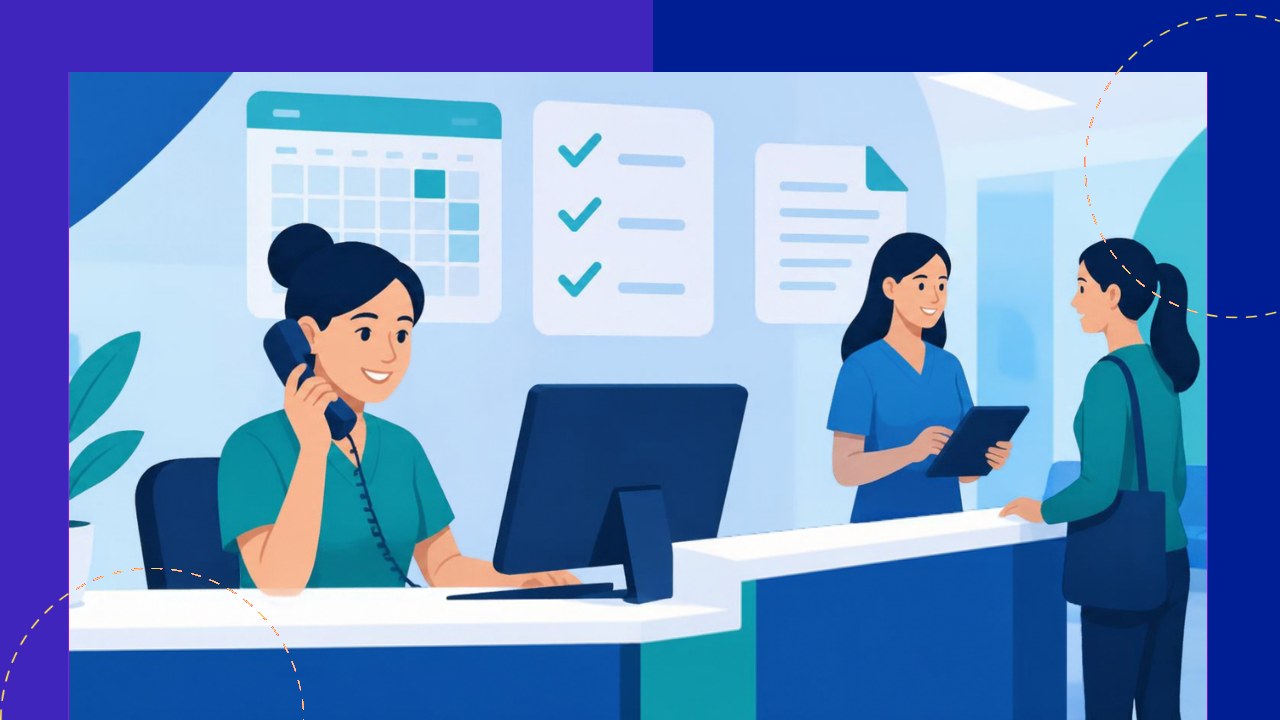
- Healthcare administrative support is the non-clinical work, such as scheduling, patient intake, insurance checks, records, and referrals, that keeps a practice running.
- Providers outsource it to lower costs, ease staff burnout, and give clinicians more time with patients.
- Pick a partner on HIPAA compliance, real healthcare know-how, and clear, regular reports.
Americans make roughly 1.0 billion visits to physician offices each year, the CDC reports. Every visit creates paperwork. Healthcare administrative support is the work that handles that paperwork. It keeps the front desk calm and lets clinicians focus on care.
In plain terms, it covers the office work behind each patient visit. That means booking appointments, checking insurance, filing records, and routing referrals. None of it treats a patient. Yet a practice cannot run without it.
The work is routine and rule-heavy. So many providers now hand parts of it to an outsourcing provider. This article explains what the work covers. It also shows why practices outsource it, and how to pick a partner.
What healthcare administrative support covers
The work is broad. But it splits into a few clear areas. Together they form the front-office and back-office backbone of a clinic, a group practice, or a hospital unit.
Scheduling and patient intake
This is the first step for most patients. Staff book, confirm, and move appointments. They also send reminders to cut no-shows. At intake, they collect patient details, consent forms, and health history. Getting this right matters. One wrong digit in a record can hold up a claim later.
Insurance checks and prior approval
Before a visit, staff confirm the patient’s plan and benefits. For some services, they also get prior approval from the payer. This work is slow and time-sensitive. Still, it protects money directly. When it slips, claims get denied and patients get surprise bills.
Records and referrals
Admin teams keep charts neat, current, and easy to find. They also handle referrals in and out. That way patients reach the right specialist fast. Digital charts help here. As HealthIT.gov notes, streamlined provider workflows support “practice efficiencies and cost savings.”
Front-office communication
Admin staff answer phones, reply to messages, and greet patients. They field billing questions. They pass clinical questions to the right person. In short, they are the practice’s voice between visits.
Why providers outsource administrative support
This work is costly and hard to staff. The government has long tried to “reduce burden and lower costs by standardizing business practices.” That is how CMS describes its administrative simplification effort. Even so, the daily load stays heavy. That is where outsourcing helps.
First, cost is a clear driver. An offshore partner can handle scheduling, checks, and records at a lower hourly rate than local hires. Second, staffing is a constant headache. Front-desk turnover runs high. Each new hire takes weeks to train.
Third, outsourcing eases burnout. Routine tasks move off the clinical team. So nurses and doctors win back time for patients. Fourth, a good partner brings scale. In busy seasons, they add staff fast. The practice avoids the hire-and-fire cycle.
Some fields need special care. Take mental health practices, which work in behavioral health settings. Their admin staff must be trained for sensitive records and strict privacy rules. The broad work still applies. But the details shift by specialty.
In-house versus outsourced admin support
Neither model is always better. The right choice depends on volume, budget, and how much control you want. The table below compares the two at a glance.
| Factor | In-house team | Outsourced partner |
|---|---|---|
| Cost | Higher wages, benefits, and overhead | Lower hourly rates, no local overhead |
| Staffing | You recruit, train, and cover absences | Partner manages hiring and coverage |
| Scalability | Slow to add capacity | Flexes up or down quickly |
| Control | Direct, hands-on oversight | Managed through reports and service levels |
How to choose an administrative support partner
A good choice protects both money and patient trust. Weigh a few key points before you sign.
HIPAA compliance and data security
Any partner that handles patient data must follow HIPAA. Ask for a signed business associate agreement. Also ask for proof of access controls and audit trails. Without these, you carry the risk.
Healthcare know-how
General call-center skills are not enough. Look for teams that already know insurance checks, prior approval, and medical records. That skill prevents costly slips on claims and coding.
Technology fit and reporting
The partner should work inside your practice and records systems, not a bolt-on tool. Also insist on clear, regular reports. You want to see wait times, no-show rates, and check accuracy. Then quality never becomes a guess.
Frequently asked questions
Is healthcare administrative support the same as medical billing?
No, though they overlap. Billing codes claims and collects payment after a visit. Admin support is wider. It mostly happens before and around the visit. It covers scheduling, intake, checks, and records. Many practices outsource both. But they are separate jobs with different skills.
Can outsourced staff use our electronic health record safely?
Yes, when access is set up right. Partners work through role-based logins. Each user sees only the data they need. Every action is logged. So the practice can review who viewed what. A business associate agreement makes this arrangement legal and sound.
How quickly can an outsourced team get up to speed?
Onboarding usually runs two to six weeks. It depends on volume and system complexity. A phased start helps. Begin with scheduling and reminders. Then add checks and records once the team proves reliable. Good process notes shorten the ramp a lot.
Will patients notice the work is outsourced?
Rarely, if the partner is trained and set up well. Staff use your greeting, your systems, and your rules. So calls and messages feel local. Clear scripts and quality checks keep the experience steady for every patient.






 Independent





