
7 enterprise IT outsourcing examples worth knowing

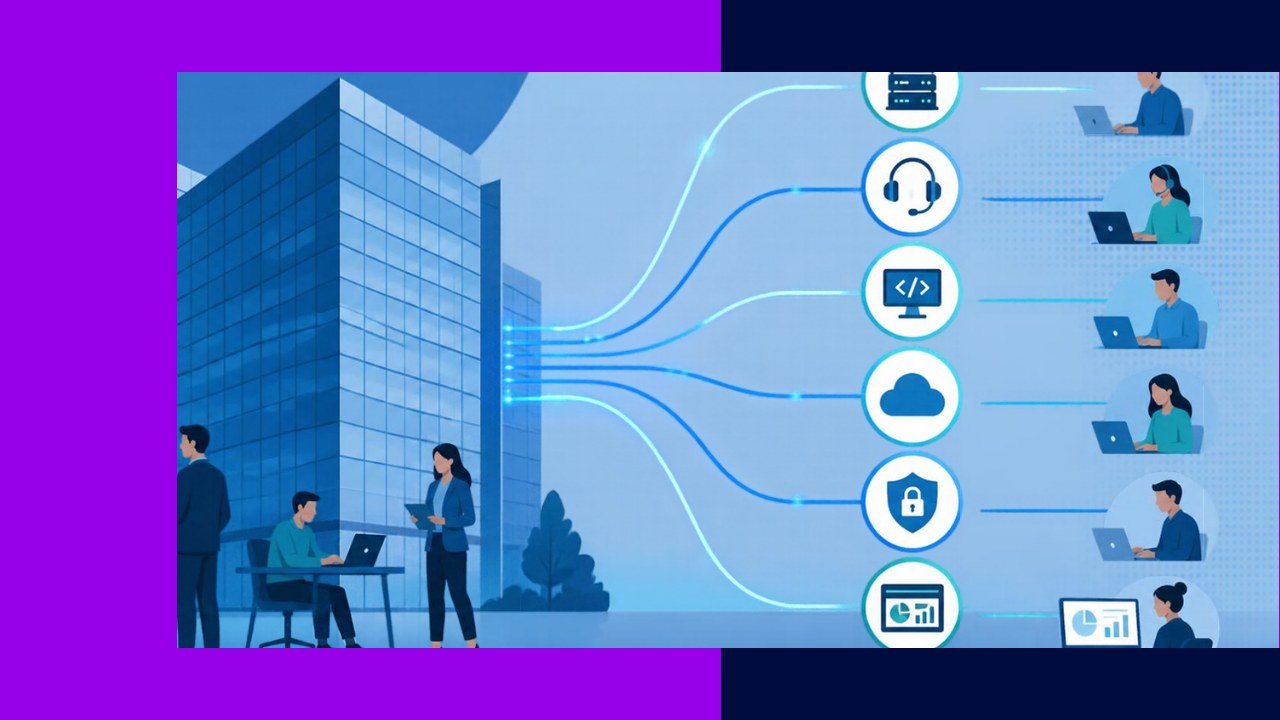
- Enterprise IT outsourcing covers far more than one task, from data centers and help desks to cloud, security, and testing.
- Each example fits a different pressure: cost, scale, speed, specialist skills, or round-the-clock coverage.
- Knowing what large organizations hand off helps you decide which parts of your own IT stack to outsource first.
Big companies rarely run every system in-house. Instead, they use enterprise IT outsourcing. In simple terms, that means hiring an outside partner to run certain tech functions for them. The goal is clear. They gain expert skills, control cost, and keep key services running without hiring for every role. Large systems are complex, so firms often lean on the NIST Cybersecurity Framework to set clear expectations first.
So what exactly gets outsourced? Below are seven plain examples. Each one solves a different problem. Together, they also show how this model supports wider modernization goals. Use them to spot where your own team is stretched too thin.
1. Infrastructure and data center operations
This is the classic starting point. A provider takes over your servers, storage, and networks. It also runs the data center that holds them. The partner then handles updates, backups, and the uptime targets set in your contract.
It fits when your setup is stable but hard to maintain. Many firms outsource here for one reason. They turn a large fixed cost into a steady monthly fee. It also helps when you want to drop aging hardware without a big upfront bill.
2. Help desk and service desk support
Every employee needs IT help at some point. A service desk answers those tickets. It covers password resets, software installs, and broken hardware. Providers staff these teams across time zones too. So support stays open at night and on weekends.
This example fits firms with many users or many offices. In-house teams often drown in routine requests. Outsourcing the first support tiers frees your staff for harder work. As a result, tickets close faster and people wait less.
3. Application development and maintenance
Software does not finish at launch. It needs new features, fixes, and security updates for years. Here, a partner builds new software or keeps your current systems healthy. Some firms outsource a whole product. Others simply add an offshore team to their own.
It works well when in-house developers are scarce or costly. It also suits older systems that still run the business but bore your engineers. For a deeper look at this model, see our guide on building software through an external team.
4. Cloud management
Most firms now run on cloud platforms. Yet few master every setting. Cloud management outsourcing covers the move to the cloud, daily operations, and cost control. NIST calls cloud computing “a model for enabling convenient, on-demand network access to a shared pool of configurable computing resources,” per the NIST cloud computing program.
This example fits firms that moved fast and now face surprise bills. A specialist partner trims wasted resources and watches performance. As a result, spending drops and systems stay quick during busy spikes.
5. Cybersecurity and SOC operations
Threats never sleep, so your defense cannot either. Many firms outsource a security operations center, or SOC. This team watches your networks around the clock. It spots attacks, checks alerts, and responds to incidents right away.
Security talent is hard to hire and costly to keep. So outsourcing fills that gap fast. CISA notes that “implementing safe cybersecurity best practices is important for individuals as well as organizations of all sizes.” Its best-practices guidance gives providers a shared baseline. This example fits any firm that cannot staff a 24/7 team alone.
6. Data and analytics
Companies collect huge amounts of data. But raw data alone decides nothing. Here, a partner builds the pipelines, storage, and dashboards. Then it turns those numbers into insight. Some teams also outsource data cleaning and reports that nobody inside wants to own.
This fits firms that value analytics yet lack the engineers for it. An outside team can launch reporting in weeks, not quarters. Because the work is project-based, it scales up and down with each new effort.
7. Quality assurance and testing
Shipping broken software costs far more than testing it first. With QA outsourcing, a dedicated partner tests your applications. The team runs manual checks and builds automated tests. It also flags defects before each release.
It fits firms that ship often and cannot let bugs reach users. Testing needs tools and skills that differ from building software. So splitting the two roles often lifts overall quality. Many firms pair QA with their app development contract for one accountable supplier.
Frequently asked questions
How do these outsourcing examples usually get priced?
Pricing varies by example. Infrastructure and service desk work often use a fixed monthly fee or a per-user rate. This keeps budgets steady. Development, analytics, and QA tend to bill by time or per project, since scope shifts more. Security monitoring usually uses tiered pricing. The price then rises with the number of devices or the volume of data watched.
Can a company outsource several of these at once?
Yes, and large firms often do. Some sign separate contracts with a specialist for each function. Others bundle infrastructure, help desk, and cloud under one deal. That way, they manage fewer vendors. The trade-off is control versus ease. So weigh how much coordination your team can really handle.
Which example should a mid-sized firm try first?
Start where the pain is loudest and the risk is lowest. For many, that means the service desk. Routine tickets are easy to define and measure. Infrastructure is another safe entry point. For now, keep sensitive or fast-changing work in-house. Hand it over once you trust the partner and the process.
How is enterprise IT outsourcing different from staff augmentation?
Staff augmentation adds individual contractors who work under your direction. Full outsourcing hands over a whole function instead. Then the provider owns both the outcome and the management. Enterprise deals often blend the two. They use extra engineers for flexible capacity and managed services for steady, measured work.






 Independent





