
Eastern European developers 101: the basics explained

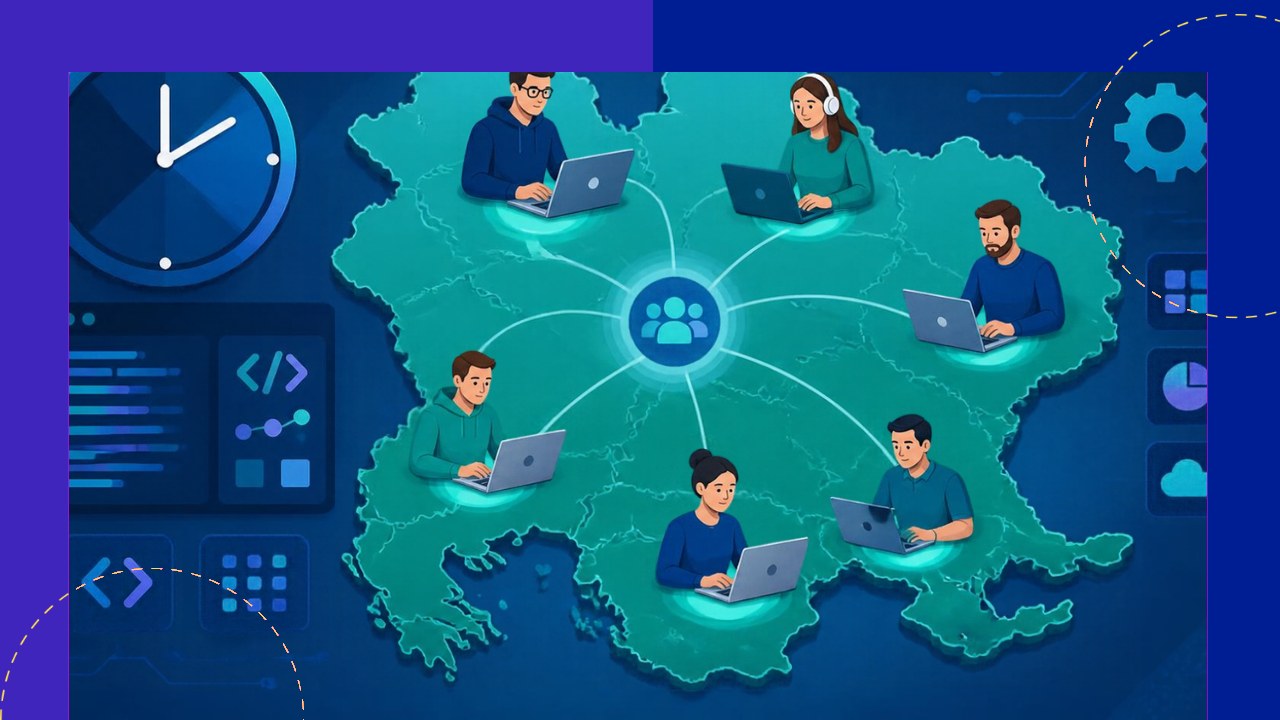
- Eastern Europe pairs deep technical talent with strong English, making it a popular region for building remote engineering teams.
- Poland, Ukraine, Romania, and Czechia anchor the region, each with its own strengths in cost, scale, and specialisms.
- You can engage developers through a staffing partner, an employer of record, or direct hires, depending on your budget and control needs.
Eastern European developers have become a go-to choice for companies that want strong engineering skills without a Silicon Valley price tag. The region sits between Western Europe and Asia, both in geography and in working hours. That middle ground is a big part of its appeal. If you are weighing where to build a remote team, it helps to know what it actually offers.
This explainer covers the key countries, technical strengths, English and culture, time-zone fit, cost, and the main ways to hire. By the end, you should know whether the region fits your plans.
Which countries make up the region
“Eastern Europe” is a loose label. In a hiring context, it usually covers Central and Eastern Europe plus parts of Southeast Europe. Poland is the largest tech hub. It has a deep pool of engineers, mature IT services firms, and strong university output.
Ukraine is another heavyweight, known for high-volume talent and competitive rates. Romania brings strong engineering schools and a growing startup scene. Czechia, Hungary, Bulgaria, and the Baltic states round out the picture. Each country has its own cost level and specialisms, so compare rather than treat the region as one block.
Technical strengths you can expect
The region produces a lot of engineers, and many train in rigorous computer science programs. According to the 2024 Stack Overflow Developer Survey, which drew about 65,000 responses from 185 countries, developers in this part of the world are well represented and active in the global community.
You will find solid coverage across common stacks. Backend work in Java, .NET, and Python is widespread. Frontend skills in JavaScript, React, and TypeScript are easy to source. There is also real depth in data engineering, cloud, DevOps, and QA. In practice, that breadth means you can staff a full product team, not just plug one gap.
English and working culture
English is a practical strength here, not just a claim. The EF English Proficiency Index ranks many regional countries highly, with Croatia second, Romania eleventh, and Poland fifteenth in its 2025 global ranking. That makes daily standups, code reviews, and written handoffs smoother than in some lower-cost regions.
Work culture tends to be direct and detail-focused. Engineers often speak up about technical risks rather than stay quiet. Many have worked with Western clients before, so Agile ceremonies and async tools feel familiar. Cultural alignment with Western Europe and North America is generally close, which lowers friction.
Time-zone fit
Time zones are where the region really shines for many buyers. Most countries sit in Central European Time or close to it. That gives a solid overlap with Western Europe through the full workday. It also leaves a useful morning window for teams on the US East Coast.
This overlap matters more than people expect. Real-time work beats waiting a full day for answers. If your work needs frequent pairing or fast decisions, nearshore hours help. For a deeper look at nearby versus distant delivery, read our piece on choosing between nearshore and offshore delivery models.
Cost expectations
Rates are lower than in Western Europe or the US, though higher than in parts of South Asia. You are paying for a balance of skill, English, and proximity. Costs vary a lot by country and seniority, so set a budget range rather than a single number.
Published salary data gives a rough sense of scale. In the Stack Overflow survey’s work section, Ukraine appears among the country medians, well below the US figure. Add a partner margin, and your fully loaded cost still lands below most Western markets. Even so, let value, not just price, drive the decision.
How to engage Eastern European developers
There are three common routes, and the right one depends on your goals.
Staffing or outsourcing partner
A staffing or outsourcing provider finds, employs, and manages talent for you. This is the fastest way to scale. The provider handles payroll, local law, and retention, while you keep technical direction. It suits teams that want speed without setting up a legal entity.
Employer of record
An employer of record (EOR) hires the developer on your behalf in their country. You direct the work day to day. The EOR owns the legal employment and compliance. This route fits companies that want long-term hires but no local entity of their own.
Direct hire or own entity
Some firms open a local office or subsidiary and hire directly. This gives the most control and can lower per-head cost at scale. It also brings the most overhead, from tax filings to HR. It makes sense once your headcount is large and stable.
Whichever route you pick, start small. Run a pilot, measure quality, and grow from there. The region rewards buyers who treat it as a long-term partnership.
Frequently asked questions
Do I need to speak the local language to manage the team?
No. English is the working language on most client projects, and documentation is written in English by default. The bigger adjustment is managing across a time gap, however small, so agree on core overlap hours and keep decisions well documented.
How do data protection rules affect hiring in the region?
Most Central and Eastern European countries fall under the EU’s GDPR framework. That gives you a known legal baseline for handling personal data. Confirm where your provider stores and processes information, and put a data processing agreement in place before any sensitive work begins.
Is the talent pool deep enough for niche or senior roles?
For mainstream stacks, yes, and senior engineers are available. For very specialised niches, supply tightens and rates rise, as they do anywhere. Widen your search across several countries in the region to improve your odds of finding rare skills.
How long does it take to stand up a team?
Through a staffing partner or EOR, you can often onboard a first hire within a few weeks. Opening your own entity takes months because of registration and tax setup. Plan a ramp period for knowledge transfer either way.






 Independent





