
What are distributed HR teams?

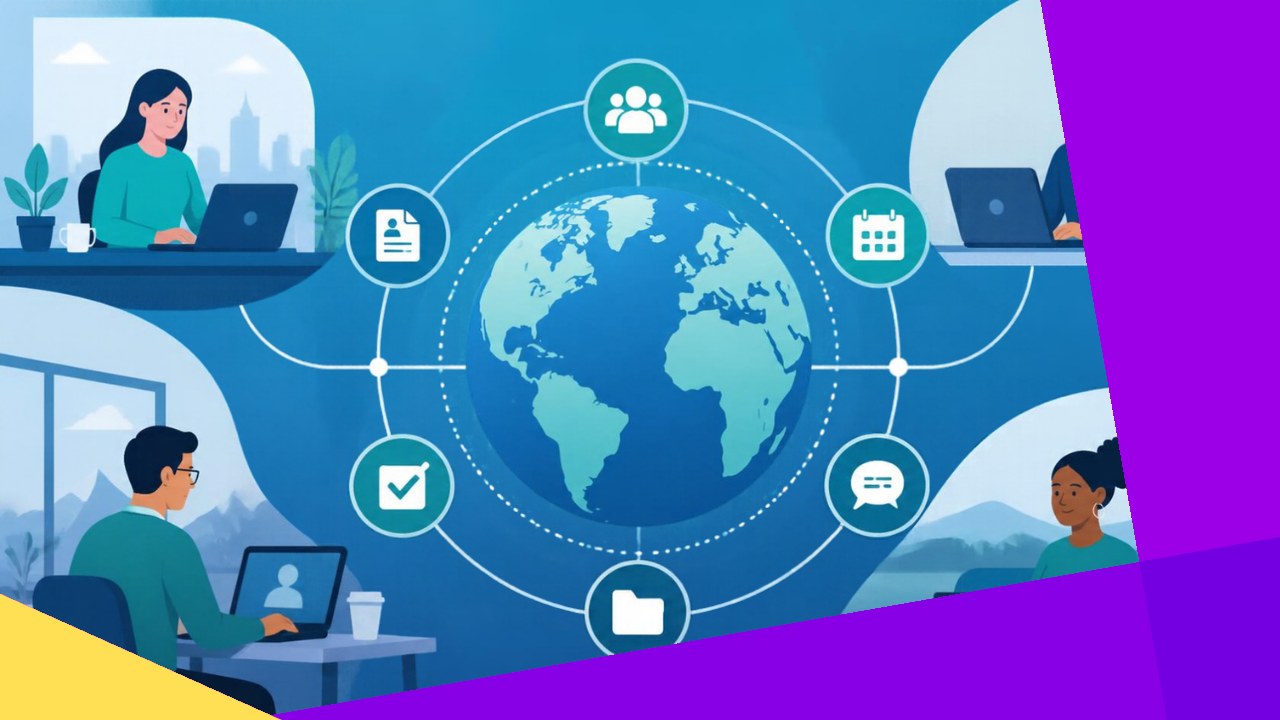
- Distributed HR teams are human resources functions run by people who work across different offices, cities, or time zones rather than one central site.
- They succeed on clear ownership, shared systems, and good async habits, not on everyone being online at the same hour.
- The payoff is wider talent access and round-the-clock coverage; the risk is patchy communication and inconsistent policy if structure is loose.
Distributed HR teams are human resources groups whose members sit in different locations and often different time zones, yet still run one connected function. Instead of a single HR office down the hall, you might have a recruiter in Manila, a benefits specialist in Austin, and an HR business partner in London. They share tools, standards, and goals, but rarely a room.
This setup is growing fast because the workforce itself has spread out. The U.S. Bureau of Labor Statistics reports that about 34 percent of wage and salary workers “worked at home at least occasionally”. When employees are everywhere, the HR team supporting them usually ends up everywhere too.
Done well, a distributed model gives you faster coverage and a bigger hiring pool. Done carelessly, it creates silos, slow answers, and policies that drift apart by region. The difference comes down to structure.
What a distributed HR team actually does
A distributed HR team handles the same core work as any HR function: hiring, onboarding, payroll and benefits, employee relations, compliance, and development. The twist is that the work moves across borders and clocks. One person may post a role while a teammate three time zones away screens applicants overnight.
Because members are apart, the team leans heavily on written process and shared records. A good distributed team treats documentation as the default, so a question asked in one region can be answered in another without a meeting.
Common models for structuring the team
There is no single right shape. Most companies pick one of these models and adjust as they grow.
Centralized hub with remote specialists
Here, a core HR leadership group sets policy and strategy, while specialists work remotely from wherever they live. The hub owns consistency; the remote members own delivery. This model keeps standards tight and suits companies that are still refining their playbook.
Regional pods
In this model, small HR teams own specific regions, such as North America, EMEA, or Asia-Pacific. Each pod knows local labor law and culture, which helps compliance. The trade-off is effort: leaders must align the pods so a worker in one region gets the same experience as everyone else.
Follow-the-sun coverage
Some global employers stagger HR staff across time zones on purpose. As one region logs off, another logs on, so employee questions get answered around the clock. This approach shines for large, always-on workforces, though it needs careful handoffs so nothing falls through the cracks.
Roles and ownership that keep it from fraying
Spread-out teams fail when nobody owns the whole, so clear roles matter more here than in a single office. At a minimum, name one person accountable for HR strategy and consistency across all locations. Then assign clear owners for recruiting, payroll and benefits, compliance, and employee relations.
Each owner should know exactly where their responsibility starts and stops. When a benefits question lands at 2 a.m. for one region, the team should already know who handles it and by when. Written service levels, such as “first reply within one business day,” remove the guesswork.
Coordination and tools
Technology is the glue. A distributed HR team needs one shared system of record so everyone sees the same employee data, rather than scattered spreadsheets. Around that core, most teams rely on a small, dependable stack.
- An HRIS as the single source of truth for employee records, pay, and leave.
- Async communication through a channel tool and recorded video, so updates do not depend on everyone being awake at once.
- A shared knowledge base holding policies, how-tos, and answers, so staff self-serve before pinging a person.
- Ticketing or case tracking so employee requests are visible, owned, and not lost in a chat thread.
Habits matter as much as software. Overlap windows, where regions share an hour or two of live time, help with quick decisions, and clear handoff notes cover the rest. The same discipline that powers any well-run remote group applies here, and the fundamentals of keeping a dispersed group aligned and supported translate directly to HR work.
Benefits and challenges
The upside is real. You can hire the best person for a role regardless of their postcode, cover more hours, and build a team that understands local markets. That local knowledge pays off in compliance and trust, since rules and norms differ widely by country.
The challenges are just as real. Communication gaps are the biggest. Gallup found that when people cannot work the way they prefer, engagement drops and burnout rises, with roughly “five in 10” remote-capable employees working hybrid. Add time zones, and misalignment compounds. Policy drift is another risk, because without a central owner, regions quietly invent their own rules. Culture is the quiet one, since belonging is harder to build when teammates never meet.
Frequently asked questions
How is a distributed HR team different from a remote HR team?
The terms overlap, but the emphasis differs. “Remote” simply means people work away from an office. “Distributed” stresses that members are spread across several locations and often several time zones, with no single dominant site. A fully remote HR team could still sit in one city; a distributed one, by design, does not.
How many HR people does a distributed company need?
A common planning benchmark is one HR staffer per 100 to 150 employees. Distributed teams often sit at the higher-support end of that range, because time-zone coverage, multiple compliance regimes, and heavier documentation all add load. So headcount per employee tends to run a touch richer than a single-site team of similar size.
What is the first thing to fix when a distributed HR team struggles?
Start with ownership, not tools. Most breakdowns trace back to unclear accountability: two people assume the other handles something, so it slips. Write down who owns each area and the response time employees can expect. Fixing that usually relieves more pain than any new software purchase.
Can you outsource part of a distributed HR function?
Yes, and many companies do. Routine, rules-based tasks such as payroll processing, benefits administration, and first-line HR queries often go to an outsourcing provider, while strategy and employee relations stay in-house. The key is keeping one internal owner accountable for standards, so the work still feels consistent to employees.






 Independent





