
What is decentralization of the workforce?

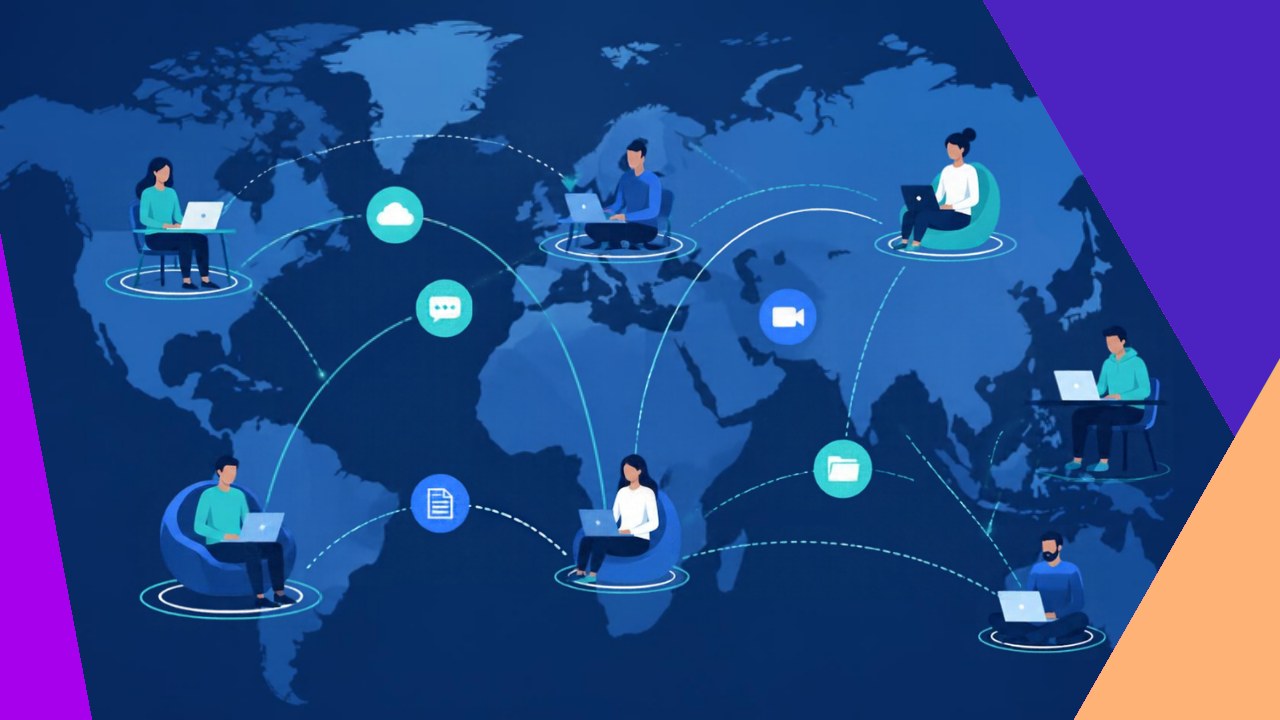
- Decentralization of the workforce means spreading your people across many locations, time zones, and employment models instead of one office and one payroll.
- The main draws are wider talent access, longer service coverage, and lower fixed costs, while the main risks sit in coordination and culture.
- Clear rules, shared tools, and strong communication turn a scattered team into a connected one, whether staff are down the hall or offshore.
The decentralization of workforce is the shift away from one central office toward a team that works from many places at once. Your people might sit in a headquarters, a home office, a co-working space, or an offshore hub in another country. Some are full employees. Others are contractors, freelancers, or staff hired through an outsourcing provider. The work still gets done, but it no longer happens under one roof.
This model grew fast, and the numbers back it up. The U.S. Bureau of Labor Statistics reports that 37 percent of wage and salary workers could work from home, and about 34 percent did so at least occasionally. Once a job can be done anywhere, the question stops being “where do we put a desk?” and becomes “where do we find the best person?”
So decentralization is not just remote work with a new name. It is a deliberate choice about how and where a whole organization gets staffed.
What is driving the shift
Several forces push companies in this direction, and they often stack together.
Talent that lives everywhere
The best candidate for a role rarely lives near your office. When you drop the location rule, your hiring pool grows enormously. You can fill a hard skill gap from another city or another continent. Harvard Business Review calls this the move to a work-from-anywhere future, where knowledge workers can “perform well while being entirely distributed.”
Cost and coverage
A decentralized model trims fixed costs. You need less real estate, and you can hire in regions where wages stretch further. Time zones also start to work for you rather than against you. A team split across the globe can keep support desks and operations running well past a single office day.
Flexible employment models
Companies now mix staff types on purpose. A core group sits on the payroll. Around it, contractors and offshore teams flex up or down with demand. This blend lets you scale quickly without carrying every cost year round.
The benefits worth naming
The upside is real when the model is run well. Access to global talent is the headline gain. Resilience matters too. When your team is spread out, one office closure does not stop the business, because work simply continues elsewhere.
Employees also value the flexibility, which helps you keep good people longer. Meanwhile, coverage across time zones improves service for customers who are themselves spread out.
The challenges to plan for
Decentralization creates two hard problems: coordination and culture. Both are manageable, but neither fixes itself.
Keeping work aligned
When nobody shares a room, small gaps grow fast. People miss updates. Handoffs slip. Two teams build the same thing twice. The fix is structure, not more meetings. Write things down, agree on how fast people should reply, and make each person’s goals clear. Good habits around keeping a spread-out team on the same page matter far more than any single app.
Protecting the culture
Culture is easy to feel in an office and easy to lose when everyone is remote. New hires can feel like outsiders. Trust takes longer to build. So leaders have to be deliberate. Regular check-ins, shared rituals, and clear values help a scattered group still feel like one team.
Compliance across borders
Hiring in many places means many rule sets. Tax, labor law, and worker classification change from country to country. A contractor in one market may count as an employee in another. Get this wrong and the penalties are steep, so legal and HR advice should come early, not late.
How to manage a decentralized workforce
You do not need a giant program to start. You need a few clear decisions, applied consistently.
1. Set the operating rules first
Decide how people communicate, where documents live, and how work is tracked. Write it down and make it easy to find. When the rules are clear, people stop guessing and start delivering.
2. Choose the right model for each role
Not every job fits every location or contract type. Core, sensitive work often stays close. Repeatable or specialist tasks suit offshore teams and contractors well. Deciding where roles sit, including whether to spread teams across more than one country, is a strategic call, not a default.
3. Communicate more than feels natural
Distributed teams need extra signal. Share context openly, over-explain priorities, and confirm that messages landed. A short daily note can prevent a week of confusion.
4. Measure output, not hours
You cannot watch a decentralized team, so stop trying. Judge people on results and clear milestones instead. This builds trust and works the same whether staff are local or offshore.
5. Invest in offshore relationships
Offshore teams are staff, not a vendor line item. Bring them into planning, give them proper onboarding, and include them in team culture. Treated as partners, they often become your steadiest performers.
Frequently asked questions
Is a decentralized workforce the same as a remote workforce?
Not quite. A remote workforce simply works away from the office, usually as your own employees. A decentralized workforce is broader. It spans multiple locations and mixes several employment types, such as staff, contractors, and offshore teams. Every remote setup is a form of decentralization, but decentralization also covers how you hire and contract, not just where people log in.
Which functions are hardest to decentralize?
Roles that depend on physical presence resist the model, such as lab work, warehouse tasks, or hands-on care. Highly sensitive functions can also be tricky, since some data needs tight, local control. Still, most administrative, technical, creative, and support roles decentralize well with the right tools in place.
How do we keep remote and offshore staff engaged?
Engagement grows from inclusion and clarity. Give everyone the same information, the same recognition, and a real say in decisions. Rotate meeting times so no region is always inconvenienced. Small gestures, like celebrating wins publicly across time zones, signal that distance does not decide who belongs.
Does decentralization always cut costs?
Usually, but not automatically. Savings on office space and regional wages are real. Yet a poorly run model adds hidden costs through rework, turnover, and compliance mistakes. The savings hold only when coordination and management are done well from the start.






 Independent





