
Significance of data network security in safeguarding confidential data


Why is data network security important?
Data network security is important because it protects sensitive information from breaches, theft, and downtime, which keeps customer trust intact.
- It blocks unauthorized access to your systems and data.
- It keeps data accurate and available when you need it.
- It lowers the risk of costly, trust-breaking breaches.
Today, data is a critical asset at home and at work. So keeping it safe has become a top priority.
Every day, firms and people face threats from cybercriminals. These bad actors hunt for weak spots to steal sensitive information. As a result, a breach can do real damage.
Strong data network security helps you lower these risks. It also helps you keep the trust of your customers.
In this article, we explore why data network security matters. Next, we look at the parts that make it work.
What is data network security?
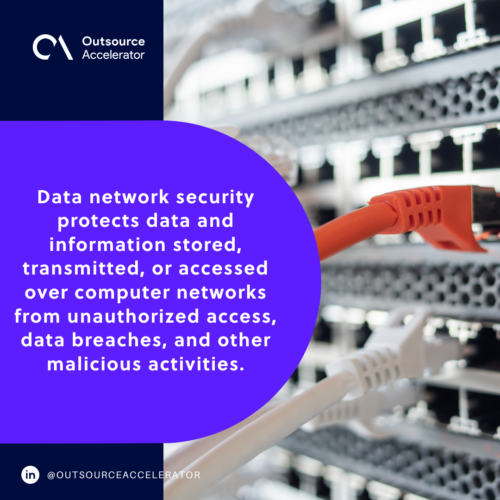
Data network security protects data that is stored, sent, or accessed over computer networks. It guards against unauthorized access, breaches, and other attacks.
It uses many technologies, processes, and policies to build a secure network environment. So it maintains three key goals:
- Confidentiality – It makes sure only authorized staff can reach private information.
- Data integrity – It keeps data unchanged during storage, transfer, or processing.
- Availability – It makes sure data is there when you need it, with no outages.
How does data network security protect data?
Data network security guards your company information in several ways. For example, it helps you prevent a data breach before it starts. Here are the main methods.
Network segmentation and isolation
First, segmentation splits a network into smaller parts. It then limits access between them. As a result, it blocks outsiders from reaching critical systems and private data.
Vulnerability assessments and penetration testing
Regular vulnerability assessments and penetration testing find weak spots. This proactive step scans networks and systems to catch flaws before attackers do.
So firms can fix issues fast. As a result, they cut the risk of a breach.
Security information and event management systems (SIEM)
Meanwhile, SIEM tools watch network events and security logs in real time. They pull data from many sources and link it together. So teams can spot and stop incidents quickly.
These tools also reveal trends in traffic and user behavior. As a result, teams can act before a small issue grows.
Regular software updates and patch management
This step keeps software current with timely updates and patches. It protects networks and apps from known flaws.
Good patch management practices apply fixes fast across the network. So threat actors find fewer open doors.
Application and database security measures
Apps and databases often hold sensitive data. So they draw the attention of cybercriminals.
To protect them, teams use strong safeguards such as:
- Secure coding practices
- Encryption
- Access controls
- Regular security audits
On top of that, activity monitoring and data loss prevention add more protection. For a wider plan, review these cybersecurity best practices.
Essential components of data network security
It helps to know the building blocks of a strong security setup. Together, they form a layered defense. So your sensitive data stays safe from fraud.
Intrusion detection systems
Intrusion Detection Systems (IDS) are key parts of data network security. They watch network traffic for signs of suspicious activity.
IDS tools help spot intrusions and raise alerts. So admins or security teams can act fast.
There are two main types of IDS:
- Network-based IDS (NIDS) – It works at key points in the network. It watches traffic for patterns that may signal an attack.
- Host-based IDS (HIDS) – It focuses on single host systems. It watches them for signs of compromise or misuse.
Virtual private networks
Virtual private networks (VPNs) create secure, encrypted links over public networks. They build a safe tunnel between a device and a remote network. So data stays safe from interceptions and theft.
In short, VPNs encrypt your traffic, which makes it unreadable to snoops. As a result, they add a layer of protection for remote access.

Transport layer security
Transport layer security (TLS) is a technology for safe network links. It encrypts data between servers and clients. So it stops eavesdropping and tampering.
TLS protects many network-based apps, such as:
- Web browsing
- Email communication
- Online transactions
It uses both symmetric and asymmetric encryption. As a result, it provides privacy, integrity, and trust. It also lets each side verify identity through digital certificates.
Authentication mechanisms
In addition, authentication confirms the identity of users and devices on a network. So only approved people and devices get access.
Strong methods like multifactor authentication (MFA) and biometrics add more safety. MFA mixes two or more factors, such as passwords, tokens, or fingerprints.
As a result, this step cuts the risk of break-ins. An attacker would need to beat several checks at once.
Safeguard your information with a robust data network security
Firms must grasp the value of strong data network security. It helps build a solid cyber defense system and keeps stakeholder trust.
A layered approach brings these measures together. As a result, you get a strong defense against persistent attackers. For deeper plans, you can also stop ransomware before it spreads and roll out full data network security solutions. Finally, if you plan to outsource, review how to ensure data security in outsourcing.
Frequently Asked Questions (FAQs)
What is the difference between data security and network security?
Data security protects the information itself. Network security protects the systems that carry it. Data network security blends both. So it guards data at rest and in transit.
What are the most common data network security threats?
Common threats include malware, phishing, and ransomware. Weak passwords and unpatched software also open doors. So regular updates and training really help.
How often should a business test its network security?
Test at least once a year, and after any major change. Also run regular vulnerability scans. As a result, you catch new flaws early.
Can small businesses afford strong data network security?
Yes. Many tools scale to small budgets. Firms can also outsource security to cut costs. So strong protection stays within reach.






 Independent






